Research team at Georgia Institute of Technology and MIT has developed an automated method of analyzing and recording information from neurons present in the living brain. A cell-detecting computer algorithm-based robotic arm can both detect and record with high precision and speed, from neurons in the living mouse brain.
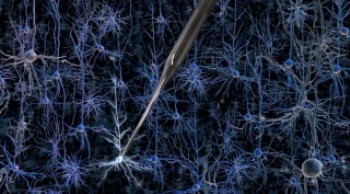 whole-cell patch clamping
The new automated technique enables the scientists to classify varied types of brain cells, followed by mapping their link with each other, and differentiating the diseased cells from normal cells.
Ed Boyden, MIT’s associate professor of biological engineering and brain and cognitive sciences and Craig Forest, Georgia Tech School of Mechanical Engineering’s assistant professor jointly work on this project.
Kodandaramaiah, Boyden and Forest started automating an ancient technique called whole-cell patch clamping. Here, a tiny hollow glass pipette is linked to the neuron’s cell membrane, followed by a small pore opening within the membrane for recording the electrical activity inside the cell.
Kodandaramaiah and the researchers succeeded in constructing a robotic arm through which a glass pipette can be precisely introduced within the brain of an anesthetized mouse. While under motion, electrical impedance will be measured by the pipette. With two-micrometer steps, the pipette measures 10x/sec of impedance. After detecting a cell, it gets deactivated automatically. Upon detecting a cell, the pipette performs suction to create a seal, attaching the cell’s membrane. The electrode intrudes across the membrane recording the cell’s internal electrical activity. With the robotic system, 90 % precision cell detection can be achieved, followed by staying connected with the detected cells for almost 40 % of the time.
The researchers also demonstrated that this method can be used to determine the shape of the cell through dye instillation. The researchers intend to extract a cell’s contents in order to translate its genetic profile.
Neuromatic Devices has been recently established by the researchers to commercialize the device.
Source: https://www.gatech.edu/