In this interview, industry expert Brandon Harrison from Stäubli explores how advanced robotics, intelligent design, and seamless integration are driving greater efficiency, safety, and adaptability across today’s rapidly evolving industrial landscape.
To get started, can you give us a quick overview of how industrial robots are being used across different industries today, and how that landscape is evolving?
Industrial robots have been transforming industries since the 1960s, when the first Unimate robotic arm entered manufacturing. Since then, they’ve expanded across sectors including automotive, logistics, electronics, food processing, and even healthcare.
Welding remains one of the most common applications because it was one of the first processes humans wanted to automate for safety and consistency. From there, we’ve seen robotics play an increasing role in areas like material handling or assembly. Essentially, anywhere efficiency, accuracy, and repeatability matter.
What’s most exciting now is how intelligent and collaborative robotics are becoming. We’re seeing the rise of autonomous mobile robots (AMRs) navigating production floors and machine learning algorithms enabling robots to adapt to different scenarios and product flows. In medicine, robots are now performing complex procedures like autonomous knee replacements. That shift from repetitive, pre-programmed movement to intelligent, adaptive decision-making marks a huge leap for automation.
This progress builds on a long heritage. Stäubli entered the robotics space in 1989 by acquiring Unimation, the company that spun out from Unimate, which created the world’s first industrial robot. So, we’ve been part of this journey from the early industrial era right up to today’s AI-driven automation.
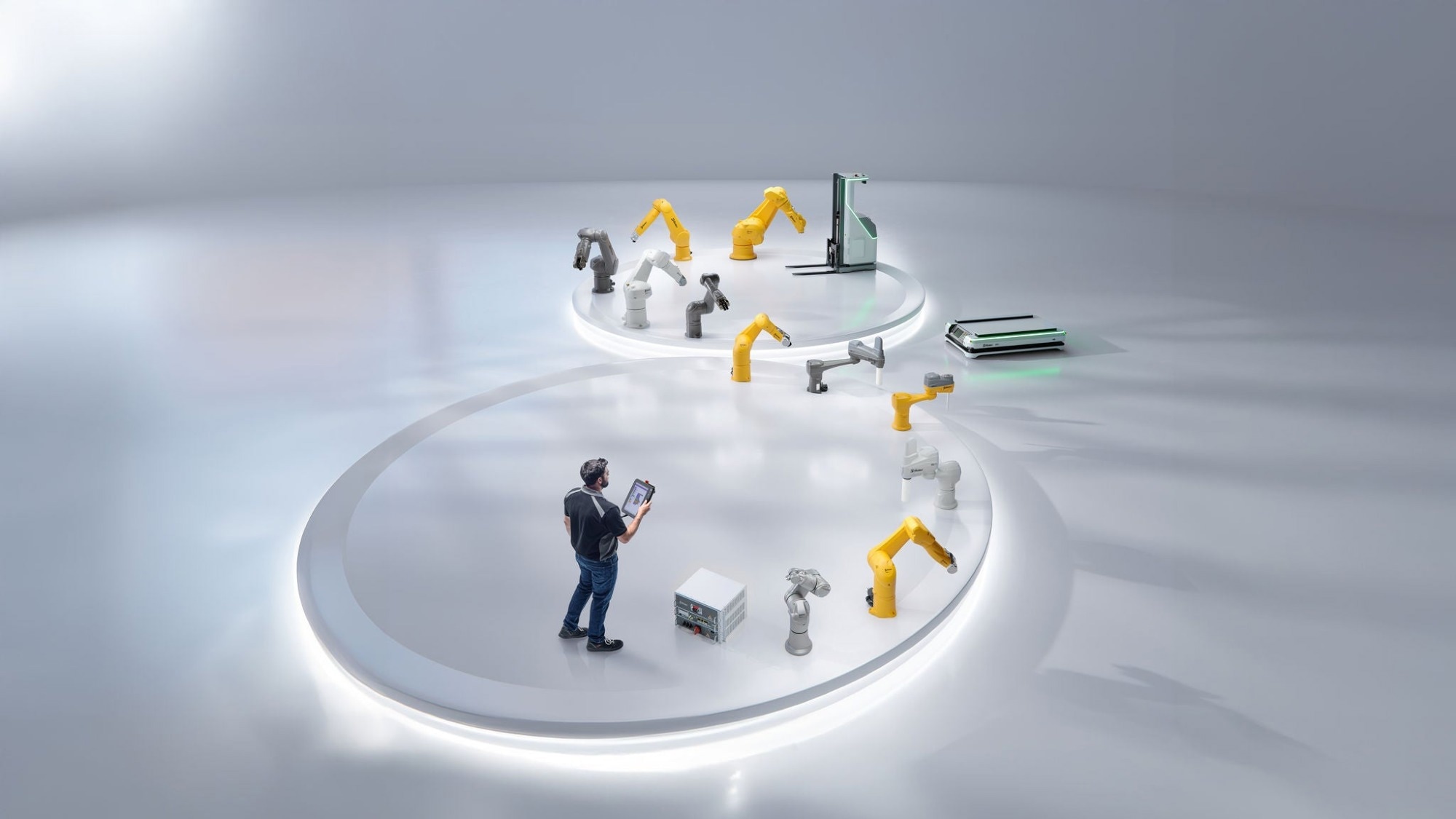
Image Credit: Stäubli Robotics
When an organization is just starting to explore automation, what are the most critical performance factors that they should prioritize in their robot selection process?
Every automation project should begin with a clear understanding of return on investment (ROI). Companies need to know how long it will take to recoup their initial investment, whether that’s a few months or several years. But ROI isn’t always purely financial. Safety, ergonomics, and quality improvements can also justify automation. If a process involves high heat, repetitive strain, or contamination risks, deploying a robot can remove people from unsafe environments or improve product consistency.
When selecting a robot, start with capability: can it perform the task, meet the required payload, and achieve the needed speed and precision? Once those basics are met, focus on dependability. The robot must withstand the environment it operates in, whether that’s harsh, sterile, or variable.
How important is it for an industrial robot to be compatible with its environmental conditions?
Environmental compatibility is critical. In fact, it’s usually the first factor to consider. Robots deployed in cleanrooms, aseptic areas, or food production zones must meet specific standards to ensure they don’t compromise product integrity. Cleanroom classifications like ISO 1–9, GMP A–D, or food safety classes all dictate different requirements.
One of the biggest challenges is cleanability. Beyond just surviving in a given environment, the robot must be able to be cleaned and disinfected effectively without degrading its coatings or seals. Using aggressive agents such as isopropyl alcohol or Spor-Klenz can damage certain materials if not properly engineered. It’s crucial to verify that the robot’s design, including its joints, coatings, and seals, can handle the exact conditions of your process.
Which industries or environments do you find most demanding for robotic design?
Pharmaceutical and cleanroom environments are by far the most demanding and the most expensive because of the strict regulatory and contamination-control requirements. Everything from the shape of the castings to the joint seals must be precisely engineered to prevent particle generation or fluid ingress.
Stäubli has been active in pharmaceutical robotics for more than 25 years, and we’re now on our fifth generation of aseptic-grade robotic arms. That experience gives us a strong advantage as more industries start to adopt cleanroom automation.
Stäubli TX2-200 HE - Unmatched Cleanability
Video Credit: Stäubli Robotics
Integration is often one of the biggest challenges in automation. What steps can companies take to ensure that a new robotic system will integrate smoothly with their existing production infrastructure?
Smooth integration starts with using standard, open communication protocols. Most robots are controlled by a higher-level system, such as a PLC, that sends motion commands. The robot itself is usually what I call a “dumb mover” because it executes instructions rather than making decisions. That means communication reliability is essential.
At Stäubli, all our robots come equipped with Ethernet-based communication protocols and Fieldbus options as standard, making it easy to integrate with modern industrial systems. For legacy environments, we can still provide compatible solutions. The key is to make sure the robot can speak the same “language” as the rest of the system. Proper integration also includes verifying basics like correct mounting, payload limits, and speeds, all of which are small details that can make a big difference in long-term performance.
In terms of long-term performance, what should companies consider to ensure operational stability over time, and what questions should they ask potential vendors?
Operational stability is all about managing the total cost of ownership (TCO). Companies should look beyond the purchase price to understand what the system will cost over its entire life. Preventive maintenance programs are essential as they reduce downtime and keep expenses predictable. At Stäubli, our Care Packs include scheduled maintenance, training, and parts replacement to help customers maintain consistent costs and avoid emergency call-outs.
We also recommend factory acceptance testing (FAT) during integration. It’s a proactive way to ensure the robot is installed correctly, that it’s properly anchored, not overloaded, and moving within safe limits. Even small installation issues can lead to performance drift or mechanical stress over time, so validation at the start can prevent costly issues later.
Could you describe the different types of robots - articulated, SCARA, and collaborative - and the tasks or environments each is best suited for?
Articulated robots, usually with six to eight axes, are often called anthropomorphic arms because they mimic the range of motion of a human arm. They’re ideal for complex motion paths or applications requiring orientation changes, like precision assembly or operations in clean or aseptic environments.
SCARA robots, short for “Selective Compliance Articulated Robot Arm”, are four-axis systems designed for high-speed, high-accuracy pick-and-place operations. They’re perfect for packaging, electronics, or light assembly, though less suitable for cleanroom use due to the moving bellows and dust-generating components inherent to their design.
Collaborative robots, or cobots, have evolved into what we now call “collaborative applications.” The focus has shifted from just having a “safe” robot to ensuring the entire application meets safety standards.
At Stäubli, we emphasize two key categories: force-and-power-limited robots, which are lightweight and designed for safe human interaction, and speed-and-distance-monitored systems, where safety measures like light curtains or laser scanners slow or stop the arm as a person approaches. Our PL e-certified systems exceed many safety requirements, which is why we’re trusted in sensitive sectors such as healthcare and medical robotics.
Stäubli Smart Factory
Video Credit: Stäubli Robotics
Can you explain some of the differentiators Stäubli Robotics offers?
Speed and rigidity are our hallmarks, and they go hand in hand. It’s not enough for a robot to move fast; it must also stop precisely at the intended position. Our patented cycloidal-style gearbox, designed and manufactured in-house, gives us exceptional stiffness and control accuracy. This mechanical advantage allows Stäubli robots to achieve industry-leading speed and repeatability without sacrificing precision.
We also provide fine motion control through advanced path-parameter tuning, such as blending and boxcar filtering, which lets users refine trajectories for smoother performance. On top of that, our focus on safety and hygiene design allows our robots to operate in environments where many others can’t, from food and pharma to medical robotics.
When evaluating robotic solutions, how much weight should be given to a vendor’s industry expertise versus the technical specs of the robot itself?
Technical specs can be misleading if taken out of context. Anyone can publish impressive numbers on a brochure, but the real test is how those specs perform in your application. For instance, accuracy ratings depend on how quickly the measurement is taken after the move. Some robots might settle for several seconds before achieving their quoted accuracy, which isn’t practical for high-speed production.
That’s why real-world validation matters. Look for proof through application testing, case studies, or live demonstrations. Evaluate not just speed or precision in isolation, but how long the robot can sustain that performance seven days a week, three shifts a day. In many cases, a vendor’s industry experience and successful track record will tell you far more than the datasheet ever could.

Image Credit: Stäubli Robotics
Training and post-sale support are often overlooked in the selection phase. What kind of support packages should companies look for to ensure long-term success?
Training is vital to long-term success. Operators need to understand not only how to run the robot, but how it interacts with the entire automation cell. Often, when a problem occurs, the robot is blamed, but the root cause lies elsewhere in the system. That’s why we encourage both robot-specific and integrator-level training.
At Stäubli, we offer tiered training options: operator training for basic navigation and teaching points, programming courses for writing code and managing communication protocols, and maintenance training that covers electrical and mechanical troubleshooting. Combining this with an appropriate service plan ensures teams can operate and maintain the system confidently for years.
After deployment, how can companies effectively assess whether the robot is delivering on performance, compliance, and overall value, especially in terms of total cost of ownership?
Performance validation starts with output. Is the robot achieving the required cycle time, payload, and reliability? With today’s Industry 4.0 tools, it’s easier than ever to capture and visualize this data. Our OptiMize Lab software helps users analyze robot motion to identify stress levels and potential wear before failures occur, showing whether the system is running within its optimal “green zone.”
Compliance can be verified through safety and risk assessments, either internally or via third-party auditors. And to evaluate the total cost of ownership, our cloud-based customer portal tracks service history, parts usage, and performance trends over the robot’s life cycle. This transparency helps companies spot potential issues, identify problem systems, and fine-tune integration parameters for improved longevity.
Stäubli SCOPE, Digital solution for Smart Industry
Video Credit: Stäubli Robotics
Finally, what advice would you give to companies that want to future-proof their automation strategy and stay adaptable as both technologies and industry standards evolve?
Compared to hard automation, robots provide exceptional flexibility. If you automate a process today and that product line changes tomorrow, you can easily redeploy the same robot for a new task. Often, our robots outlive the life cycle of the product they were initially built to handle.
Our systems use Structured Text programming, which makes reprogramming and redeployment fast and intuitive. Whether you’re re-teaching points or adjusting motion paths, the robot can be adapted to a new workflow with minimal downtime. For companies thinking long term, adaptability is the key to future-proofing their automation investments.
About Brandon Harrison 
Brandon earned his engineering education at the University of Cincinnati and brings over 14 years of experience at Stäubli. Currently serving as Local Head of Business for Medical Robotics and Global Account Manager for Life Sciences, he specializes in automation and robotic solutions supporting advanced medical and laboratory applications.

This information has been sourced, reviewed and adapted from materials provided by Stäubli Robotics.
For more information on this source, please visit Stäubli Robotics.
Disclaimer: The views expressed here are those of the interviewee and do not necessarily represent the views of AZoM.com Limited (T/A) AZoNetwork, the owner and operator of this website. This disclaimer forms part of the Terms and Conditions of use of this website.