Researchers have developed an anemone-inspired hydrogel robot powered by a BP/WS2 moiré superlattice that enables both light-driven movement and infrared photocurrent sensing. By integrating actuation and detection within a modular materials framework, the system achieves millimeter-scale spatial resolution for identifying overheating in confined environments for early fault detection.
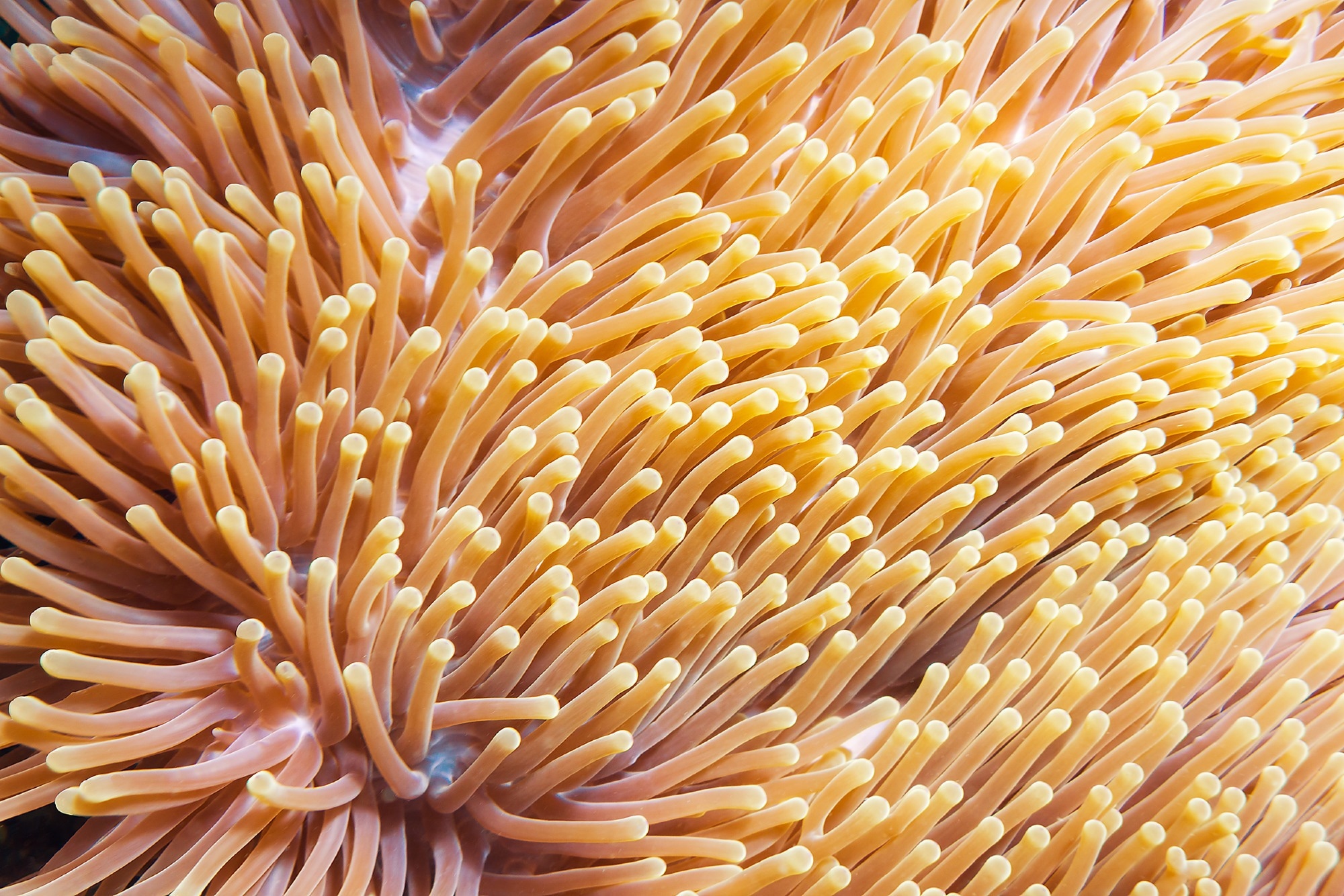
Study: Moiré superlattice-driven bionic hydrogel robot with programmable multifunctionality. Image Credit: Windofchange64/Shutterstock.com
Published in Nature Communications, the team introduced an anemone-like hydrogel robot (ALHR) built around a black phosphorus/tungsten disulfide (BP/WS2) moiré superlattice engineered for dual-mode performance.
This superlattice enables the robot to move directionally through a photothermal effect while also detecting infrared radiation via photocurrent signals when its tentacles contact an electrode. In doing so, the system can both respond to and report overheating events, making it suitable for early fault detection in equipment.
Background
Hydrogel robots are particularly attractive for navigating confined or delicate environments because of their biocompatibility and mechanical adaptability. Inspired by natural organisms, researchers have long aimed to embed both sensing and actuation into these soft materials so that robots can move and perceive in a coordinated way.
Yet progress has been slowed by two persistent challenges.
First, the high water content that gives hydrogels their flexibility often degrades embedded sensor performance. Second, efforts to enhance mobility frequently compromise sensing capability. Together, these issues have created a clear actuation–sensing integration gap.
To address this gap, the researchers turned to moiré superlattice materials, which are known to enhance both photothermal and photovoltaic properties through interlayer coupling. While such materials have shown promise in optoelectronics, their dual-function potential in robotics has remained largely unexplored. Building on this opportunity, the team designed a BP/WS2 moiré superlattice capable of simultaneous photothermal and photovoltaic conversion.
When integrated into a thermoresponsive poly(N-isopropylacrylamide) (PNIPAM) hydrogel, the material allowed the robot to convert light into motion in one region and into electrical signals in another. This deliberate pairing of responsive moiré units with a thermosensitive hydrogel matrix illustrates a materials–structure co-design strategy, where functional components are matched to enable coordinated mechanical and electrical behavior.
Materials and Methods
To realize this concept, the researchers first synthesized the BP/WS2 moiré superlattices through a sequential fabrication process. WS2 nanosheets were grown on silicon/silicon dioxide (Si/SiO2) substrates via chemical vapor deposition at 850 °C using tungsten trioxide (WO3) and sulfur precursors.
After growth, the nanosheets were transferred using polymethyl methacrylate (PMMA)-assisted etching with potassium hydroxide (KOH) and buffered oxide etch (BOE) solutions. In parallel, BP nanosheets were prepared by ball-milling red phosphorus, followed by 10 hours of ultrasonic exfoliation in ethanol and centrifugation to obtain stable dispersions.
With both components in hand, the BP/WS2 composite was assembled by inkjet-printing BP dispersion onto WS2 nanosheets at an optimized 1:8 mass ratio. The structure was then vacuum-dried, and gold (Au) electrodes were deposited via thermal evaporation to enable electrical measurements.
The robotic body itself was constructed in two functional sections.
The base incorporated the BP/WS2 composite within a PNIPAM hydrogel matrix, forming the photothermally responsive actuation unit. The tentacles, by contrast, were fabricated from pure PNIPAM hydrogel to maintain flexibility, with a BP/WS2 film later spin-coated onto their tips to provide sensing capability.
Both hydrogel components were mold-cast, refrigerated at 5 °C for 12 hours, and cured under a 395 nm ultraviolet lamp for 10 minutes. After assembly, the completed robot measured 20 × 4 × 3 mm and featured six tentacles, each 14 mm long.
To evaluate performance, the team conducted photoresponse tests using 365–940 nm lasers at an intensity of 45 mW/cm2. Infrared thermal imaging tracked temperature changes during photothermal actuation, while photocurrent signals were measured with a source meter and oscilloscope. These measurements directly linked material properties to system-level robotic behavior.
Findings and Analysis
The functional division between base and tentacles allowed the ALHR to demonstrate coordinated motion and sensing. Under 660 nm illumination, the BP/WS2-PNIPAM composite base underwent reversible contraction due to the photothermal effect, enabling directional movement at approximately 2 mm per second. At the same time, the tentacles responded to near-infrared radiation, particularly 808 nm light, by generating photocurrent upon contacting bottom electrodes.
In effect, the robot could move toward a stimulus and electrically report localized heating events.
Material characterization clarified how this dual functionality arises. The BP/WS2 moiré superlattice, assembled via ultrasonic-assisted stacking, was confirmed by X-ray diffraction (XRD) and Raman spectroscopy, both of which indicated strong interlayer coupling. Transmission electron microscopy (TEM) revealed periodic moiré patterns with lattice spacings of 0.46 nm for BP and 0.25 nm for WS2.
X-ray photoelectron spectroscopy (XPS) further showed electron transfer from BP to WS2, along with shifts in binding energy that reflect modulated electron cloud distribution.
These structural features translated directly into enhanced optical and electrical performance. The superlattice exhibited a bandgap of approximately 1.93 eV and strong infrared absorption. At 808 nm, it achieved a photothermal conversion efficiency of 72.1 %, increasingthe temperature from 22 °C to 51.9 °C within 600 seconds.
Simultaneously, under zero bias illumination, it generated 514.2 nA of photocurrent, with a responsivity of 4.14 A/W and a specific detectivity of 12 × 1011 Jones. Response times were rapid, with a 70-millisecond rise and a 48-millisecond decay.
First-principles calculations provided a theoretical explanation for this performance.
Moiré potential wells confine interlayer excitons, extending their lifetimes and enhancing both heat generation and charge separation. The resulting flat-band-induced carrier confinement produces periodically distributed localized electronic states that regulate charge distribution under illumination. In other words, the same interfacial physics that boosts light absorption also strengthens both photothermal and photoelectric responses, enabling true dual-mode operation.
At the system level, the ALHR maintained stable performance over 200 actuation cycles with minimal degradation and retained more than 85 % of its response speed after seven days. In simulated transformer cooling pipes, it detected temperatures ranging from 380–453 K with a spatial resolution of 2.037 mm.
These demonstrations connect nanoscale material design to practical fault-detection scenarios, reinforcing the broader design framework proposed by the authors. Because the strategy focuses on matching functional two-dimensional heterostructures with compatible hydrogel matrices, it can be extended to other material systems with tunable optoelectronic properties.
Conclusion
This study demonstrates a soft hydrogel robot that can both move and detect heat using a single light-responsive material system. By integrating a BP/WS2 moiré superlattice into a thermoresponsive hydrogel, the researchers enabled coordinated photothermal actuation and infrared sensing within one compact platform. The robot can travel directionally under light and generate electrical signals when it encounters localized overheating, achieving millimeter-scale detection resolution.
Beyond the device itself, the key contribution lies in the design strategy. By pairing functional nanomaterials with compatible soft matrices from the outset, the work outlines a practical framework for integrating sensing and actuation without sacrificing performance. This materials-driven approach provides a clear foundation for developing multifunctional soft robots suited to confined-space monitoring and early fault detection.
Journal Reference
Zhang, L., Zhang, Y., Li, X., Han, D., Xu, S., Zhai, W., & Wang, J. (2026). Moiré superlattice-driven bionic hydrogel robot with programmable multifunctionality. Nature Communications. DOI:10.1038/s41467-026-69611-w. https://www.nature.com/articles/s41467-026-69611-w
Disclaimer: The views expressed here are those of the author expressed in their private capacity and do not necessarily represent the views of AZoM.com Limited T/A AZoNetwork the owner and operator of this website. This disclaimer forms part of the Terms and conditions of use of this website.