Autonomous robots now steer aircraft, screen job applicants, assist surgeons, and patrol warehouses. Each time one of these systems causes harm, a pressing legal and ethical question follows: who bears responsibility? The answer is neither simple nor settled, and how societies resolve it will define the pace and safety of AI deployment across every industry.
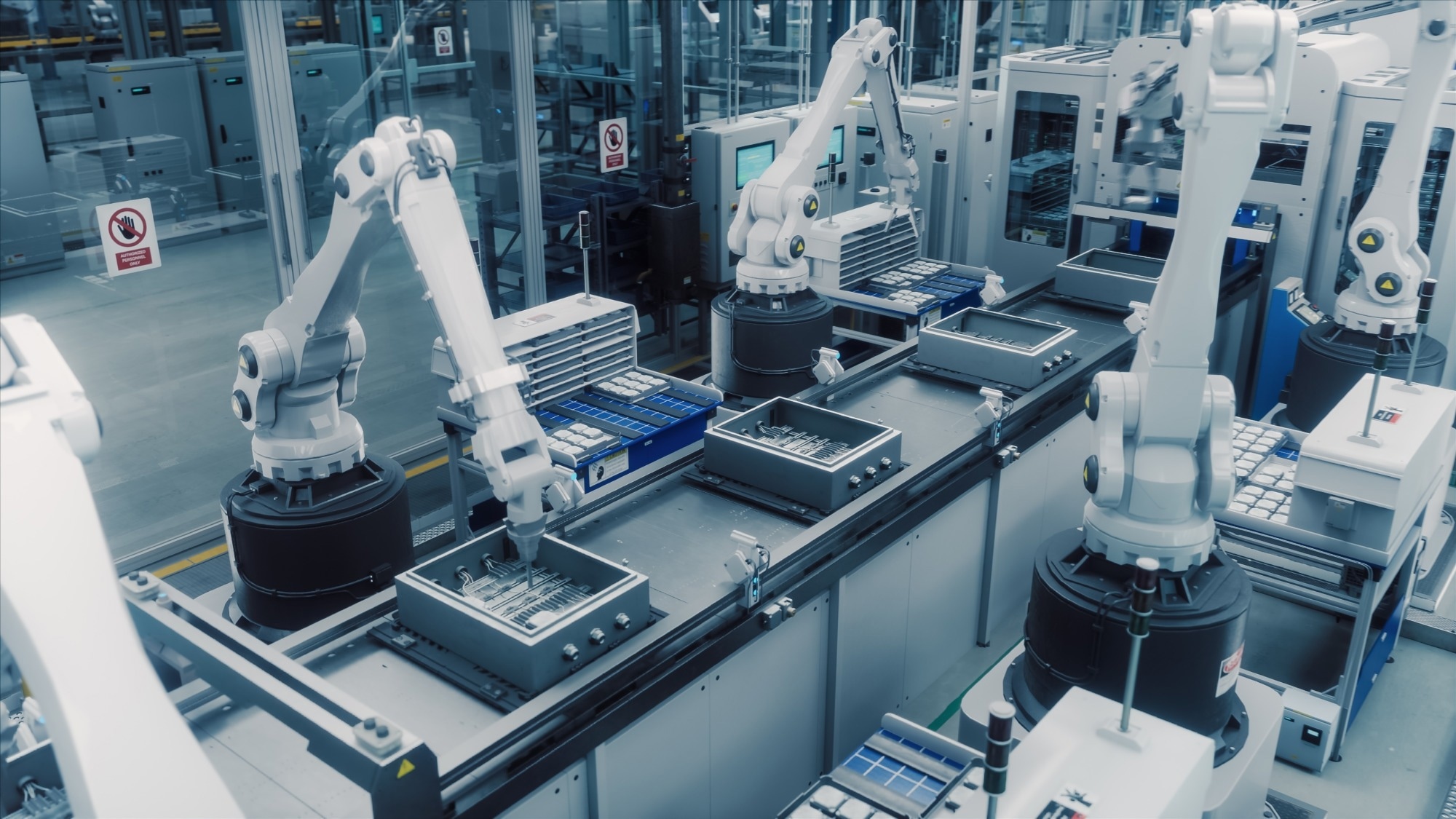 Image Credit: Gorodenkoff/Shutterstock
The Responsibility Gap
Modern legal systems assume that a human actor decides the outcome. Autonomous systems break this assumption because their outputs are generated by algorithms, training data, and real-time inputs as opposed to one human decision. This is referred to as the “responsibility gap,” the situation in which an AI system causes harm but no entity can be held accountable for it in its own right.1
This gap widens as robots become more autonomous. If the system continues to learn after deployment, its behavior during an accident may differ significantly from what the developer originally programmed. In traditional product liability law, manufacturers are responsible for defects arising during production, but this does not hold true if a defect arises from deployed machine learning.2
To trace a harmful robot decision back to a specific flaw relies on a technical skill that courts rarely have. Because modern machine learning systems are structurally opaque, proving liability in cases of robot-caused harm is not just a matter of legal argument. This technical complexity makes the responsibility gap a real problem that is not just theoretical.1
Manufacturer Liability
Manufacturer liability is the most common basis for assigning blame. Under the product liability doctrine, the party who puts a defective product into commerce bears the cost of the product’s damages. The EU's revised Product Liability Directive now explicitly includes AI systems as "products," meaning manufacturers can be held liable even when a defect emerges from machine learning that alters post-sale behavior.2
The new directive makes it easier for victims to prove that the product was defective, that they were harmed, and that there was a causal link between the software and harm. It's no longer necessary to prove manufacturer negligence, which is significantly better for injured parties in seeking compensation.2
But manufacturers still need to defend themselves if there is damage caused by software under their control or by a failure to update the software. This carve-out makes manufacturers responsible for foreseeable failure modes even if a robot is sent out of the factory and works in the field for years.3
Operators and Control
The operator who deploys and profits from a robotic system bears substantial legal liability beyond that of the manufacturer. The European Parliament’s analysis of AI civil liability calls for strict, risk-based operator liability and mandatory insurance, with operators as the parties best positioned to manage real-world deployment risks on a day-to-day basis.4
Operators configure how robots are used, set the environments in which they function, and determine maintenance schedules. If a robot is harmful because it is deployed in a setting for which it was not designed, or because an operator missed important safety updates along the way, then the causal chain is operational and not the design.4
Research published in the RUDN Journal of Law concludes that legal responsibility in robotics should be differentiated by the degree of autonomy and by whether the robot acts independently or alongside a person. With active human oversight at the time of the incident, the common legal model is shared liability between operator and manufacturer.4,5
Cases That Shaped the Debate
The Boeing 737 MAX crashes of 2018 and 2019 provide the clearest case study of autonomous system liability. The Maneuvering Characteristics Augmentation System (MCAS) received data from a single faulty sensor and repeatedly pushed the aircraft's nose down, killing 346 people.6
Investigations published in Frontiers in Political Science show that engineers relied on a single sensor for a safety-critical function despite knowing that each aircraft carried two, violating fundamental redundancy principles in safety-critical software design.6
Boeing's liability did not rest on a software error alone. It emerged from organizational decisions: prioritizing market competition over rigorous testing, concealing MCAS from pilots and the FAA, and failing to classify a system failure as critical. Boeing agreed to pay $2.5 billion and faced a federal fraud charge, demonstrating that corporate decision-making carries criminal and financial consequences alongside algorithmic ones.6
The Uber self-driving fatality in Tempe, Arizona, in 2018 was a different scenario. The system did not properly classify a pedestrian, and safety provisions had been modified to reduce false-positive braking alerts. This deployment-level change made it unclear whether liability lay with the manufacturer, the operator, or both parties together.7
Distributed Accountability
Since no single actor designs, deploys, and regulates an autonomous robot, legal scholars are increasingly calling for distributed accountability models. In 2024, AI ethics is discussed in the literature, which argues that responsibility for AI development should be shared among developers, users, regulators, and society. In the context of AI creation, one cannot place all the blame on a single person when the damage has been done by a complex system built by many people.8
The Gradient Responsibility Networks framework provides a mathematically grounded model for distributing moral responsibility among all actors throughout an AI system’s lifetime. It has been recognized that accountability shifts over time as the system evolves and new risks emerge, and binary, all-or-nothing liability models fail to capture this temporal complexity.9
Oxford research stresses that meaningful human control requires individuals with both the authority and competence to alter a system's decisions, not just the ability to observe its outputs. Where oversight becomes performative rather than substantive, the accountability value it provides collapses, leaving a gap that neither law nor ethics can easily fill.6
Legal Personhood and Its Limits
Some of these proposals call for autonomous robots to have electronic personhood, so they are able to bear responsibility for their own conduct. The European Parliament’s resolution in 2017 rejected this pathway and asserted that robots cannot be held responsible for the harm they cause to other people. Robots have always been treated by courts as objects, not as persons legally responsible for their actions, and responsibility is held by the humans and companies behind the systems.10
Saving this for later? Download a PDF here.
Without personhood, an autonomous system cannot be sued, fined, or punished. This keeps liability with human actors and corporations, which protects victims but requires plaintiffs to identify the correct defendant in a complex technological supply chain spanning chip designers, software vendors, system integrators, and fleet operators. Without legislation, courts are unlikely to grant AI legal personhood.8
As legal scholars have noted, AI systems must first be able to self-empower within socially and institutionally recognized systems, a capability not achieved by any current robotic system. The law will likely drive any future changes on this question, not judicial ingenuity.8
Governance as the Foundation
Liability regimes have real power only when they are paired with proactive governance. A Scientific Reports article argues that embedding responsibility in AI systems requires integrating design and development into existing risk management frameworks from the earliest stages of the project. Retrofitting accountability after deployment is technically and legally difficult.11
In its report, the OECD calls for impact assessments, explainability of design, and robust testing protocols for autonomous systems operating in high-stakes environments. These measures establish documentation trails that courts and regulators can follow to track decision-making processes after the event and to make a more precise and defensible attribution of liability.12
The current trajectory points toward a multi-layered model. Manufacturers are responsible for design defects and post-sale software failures; operators are responsible for deployment decisions and maintenance issues; and regulators are responsible for setting proper safety standards. Each layer is a check on the others, and the entire structure depends on transparency during a robot’s operational life.8
References and Further Reading
- Banteka, N. (2021). ARTIFICIALLY INTELLIGENT PERSONS. 58 HOUS. L. REV. 537. https://houstonlawreview.org/article/19357.pdf
- Margishvili, M. (2025). Liability for Autonomous Vehicle-related Damages: EU, US, and Chinese Approaches. Central European University. https://www.etd.ceu.edu/2025/margishvili_mariam.pdf
- Langlais, E. et al. (2024). Which Liability Laws for Artificial Intelligence? Université Paris Nanterre. https://economix.fr/pdf/dt/2024/WP_EcoX_2024-22.pdf
- Artificial Intelligence and Civil Liability: A European Perspective. (2025). Policy Department for Justice, Civil Liberties and Institutional Affairs, European Parliament. https://www.europarl.europa.eu/RegData/etudes/STUD/2025/776426/IUST_STU(2025)776426_EN.pdf
- Ivanova, L. V. et al. (2025). Defining ‘robotics’ for legal responsibility: A conceptual framework. RUDN Journal of Law, Vol 29, No. 2. DOI:10.22363/2313-2337-2025-29-2-509-523. https://journals.rcsi.science/2313-2337/article/view/327907
- Salvini, P. et al. (2023). Human involvement in autonomous decision-making systems. Lessons learned from three case studies in aviation, social care and road vehicles. Frontiers in Political Science, 5, 1238461. DOI:10.3389/fpos.2023.1238461. https://www.frontiersin.org/journals/political-science/articles/10.3389/fpos.2023.1238461/full
- Collision Between Vehicle Controlled by Developmental Automated Driving System and Pedestrian Tempe. Accident Report. (2019). National Transportation Safety Board. NTSB/HAR-19/03, PB2019-101402. https://www.ntsb.gov/investigations/accidentreports/reports/har1903.pdf
- Jin young Hwang. (2024). Ethics of artificial intelligence: Examining moral accountability in autonomous decision-making systems. World Journal of Advanced Research and Reviews. DOI:10.30574/wjarr.2024.23.3.2884. https://wjarr.com/sites/default/files/fulltext_pdf/WJARR-2024-2884.pdf
- Hong, T. K. (2026). Should We Be Morally Accountable for AI Behavior? A Novel Framework for Distributed Responsibility in Artificial Intelligence Systems. Singapore University of Social Sciences. https://zenodo.org/records/19803765
- Civil Law Rules on Robotics. European Parliament resolution of 16 February 2017 with recommendations to the Commission on Civil Law Rules on Robotics (2015/2103(INL)). https://eur-lex.europa.eu/legal-content/EN/TXT/PDF/?uri=CELEX:52017IP0051
- Stahl, B. C. (2023). Embedding responsibility in intelligent systems: From AI ethics to responsible AI ecosystems. Scientific Reports, 13(1), 7586. DOI:10.1038/s41598-023-34622-w. https://www.nature.com/articles/s41598-023-34622-w
- ADVANCING ACCOUNTABILITY IN AI. (2023). OECD Publishing. https://www.oecd.org/content/dam/oecd/en/publications/reports/2023/02/advancing-accountability-in-ai_753bf8c8/2448f04b-en.pdf
Disclaimer: The views expressed here are those of the author expressed in their private capacity and do not necessarily represent the views of AZoM.com Limited T/A AZoNetwork the owner and operator of this website. This disclaimer forms part of the Terms and conditions of use of this website.