In this interview, AZoRobotics sits down with Dr. Rob Dodge to talk about what really happens behind the scenes of immunogenicity testing and why it’s becoming an automation problem as much as a scientific one. With decades of experience in bioanalysis, Dr. Dodge explains why traditional neutralizing antibody (NAb) assays are so difficult to scale, and how a mix of robotics and machine learning, potentially even virtual assays, could start to ease that burden.
To start, for readers who may come from robotics, automation, or data science backgrounds rather than immunology, could you briefly explain what anti-drug antibodies are, why immunogenicity testing is so critical for protein therapeutics, and how this space is becoming increasingly data- and automation-driven?
Anti-drug antibodies (ADAs) can be viewed as an immune-system response to a drug where a patient identifies an administered therapeutic protein as a foreign entity and generates specific antibodies to block it. Thus, the body develops an immune response to an administered drug as if it were a pathogen to be eliminated.
Immunogenicity testing, which is a laboratory-based assessment to determine if the body is mounting an immune response to the therapeutic, is critical because these ADAs to the drug can fundamentally alter a drug's performance.
Specifically, the class of ADAs termed “neutralizing antibodies” (NAbs) specifically block (neutralize) the drug's actions by targeting the drug's active site, leading to therapeutic failure. Beyond efficacy, ADAs can also pose significant safety risks, including life-threatening hypersensitivity reactions or the potential to cross-react with a patient's own native proteins.
Because laboratory ADA testing by itself does not necessarily give a full picture of a patient’s response to the drug, impact is generally focused on multi-dimensional datasets that integrate pharmacokinetic (PK), efficacy, safety, and pharmacodynamic (PD) data for a holistic analysis. This has opened the door to AI-assisted dataset interpretation, especially from large clinical datasets where multiple factors (age, disease state, multiple laboratory test results, treatment time, etc.) can affect the interpretation of ADA impact.
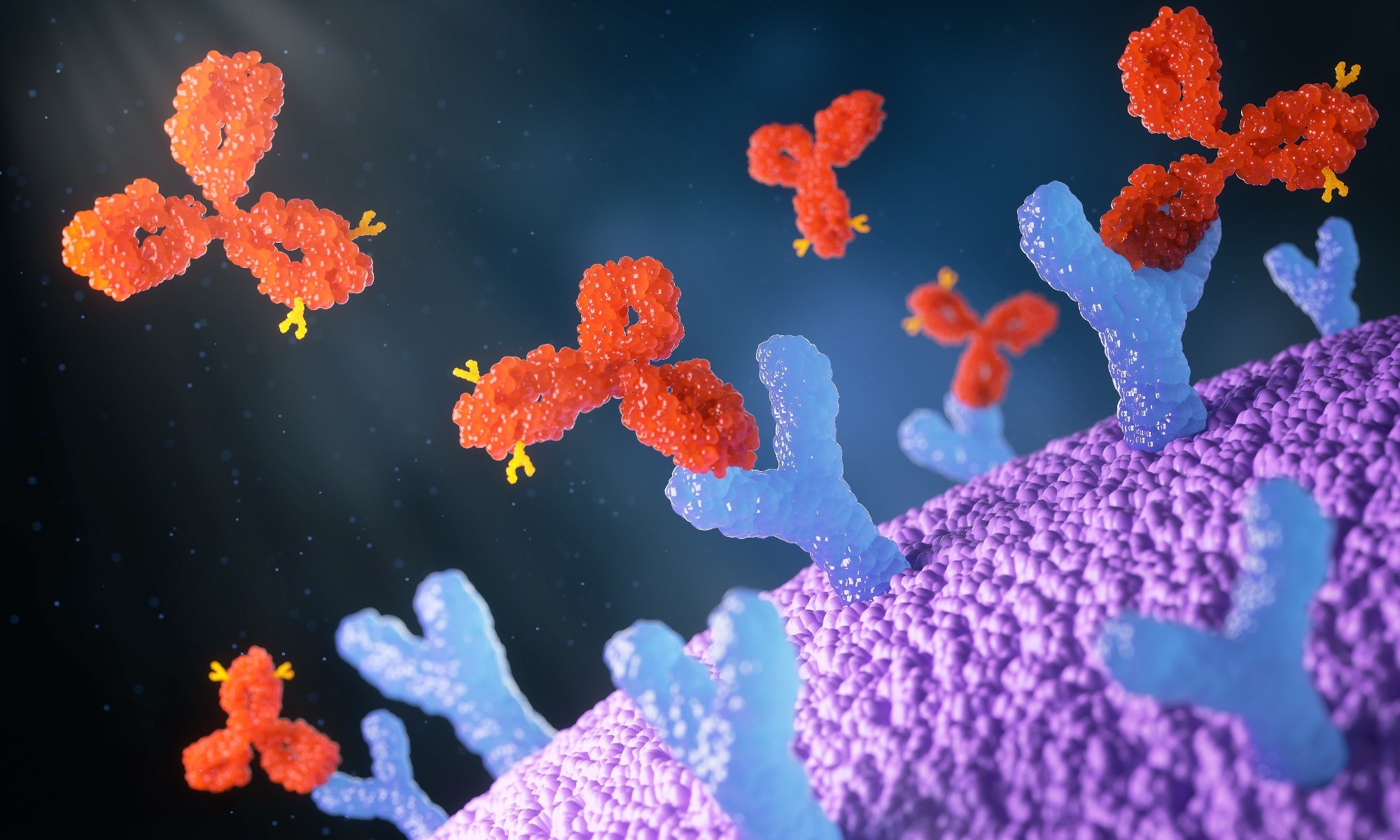
Image Credit: Anusorn Nakdee/Shutterstock.com
In early development, multiple assays are often used to screen and characterize anti-drug antibodies. From a technology and workflow perspective, how are these strategies typically streamlined as programs move from early clinical studies into larger registrational trials, and where do you see the biggest opportunities for automation in that transition?
As development transitions from early clinical studies to large registrational trials, bioanalytical strategies are typically streamlined by shifting from exhaustive characterization of parameters at numerous timepoints to a focused risk-based approach that prioritizes clinically impactful data and typically fewer sampling times.
This process often involves leveraging early clinical datasets, specifically anti-drug antibody (ADA) titers, pharmacokinetic (PK) trough concentrations, and pharmacodynamic (PD) biomarkers, as surrogate measurements to justify the reduction of stand-alone neutralizing antibody (NAb) assays.
From an automation workflow perspective, a significant opportunity exists to invest in the implementation of automated robotic platforms that allow for testing of large numbers of samples without intensive human analyst involvement
Traditional laboratory NAb assays are known to be resource-intensive and challenging to scale. What are the main technical or operational bottlenecks that currently constrain their use in large registrational trials?
Traditional laboratory NAb assays, particularly cell-based formats, present significant technical challenges because they require specialized cellular maintenance (human cell line culture) and involve a high degree of operational complexity compared to standard binding assays.
Operationally, these formats suffer from low throughput and high inter-assay variability, making them difficult to scale for the thousands of samples generated in global registrational trials. In addition, the need for a custom and unique NAb assay format for each therapeutic significantly limits the amount of automation that can be implemented. Thus, NAb assays generally require human analysts with advanced technical skills.
Collectively, these constraints make traditional NAb testing a resource-intensive and time-consuming component of late-stage development, driving efforts toward more scalable and data-driven alternatives.
Your work on a machine learning-based “virtual NAb assay” aims to predict neutralizing antibody status in patients. What types of inputs and features are you using to train these models, and how do you establish a robust ground truth for NAb positivity or negativity to supervise the algorithms?
To train the virtual NAb assay model, we use a multi-dimensional set of inputs that includes anti-drug antibody (ADA) titers, pharmacokinetic (PK) data, and pharmacodynamic (PD) biomarker response (efficacy). Over time, the model can also take in clinical covariates like patient weight, baseline disease severity, use of concomitant medications, and other patient-level metadata. The key is that the machine learning model shouldn’t just look at a single time point, but at the overall patient profile. For example, things like how long ADA persists and how strong the ADA response is (titer) are often closely linked to whether neutralizing activity is present.
To build a robust supervised dataset, validated laboratory NAb assays (typically cell-based reporter assays or competitive ligand-binding (CLB) formats) are performed on a representative subset of patients in the trial. These results, together with PK and PD data, give a clear readout of a patient’s neutralizing antibody status (positive or negative), which is then used to train and check the model.
For drugs with a well-understood mechanism of action, you can also look at clinical outcomes to support this. For example, a complete loss of PD effect or a clear drop in drug exposure that lines up with the emergence of high-titer neutralizing antibodies.
When building a predictive model for something as complex as neutralizing antibody status, how do you handle defining patient status for training, and what modeling approaches have worked best?
This is a key question for both machine learning models and how humans interpret the data. In practice, the way patient status is defined in the training set, based on human judgment, has a direct impact on what the model learns and ultimately predicts.
What has worked best is focusing on overall patient status rather than isolated data points. Recurrent neural networks (RNNs) are particularly useful here because they can follow how things change over time and pick up on the most relevant patterns in the dataset. This tends to be more reliable than simpler regression approaches that look at single timepoints in isolation, like a basic linear regression model.
What are you seeing so far in terms of model performance, and what factors seem to drive success or failure?
At this stage in model development, the goal is for the model to predict NAb status based on training with patient status classifications. Early results suggest that how NAb status is defined in the training set is the most important factor. If a human can clearly and consistently classify patient status, the model is generally able to learn and reproduce those patterns.
However, when the classification itself is unclear or inconsistent based on the available inputs, the model cannot perform better than the data it was trained on. That limitation is still informative - if the model cannot reliably predict NAb status from the dataset, it likely means there isn’t enough supporting surrogate assay data to justify removing laboratory-based, cell-based NAb testing.
From a robotics and automation angle, how do you envision a virtual NAb assay being integrated into existing immunogenicity workflows, for instance, as an in-silico triage layer to reduce physical NAb testing, as a decision-support tool embedded in automated lab pipelines, or as a candidate replacement for certain use-cases?
At this stage of implementation, the virtual NAb assay would serve as one part of the decision-making process for eliminating physical NAb assay testing. If a virtual NAb assay cannot be implemented successfully, it suggests that physical NAb testing cannot be removed.
On the other hand, if a virtual NAb assay can be developed, it becomes one piece of evidence used to support a request to Health Authorities to eliminate lab-based testing.
Looking ahead, what steps are needed to build broader confidence in machine learning–driven approaches for immunogenicity assessment across the biopharmaceutical industry?
As with all testing in the drug development process, there is a partnership between pharmaceutical developers and Health Authority experts. In general, implementing new technologies or methods involves generating data that includes both existing approaches and the proposed new ones.
Adoption of virtual NAb assay machine learning algorithms will follow this same path, with physical testing compared directly to virtual assay results across multiple clinical trials. This side-by-side approach helps establish confidence and supports broader acceptance of the new methods across different programs.
Finally, for both patients and sponsors, where do you see the most compelling impact of virtual NAb assays and AI-enhanced immunogenicity testing - whether in accelerating clinical development, optimizing trial design, personalizing dosing decisions, or improving access to effective biologic therapies at scale?
The most impactful outcome would be a more robust understanding of immunogenicity impact and the factors that drive its prediction. Currently, assessment and prediction of immunogenicity and NAb status rely on a limited set of clear signals (e.g., PK and PD). However, with machine learning and AI-assisted analysis, all collected metadata can be brought into the analysis.
This allows for a more complete view and can help uncover patient-specific factors that may limit drug efficacy. It also creates the opportunity to understand immune response at the individual patient level, rather than relying on averages across all patients treated with a given therapeutic.
About Dr. Rob Dodge
 Dr. Rob Dodge has worked in the pharmaceutical industry for over 30 years, with experience spanning CMC manufacturing of biologics and bioanalytical testing of protein drugs and biomarkers. He is currently an independent Bioanalytical Consultant, focusing on the application of Artificial Intelligence and Machine Learning to regulated bioanalysis.
Previously, Dr. Dodge served as Director of Immunochemistry and Cell Biology at Pharmanet Development Group, a contract research laboratory specializing in bioanalytical assay development and sample testing. His team developed assays for drug quantitation, immunogenicity, and biomarker detection. Prior to that role, he was co-founder and Laboratory Director at Princeton Bio Lab, a GLP/GMP-compliant contract research organization specializing in cell-based assays for protein therapeutics, which was acquired by Pharmanet in 2007.
Dr. Dodge also held senior positions, including as Director of Bioanalysis at Bristol-Myers Squibb, and later served as Global Lead of Scientific Governance at Novartis.
He remains an active volunteer, teaching international courses on bioanalysis and immunogenicity to industry scientists, regulatory authority representatives, and academic participants, as well as serving in leadership roles within the American Association of Pharmaceutical Scientists.
Disclaimer: The views expressed here are those of the interviewee and do not necessarily represent the views of AZoM.com Limited (T/A) AZoNetwork, the owner and operator of this website. This disclaimer forms part of the Terms and Conditions of use of this website.