What do ancient Martian rocks and Earth’s climate history have in common? NASA’s Perseverance rover just found the mineral clues that could rewrite what we know about life-friendly environments on Mars.
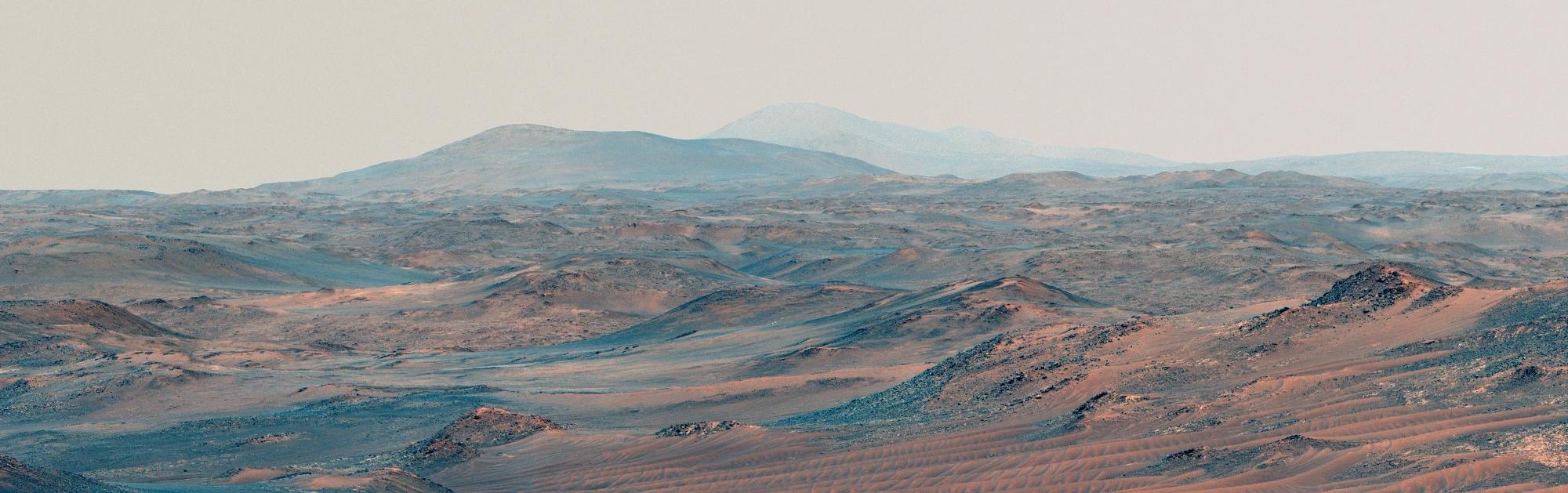
Image Credit: NASA/JPL-Caltech/ASU/MSSS
Nearly five years after landing on Mars, NASA’s Perseverance rover is showing no signs of slowing down. According to a recent NASA update and a study published in Science, the rover has been officially cleared to keep exploring until at least 2031. With almost 25 miles (40 kilometers) under its belt, it’s not just the most mobile Mars rover ever, it's also delivering some of the most compelling scientific findings to date.
Two key factors are keeping the mission on track: a powerful autonomous navigation system that lets the rover handle Mars’s tough terrain, and a breakthrough discovery involving olivine - a mineral that’s helping scientists piece together the planet’s ancient history.
Built for the Long Haul
Perseverance landed in Jezero Crater back in 2021, tasked with a big goal of searching for signs of ancient microbial life and collecting rock samples that could one day make their way back to Earth.
Jezero wasn’t chosen at random. From orbit, it looked like it used to be home to a lake and river delta, which is exactly the kind of place that might have once supported life.
Since then, the rover has covered an impressive amount of ground. It’s crossed the crater floor, navigated the dried-up delta, and is now making its way along the inner edge of the crater. The terrain hasn’t been easy, but every new rock, ridge, and sediment layer is another clue in the story of Mars’s past.
And Perseverance has done all this while acting as a fully mobile science lab, collecting, analyzing, and storing rock cores as it goes.
Smarter Driving, Longer Lifespan
Behind Perseverance’s long mission is some seriously smart engineering. Teams at NASA’s Jet Propulsion Laboratory have been running extensive tests back on Earth to make sure the rover’s core systems, like the rotary actuators that drive and steer its wheels, are durable. As of yet, everything seems to be holding up well, and the rover has enough life left to travel another 37 miles (60 kilometers). That clears the path for operations to continue well into the next decade.
But staying functional is only one aspect. What really sets Perseverance apart is how well it can handle Mars on its own.
The rover’s Enhanced Autonomous Navigation system, or ENav, gives it a kind of foresight that previous missions didn’t have. Instead of inching forward and waiting for instructions from Earth, Perseverance looks ahead, up to 50 feet (15 meters), and makes its own decisions about how to move. It scans the terrain, checks for hazards, and plans a safe path in real time, all while staying within boundaries set by engineers.
That autonomy means it can cover more ground in less time and reach areas that would have been too risky for earlier rovers. It's a game-changer not just for this mission, but for future missions to Mars and beyond, where real-time communication just isn’t possible.
A Window into Mars’s Deep Past
While the rover’s systems keep it moving, its science team is focused on what it’s uncovering, and one of the most exciting discoveries yet comes from a spot called the Margin Unit. There, Perseverance drilled into rocks rich in olivine, a mineral that forms deep inside planets under intense heat. Finding it at the surface tells scientists they’re looking at ancient, deeply buried material that's since been exposed by erosion.
According to the new study, the olivine likely formed when magma intruded into the crust and cooled very slowly underground. Over time, that rock was pushed up and worn down, revealing it at the surface. But the story doesn’t stop there.
Once exposed, the olivine interacted with two key elements: groundwater from Jezero’s ancient lake system and carbon dioxide from the Martian atmosphere. This chemical interaction led to the formation of carbonate minerals, an exciting development for astrobiologists. Carbonates have the potential to preserve signs of past life and record clues about a planet’s ancient climate and chemistry.
This combination of olivine and carbonate was a major reason we chose Jezero Crater in the first place... These minerals are like time capsules. They help us understand how the planet evolved and whether it might have supported life.
Ken Williford, Scientist on the Perseverance Team and Lead Author
As Perseverance climbed a 1312-foot (400-meter) slope in the Margin Unit, the team also noticed a shift in how the rocks had been altered.
Lower down, where water once flowed, the olivine showed clear signs of chemical change. Higher up, it looked more like untouched, original magma rock. That pattern gave researchers a kind of vertical timeline, from wetter, more dynamic conditions at the bottom to drier, more volcanic ones at the top.
And there’s more.
In another part of the crater, the rover collected a sample from a rock called “Cheyava Falls” that might contain a biosignature, a chemical marker that could point to ancient microbial life. It’s still early, but this sample is one of the top candidates for deeper analysis once NASA brings these materials back to Earth.
What’s Next for Perseverance?
Five years in, Perseverance is proving to be a platform for discovery that continues to deliver. With its advanced navigation system, rugged design, and long mission timeline, the rover is set to cover even more ground and gather even more valuable samples.
Its recent work in the Margin Unit has already added a vital chapter to Mars’s story.
As the rover heads toward a new region known as Lac de Charmes, scientists are eager to see what comes next, especially as it continues to collect olivine-rich samples that could further refine our understanding of Mars’s deep past.
NASA Perseverance Mars Rover’s Record-Breaking Drive
Disclaimer: The views expressed here are those of the author expressed in their private capacity and do not necessarily represent the views of AZoM.com Limited T/A AZoNetwork the owner and operator of this website. This disclaimer forms part of the Terms and conditions of use of this website.