Think robots just cut costs? This study reveals they’re also unlocking new credit lifelines for manufacturers by boosting trust, speed, and resilience.
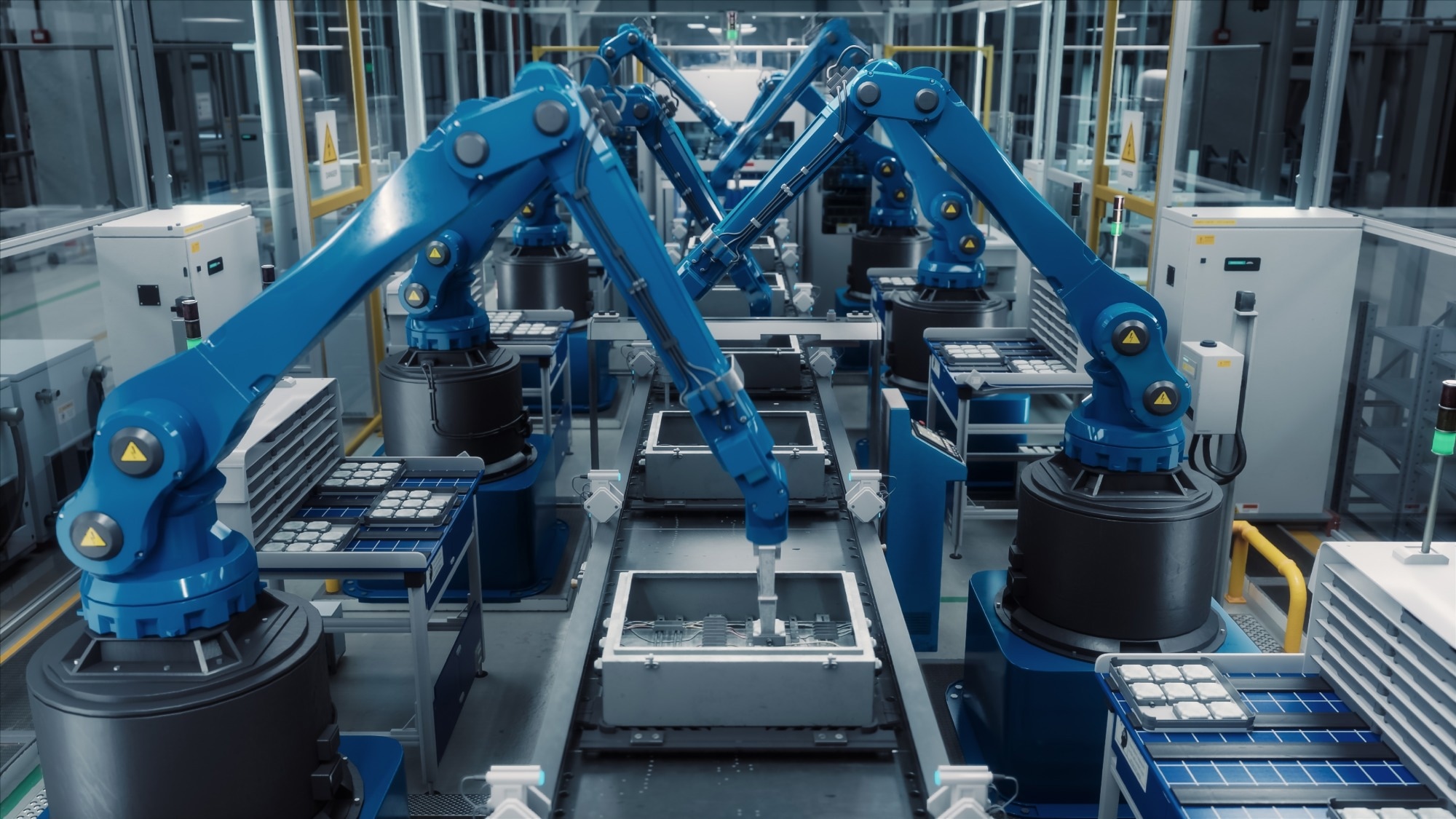
Study: The impact of industrial robot adoption on firm’s trade credit. Image Credit: Gorodenkoff/Shutterstock.com
A new study published in Humanities and Social Sciences Communications reveals a lesser-known benefit of industrial robots: they’re helping manufacturers get better access to trade credit.
By analyzing data from 2011 to 2019, researchers found that firms using robots weren’t just becoming more efficient; they were also earning more trust from suppliers, thanks to stronger supply chains and more stable operations. That trust translated into suppliers being more willing to offer credit, particularly for firms operating in tech-driven, competitive, and privately owned environments.
Why This Matters
We already know automation and AI are changing the way factories run, making them faster, more precise, and more productive. But there’s been a big gap in understanding how this shift affects a company’s finances, especially in countries like China, where bank loans can be hard to get.
For many manufacturers, trade credit (essentially, buying now and paying later) is a key lifeline.
This study shines a light on how adopting robots can help companies earn more of that trust-based credit. It goes beyond the usual focus on costs and labor to show how automation can actually shape financial relationships and boost business resilience.
The Logic Behind it
The researchers had a straightforward question: Does using industrial robots make suppliers more willing to extend credit?
Their answer? Yes - and here’s why:
- Robots make supply chains more reliable. With automation, companies can better handle disruptions, adjust to market changes, and use real-time data to predict and prevent problems. That lowers the risk for suppliers.
- Operations get faster and smoother. Robots improve productivity, reduce errors, and speed up product development. All of that makes a company more competitive and financially healthier.
- Robots send a message. When a company invests in automation, it signals stability, innovation, and long-term thinking. That kind of image helps ease concerns suppliers might have about getting paid on time.
To test these ideas, the researchers looked at a large sample of Chinese manufacturing firms over nine years. They measured trade credit based on what firms owed to suppliers, and tracked robot adoption by firm and industry. Their analysis took into account things like company size, profitability, and ownership structure to isolate the impact of automation.
Results and Analysis
The analysis revealed a consistent and statistically significant relationship between robot adoption and increased access to trade credit. This result remained robust across multiple specifications and validation techniques. The researchers tested the stability of their findings by:
- Using alternative measures of both robot adoption and trade credit
- Applying lagged variables to address potential timing effects
- Modifying the sample period to rule out time-specific biases
To further address endogeneity concerns, such as the possibility that firms with better access to credit might be more likely to adopt robots, the study employed several advanced econometric methods:
- Instrumental variable analysis, using US industry-level robot penetration as an external instrument
- Propensity score matching (PSM), to ensure balanced comparisons between firms with similar characteristics
- Difference-in-differences (DID) models, using China’s Intelligent Manufacturing Development Plan (2016–2020) as a quasi-natural experiment
Additional analysis confirmed the underlying mechanisms. Robot adoption improved trade credit access by enhancing supply chain resilience, increasing asset efficiency (as measured by total asset turnover), and reducing financing constraints (as indicated by the Whited and Wu index).
However, the effects were not uniform across all firms. The positive impact was notably stronger in:
- High-tech firms, particularly those with management experienced in information technology or a higher proportion of technical staff
- Non-state-owned enterprises, which often have greater operational flexibility and responsiveness
- Industries with intense market competition, where automation serves as a visible signal of stability and efficiency to suppliers
So What’s the Takeaway?
This research adds a new layer to how we think about automation. It’s not just about doing things faster or cheaper. It’s also about building credibility, reducing risk, and opening up financial opportunities, especially in environments where formal financing is limited.
For manufacturers, particularly those in emerging markets, this suggests a smart automation strategy can do double duty when it comes to improving performance and strengthening supplier relationships. For policymakers, it offers a strong case for supporting intelligent manufacturing - not just for productivity, but for financial resilience too.
Journal Reference
Ge, Y., Zhang, R., Zhu, H., & Wang, Q. (2026). The impact of industrial robot adoption on firm’s trade credit. Humanities and Social Sciences Communications. DOI:10.1057/s41599-025-06476-2. https://www.nature.com/articles/s41599-025-06476-2
Disclaimer: The views expressed here are those of the author expressed in their private capacity and do not necessarily represent the views of AZoM.com Limited T/A AZoNetwork the owner and operator of this website. This disclaimer forms part of the Terms and conditions of use of this website.