Achieving net zero emissions by 2050 and improving competitiveness by reducing production costs is the dual objective set by the aeronautical industry. This goal is currently hampered by the dependence on heavy, expensive, and inflexible machinery in manufacturing processes.
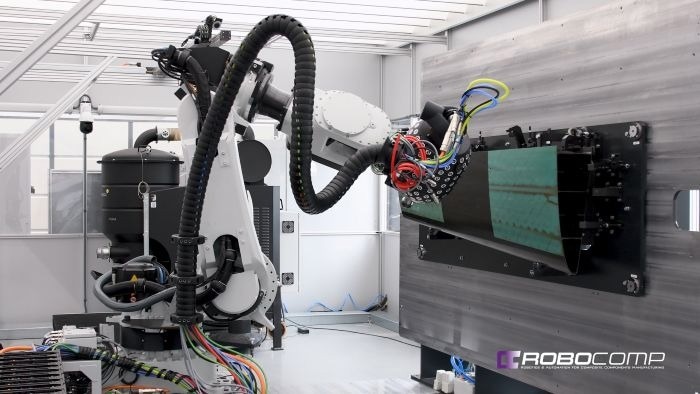 Image Credit: IDEKO
To address this situation, the technology center IDEKO has contributed to the development of a new generation of flexible, sensorized and connected robotic cells within the framework of the ROBOCOMP project. Led by the DANOBAT cooperative, this initiative aims to transform the manufacturing processes of aeronautical components.
"The new solutions are designed to replace traditional systems and automate critical machining operations on carbon fiber parts, such as milling, drilling and trimming, in order to boost efficiency and reduce energy consumption," explains the center's researcher, Asier Barrios.
This technological transition responds to specific operational limitations of current machinery. While large traditional equipment usually machines parts in a horizontal position, restricting access to many components with complex geometries, ROBOCOMP's proposal introduces the ability to work on parts placed vertically.
This feature also facilitates production scalability, allowing plants to adapt quickly to new manufacturing requirements.
Precision and Monitoring
The contribution of the technology center, a member of the Basque Research and Technology Alliance (BRTA), has been essential in providing intelligence to these new solutions. Specifically, IDEKO’s scientific work has focused on increasing robot precision through improvements in mechatronics and system calibration, a critical factor in meeting the strict requirements of the aerospace sector.
In addition, the center has equipped these cells with the intelligence required to operate autonomously. Through artificial vision systems and sensors, the robots are able to see and analyse the status of the manufacturing process as it takes place. This digitalization allows the process to be monitored in real time, instantly identifying possible errors or deviations to ensure the quality of the part.
Sustainability has also been addressed within the initiative, through the implementation of technologies that optimize the machining of composite materials to ensure more efficient use of energy and resources.
Transfer to Other Sectors
The success of the initiative has been supported by a solid industrial consortium covering the entire value chain. Alongside the leadership of DANOBAT and the scientific knowledge of IDEKO, the project has benefited from the participation of Airbus, which has contributed the end user's vision and requirements; Robotnik, a European leader in mobile robotics; and Industrial Olmar, a company dedicated to the manufacture of autoclaves and pressure equipment.
This collaboration has enabled the development of technologies that position the Basque and Spanish industrial fabric at the forefront of advanced manufacturing, with a clear drive towards other markets.
The technologies developed at ROBOCOMP will be transferable to other machining-intensive sectors, such as automotive, energy and capital goods, thereby strengthening the competitiveness of small and medium-sized enterprises and opening up new business opportunities in the field of advanced services and smart maintenance.
The project has been funded by the Centre for the Development of Industrial Technology (CDTI) through the Aeronautical Technology Programme (PTA), a grant framed within the Recovery, Transformation and Resilience Plan of the Government of Spain.