Researchers have developed a life-sized biomimetic robotic joint embedded with Type I receptor-like sensors and demonstrated that joint receptors alone can estimate joint position with less than 2° error. This challenges the long-standing belief that they function solely as limit detectors.
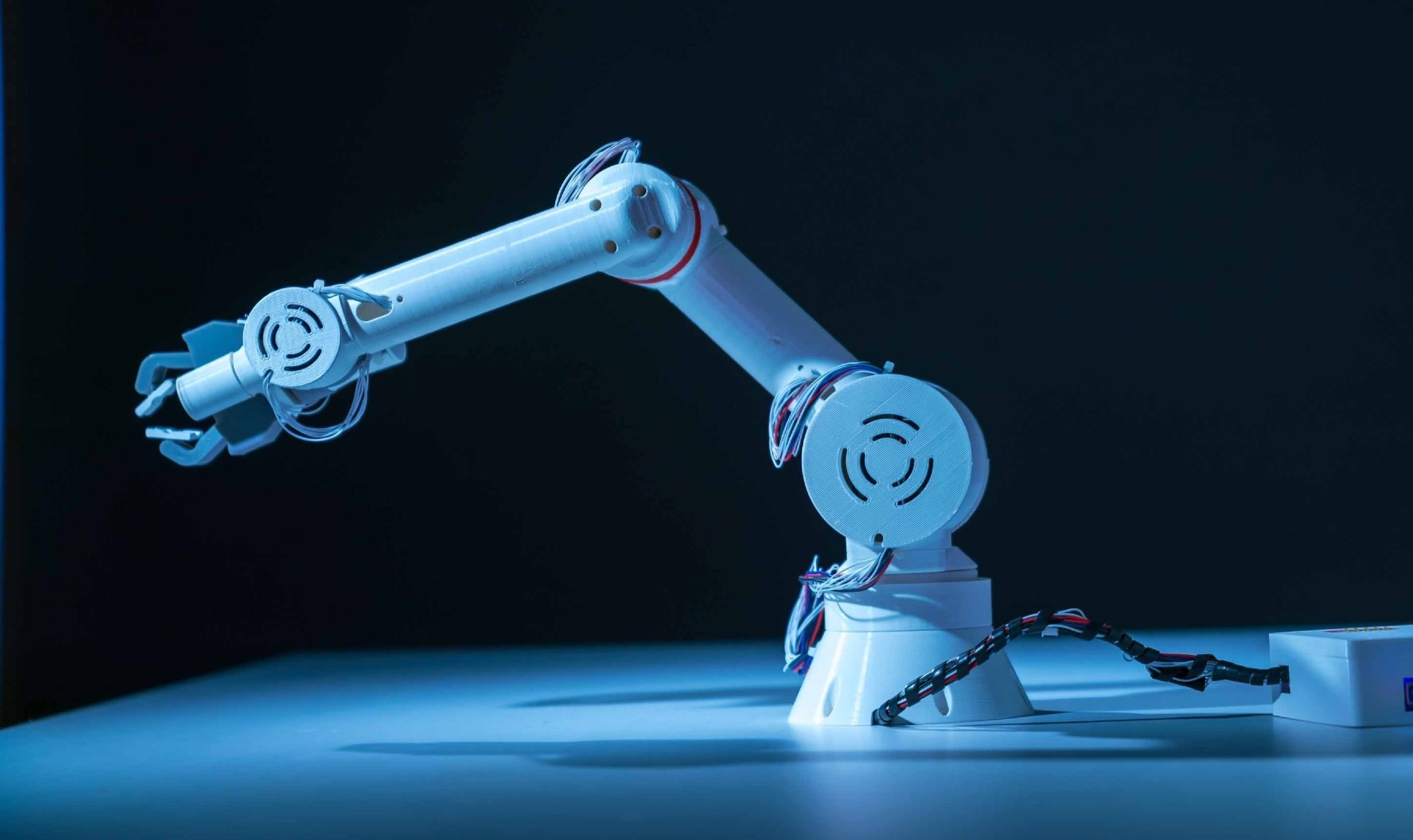
Study: Exploring the proprioceptive potential of joint receptors using a biomimetic robotic joint. Image Credit: luchschenF/Shutterstock.com
In an article published in the journal Scientific Reports (Nature Portfolio), researchers reexamined the traditional view that joint receptors only detect extreme joint angles.
Using a robotic joint designed to mimic Type I receptors, they showed that these receptors enabled precise proprioceptive sensing with under two degrees of error. The findings suggest joint receptors may play a more significant role in proprioception than previously assumed, with implications for understanding sensory disorders and highlighting the value of biomimetic robotics in neuroscience research.
Background
Proprioception, the sense of body position and movement, has historically been attributed primarily to muscle spindles. Joint receptors, by contrast, were largely dismissed as simple limit detectors after early studies found that proprioception persisted even when joints were removed or anesthetized.
More recent neuroanatomical evidence, however, shows that joint receptors are widely distributed throughout the capsule, including mid-capsular regions. This broader anatomical presence raises the possibility that their functional contribution has been underestimated.
Isolating the true proprioceptive capacity of joint receptors in vivo is challenging due to sensory integration and compensatory mechanisms. To address this limitation, the researchers employed a biomimetic robotic joint embedded with Type I receptor–mimicking sensors, coupled with a neural network model. This controlled system allowed them to quantitatively test whether joint receptors alone could achieve precise positional sensing.
Design and Implementation
The team adopted a biomimetic robotics approach to directly investigate whether joint receptor-like sensors could independently support proprioceptive sensing.
A physical synovial ball joint was constructed to replicate key mechanical and sensory features of biological joints. Rather than replicating a specific anatomical structure, the design served as a generalized model to explore fundamental proprioceptive potential.
The structural “bones” consisted of aluminum frames and carbon fiber–reinforced polyamide. Cartilage components were fabricated from elastic resin using stereolithography (SLA) 3D printing.
The joint capsule was built from layered natural rubber latex to a thickness of approximately 2 mm. Within this fibrous membrane, 60 strain gauge sensors were manually embedded to mimic Type I joint receptors. These were distributed across mid-capsular, transitional, and bone attachment regions. Unlike human joints, however, the distribution was uniform rather than anatomically concentrated near attachment sites.
Sensor outputs were processed via custom circuit boards using Wheatstone bridge configurations and instrumentation amplifiers with 1000× gain. Data acquisition was handled by Arduino MEGA units. True joint angles were measured using an Intel RealSense T265 Visual SLAM system integrated within the robot operating system (ROS) framework. Although minor measurement drift (0.2–0.6 % of full range) was present, it was considered acceptable for the study’s purposes.
To map sensor inputs to joint pose outputs, the researchers implemented a four-layer fully connected neural network inspired by the dorsal column–medial lemniscal pathway. The network accepted 60 strain-gauge inputs and produced six-dimensional joint-pose outputs.
Hidden layers contained 128, 64, and 32 neurons with rectified linear unit (ReLU) activation. Training was conducted in PyTorch using mean squared error (MSE) loss and Adam optimization over 100 epochs.
Importantly, the team chose a relatively simple feedforward architecture rather than more complex time-series models. This decision allowed them to test whether accurate proprioceptive estimation could emerge without assuming advanced neural dynamics. Reproducibility was confirmed through independent data reacquisition and retraining.
To assess redundancy, permutation importance analysis was used to iteratively remove influential sensors and evaluate performance degradation across ten independent trials, with statistical comparisons conducted using Welch’s t-test and Holm correction.
Functional Validation
The robotic joint successfully reproduced physiological ranges of motion: approximately 90° bending in all directions, 45° axial twisting, and 1 cm push-pull displacement.
Even when data from disconnected sensors were included to simulate biological damage, the model achieved mean angular errors below two degrees for both bending and twisting. These results demonstrate that Type I–like receptors alone can support precise proprioceptive estimation.
Redundancy analysis revealed statistically significant increases in mean error beginning at approximately 25.7–28.6 % sensor reduction. Maximum errors rose significantly near 50 % reduction. Notably, proprioceptive function was partially preserved even after nearly half of the initially functional receptors were lost (40 of 60 sensors were operational at the start of redundancy testing), underscoring robust redundancy.
Shapley additive explanations (SHAP) analysis further showed that receptors critical for bending and twisting near joint limits were concentrated around bone attachment and transitional regions, closely mirroring patterns observed in human joints. For push-pull movements, mid-capsular receptors also played a substantial role. These patterns support the idea that joint receptors contribute more broadly to proprioception than previously believed.
Interpretation and Neurobiological Implications
By taking a constructive biomimetic approach, the study directly addressed a long-standing question: Can joint receptors alone support proprioception? This question is difficult to test in biological systems due to multisensory integration and neural adaptation.
Despite differences in materials and anatomy, the robotic joint achieved positional accuracy within the range reported for humans (approximately 2–3° in prior studies). Redundancy testing showed that the function persisted until nearly 50 % receptor loss. Together, these findings challenge the traditional view of joint receptors as mere limit detectors and suggest they possess meaningful proprioceptive capacity.
The authors acknowledge several important limitations.
The capsule material was isotropic latex rather than anisotropic collagen tissue. Receptor sizes were larger than their biological counterparts. Only Type I receptors were modeled, excluding other receptor classes involved in rapid motion detection. Additionally, the simplified neural network did not incorporate biological adaptation, synaptic dynamics, or multisensory integration. These factors should be considered when interpreting the results.
The framework also generates new hypotheses for conditions such as hereditary sensory and autonomic neuropathies type III (HSAN III), where preserved elbow proprioception despite spindle loss may reflect compensatory joint receptor function. The authors further speculate that developmental or evolutionary differences in neural weighting could shape the relative contributions of muscle spindles and joint receptors.
Conclusion
This study moves beyond the question of whether joint receptors contribute to proprioception and instead quantifies their potential. In a controlled biomimetic system, receptor-like inputs alone supported sub–2° positional accuracy and maintained function despite substantial sensor loss.
While not a full biological replica, the model suggests joint receptors may play a more active and resilient role in proprioception than traditionally assumed. It also highlights how biomimetic robotics can help isolate and test long-standing neurophysiological assumptions.
Journal Reference
Miki et al. (2026). Exploring the proprioceptive potential of joint receptors using a biomimetic robotic joint. Scientific Reports, 16(1). DOI:10.1038/s41598-025-27311-3. https://www.nature.com/articles/s41598-025-27311-3
Disclaimer: The views expressed here are those of the author expressed in their private capacity and do not necessarily represent the views of AZoM.com Limited T/A AZoNetwork the owner and operator of this website. This disclaimer forms part of the Terms and conditions of use of this website.