Researchers have developed an elephant-inspired robotic trunk that can quickly shift between soft and rigid states, allowing it to handle delicate tasks while still supporting significant weight.
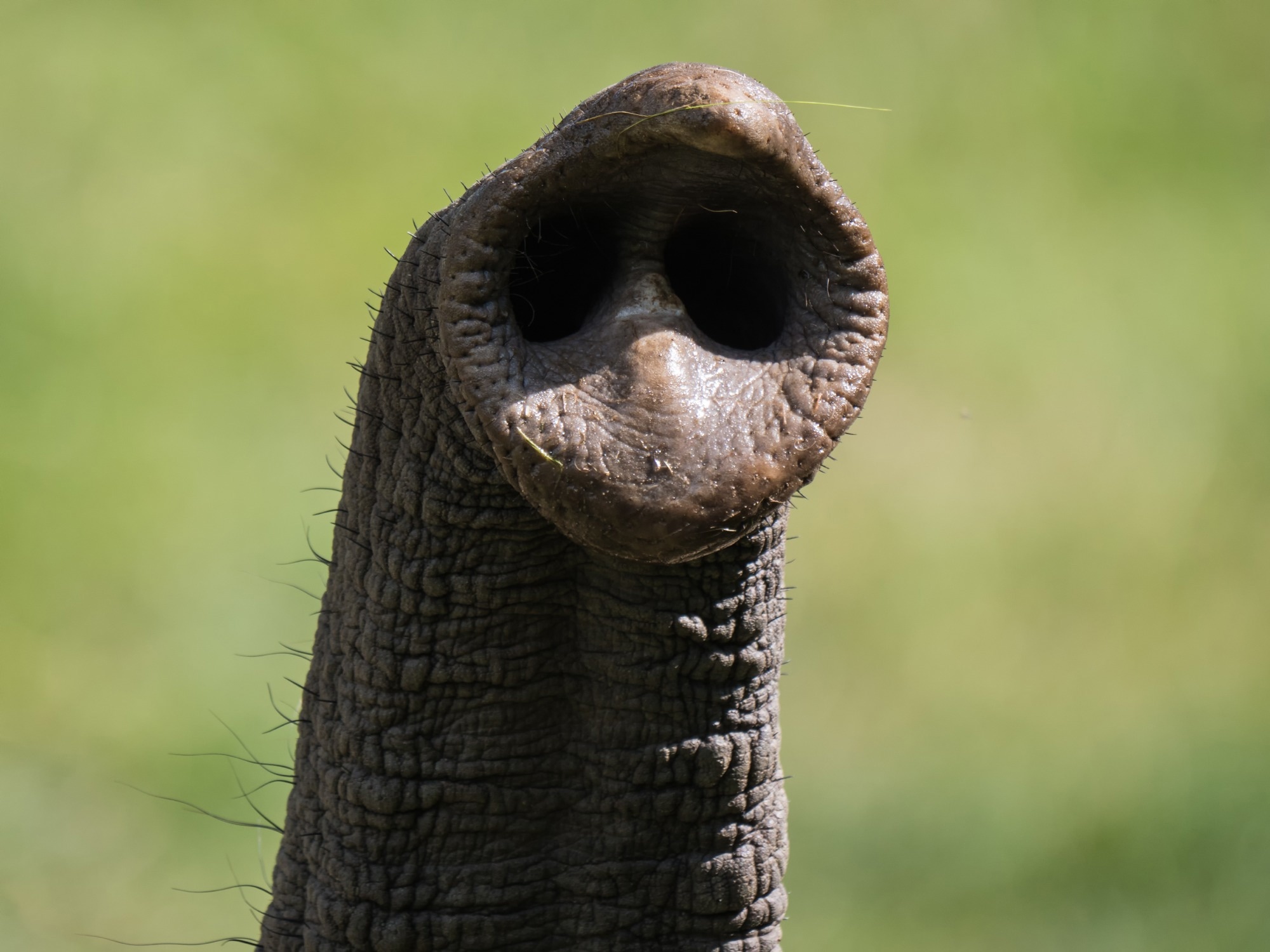
Study: A bionic robotic trunk with tensegrity-enabled elephant-comparable stiffness variability for assisted daily living. Image Credit: dreakrawi/Shutterstock.com
Published in Nature Communications, the team introduced a bionic robotic trunk (BRT) designed to mirror the versatility of an elephant’s trunk. What sets this system apart is its ability to rapidly and continuously adjust stiffness, overcoming a long-standing limitation in soft robotics. As a result, the trunk can move through tight spaces with precision and then stiffen to lift or stabilize objects.
The device has been proven to assist a post-stroke participant with everyday activities such as opening doors and retrieving items.
Background
This advance builds on years of research aimed at replicating the unique combination of strength and dexterity found in elephant trunks. Earlier approaches, such as research into mechanical locking systems, pneumatic jamming, and phase-change materials, have struggled to balance flexibility with responsiveness. While some of these designs allowed for stiffness control, they tended to rely on bulky hardware or responded too slowly for practical use.
To move past these limitations, researchers have been leaning towards the idea of cable-driven systems inspired by biological muscle interactions. However, these designs typically fell short because deformation occurred mainly within the actuators rather than the structure itself, limiting energy storage and overall stiffness performance.
Fabrication and Experimental Methodology
Against this backdrop, the team developed a new approach based on a cable-driven tensegrity structure. By distributing forces throughout the structure, the design enables more efficient energy storage and faster stiffness transitions.
The trunk itself is built from 3D-printed aluminum frames connected by springs to form a lightweight yet stable skeleton. Thin cables threaded through the structure control its movement, while six servo motors adjust tension to produce different shapes and stiffness levels. To ensure precise measurement, the researchers used a motion capture system to track bending angles and length changes during operation.
For real-world testing, the trunk was mounted on an electric wheelchair alongside a robotic gripper. A joystick and rotary control allowed the user to operate the system, which was powered by a battery capable of up to 10 hours of continuous use.
Experimental Results and Validation
With the system in place, testing focused on how effectively it could balance flexibility and strength. The results showed a wide and continuous stiffness range, enabling the trunk to switch from soft, compliant motion to a rigid, load-bearing state in just over one second.
This capability translated into both precision and durability. The trunk was able to navigate confined spaces and puncture a balloon, while also supporting objects ranging from a fragile egg to a 2.17 kg load. In dynamic tests, it demonstrated rapid responsiveness. For example, an egg that cracked under impact in a soft state remained intact when the system stiffened in time.
Importantly, the system was also able to adapt to gradual loading conditions, automatically adjusting its structure to maintain stability without requiring constant user input.
When integrated into the wheelchair setup, these capabilities enabled the participant to complete a range of daily tasks, including retrieving items, disposing of waste, and handling multi-step activities like laundry. The system reduced both physical effort and cognitive strain, highlighting its practical value.
Conclusion
Overall, the study presents a step forward in stiffness-tunable robotics. By combining a tensegrity framework with cable-driven actuation, the BRT achieves a level of performance that more closely matches biological systems, offering both dexterity and strength in a single device.
While trade-offs like reduced length at higher stiffness levels remain, the integration with a mobile platform helps maintain functional reach. Challenges like long-term cable durability still need to be addressed, but all-in-all, the system establishes a strong foundation for future assistive technologies.
Journal Reference
Zhang et al. (2026). A bionic robotic trunk with tensegrity-enabled elephant-comparable stiffness variability for assisted daily living. Nature Communications. DOI:10.1038/s41467-026-70380-9
https://www.nature.com/articles/s41467-026-70380-9
Disclaimer: The views expressed here are those of the author expressed in their private capacity and do not necessarily represent the views of AZoM.com Limited T/A AZoNetwork the owner and operator of this website. This disclaimer forms part of the Terms and conditions of use of this website.