Underwater gliders use real-time acoustic processing to follow whale movements. This approach enables long-duration, low-impact monitoring of marine ecosystems and improves behavioral research.
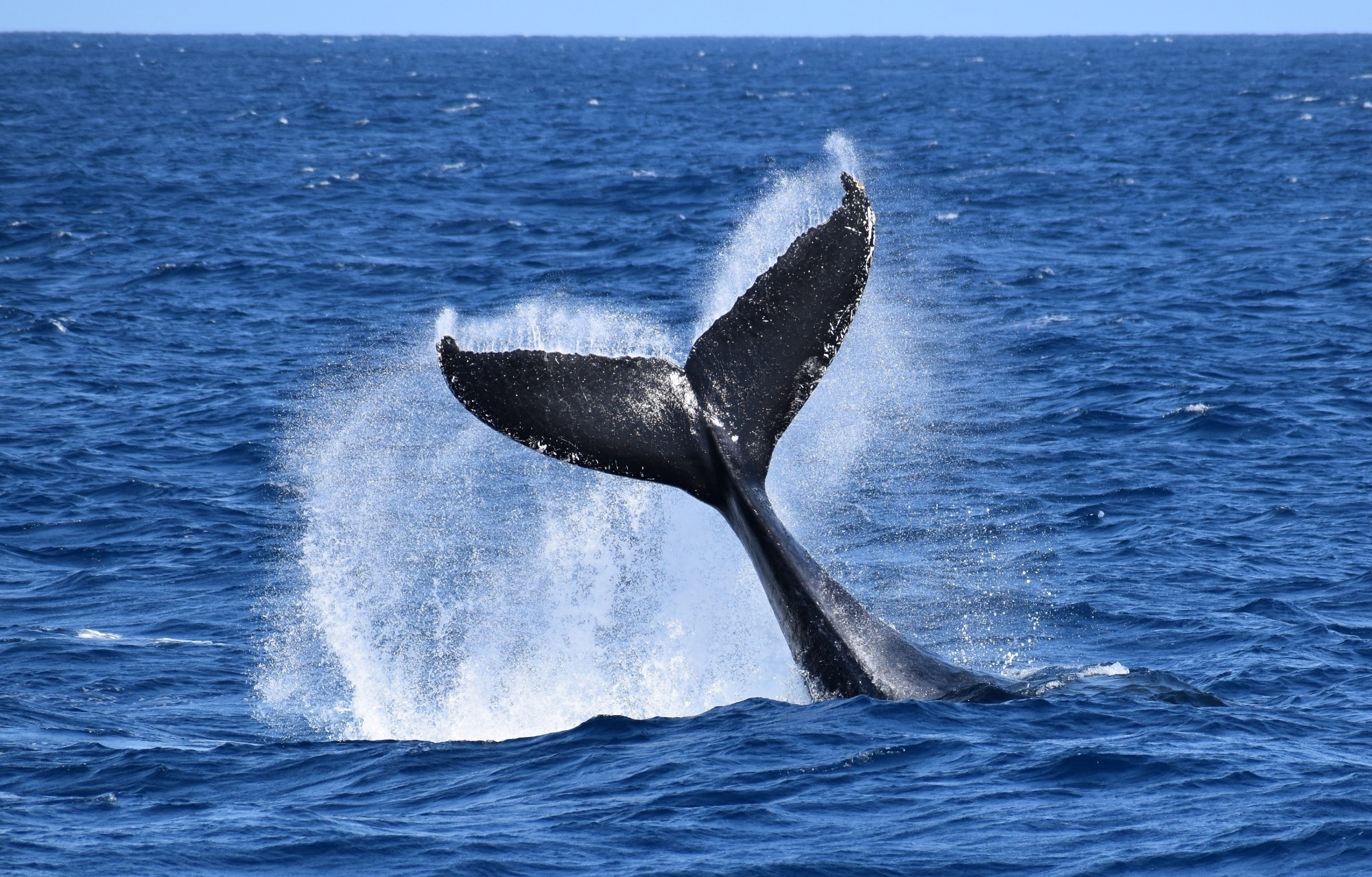 Study: Backseat driver architecture to passively follow sperm whales by their voices with an autonomous underwater glider. Image Credit: MPRshots/Shutterstock
In an article published in the journal Nature, researchers presented a system for tracking sperm whales using an underwater glider equipped with a hydrophone array. A “backseat driver” processes whale echolocation clicks in real time, estimating their direction to autonomously steer the glider toward the whales. The goal is long-term, passive acoustic monitoring with minimal disturbance to whale behavior.
Short-Term Monitoring to Long-Term Tracking
To study sperm whale behavior and support conservation, researchers use passive acoustic monitoring (PAM) via buoys, vessels, or animal-attached tags. However, these methods offer only short-term tracking, limiting long-term behavioral studies. Underwater gliders present a promising solution, as they are quiet, energy-efficient platforms capable of month-long missions.
While gliders have been used for oceanography and offline acoustic analysis, a full “backseat driver” capable of onboard acoustic processing and real-time mission changes, including angle-of-arrival estimation to actively track whales, has not been demonstrated. This paper fills that gap by presenting the design and sea-testing of a PAM-controlled backseat driver on a SeaExplorer glider for autonomous sperm whale following.
Backseat Driver Implementation and Acoustic Processing
The researchers detailed the implementation of a backseat driver on a Project Cetacean Translation Initiative (CETI)-SeaExplorer glider for real-time PAM of sperm whales. The backseat runs as a robot operating system (ROS)-based process on a Jetson Nano board within the glider's science section, operating in parallel with the main controller without interfering with core functions. Connectivity is established via serial port and Ethernet, enabling two-way exchange of American Standard Code for Information Interchange (ASCII) commands and data.
The backseat driver performs three key tasks, namely, changing the glider's mission (heading, depth), surfacing to share detections with the user, and receiving user-updated parameters. A suite of mission and operational control commands, such as resetting dive profiles or adjusting ascent rates, is implemented with built-in safety overrides to prevent unsafe maneuvers.
Acoustic processing includes click detection using multipulse-structure analysis, angle-of-arrival estimation via correlation-based beamforming on a four-hydrophone array, and source-separation clustering to distinguish among multiple whales. A decision module selects a target whale (based on the highest signal-to-noise ratio (SNR)) and commands a heading change to follow it, with adjustable pause periods to avoid rapid oscillations. The glider can either surface to report whale locations or autonomously track a selected whale. Permitting notes confirm no live vertebrates were used in experiments.
Proof-of-Concept Results from Sea Experiments
The authors presented proof-of-concept results from two experiments demonstrating the glider's backseat-driver capabilities for tracking sperm whales, although long-term autonomous following remains future work. The first experiment was a controlled study conducted in southern France in July 2025, where the glider was deployed with a pre-set V-shaped dive profile to depths of 50 to 200 meters, while a boat-deployed modem played back recorded sperm whale clicks from three simulated whales.
The backseat driver processed 30-s acoustic buffers in real time, performing click detection, source separation, and angle-of-arrival estimation to command heading changes. Results showed that the glider responded immediately to heading commands, with convergence times ranging from 2.6 to 4.6 min, an acceptable delay given the slow, smooth movement of sperm whales at 2 to 5 m/s.
Download the PDF of this page here
Bearing estimation errors were smaller for deeper dives at 100 to 150 m compared to shallower dives at 50 m, which was attributed to multipath interference near the surface. The glider successfully changed its heading toward the acoustic source, though convergence became limited near the surface due to wave effects, and no false alarms occurred during a silent 200-m dive.
The second experiment was a field trial conducted off the coast of Dominica in July 2024, where the glider detected real sperm whale echolocation clicks during a five-day survey at 800 m depth. The acoustic algorithm identified 37 clicks within a single three-second buffer and successfully separated them into seven distinct whale sources based on temporal, spectral, and spatial features. An elevation-azimuth plot showed clear clustering by source, demonstrating effective source separation.
The researchers highlighted that the ROS-based backseat driver proved reliable and plug-and-play, though limitations include the glider's slow speed, potential detection by whale biosonar, sporadic distant detections causing frequent heading changes, and noise interference from the glider's pump and battery operations. Future work includes implementing range estimation to maintain a minimum distance from whales and coordinating multiple gliders for broader surveys.
From Detection to Following
This study successfully designed and sea-tested a PAM-controlled backseat driver on a SeaExplorer glider to autonomously track sperm whales. Results from controlled experiments in France and field trials off Dominica demonstrated reliable real-time click detection, source separation, angle-of-arrival estimation, and responsive heading changes.
While long-term autonomous whale following remains future work, the ROS-based backseat driver proved effective and adaptable. The glider’s quiet, energy-efficient operation offers a promising solution for long-duration passive acoustic monitoring. Future efforts will focus on range estimation to maintain safe distances from whales and coordination of multiple gliders for broader behavioral studies.
Journal Reference
Diamant et al. (2026). Backseat driver architecture to passively follow sperm whales by their voices with an autonomous underwater glider. Scientific Reports, 16(1). DOI:10.1038/s41598-026-43138-y, https://www.nature.com/articles/s41598-026-43138-y
Disclaimer: The views expressed here are those of the author expressed in their private capacity and do not necessarily represent the views of AZoM.com Limited T/A AZoNetwork the owner and operator of this website. This disclaimer forms part of the Terms and conditions of use of this website.