Autonomous aquatic robot analyzes environmental DNA in real time to monitor species. This AI-enabled system improves detection accuracy, reduces costs, and enables continuous ecological surveillance in complex water systems.
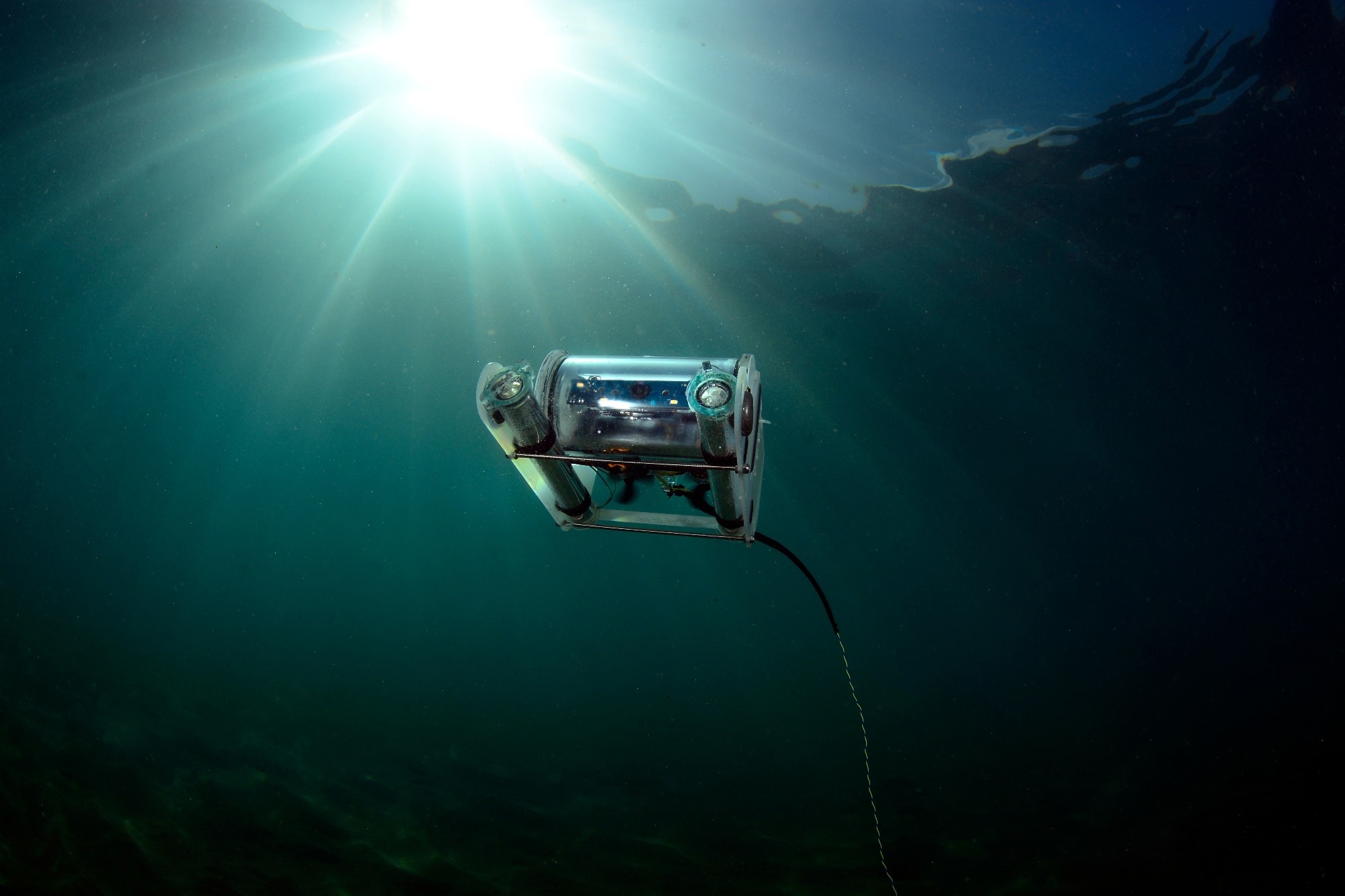 Study: Aquatic robot to monitor species, advance hydropower. Image Credit: Humberto Ramirez/Shutterstock
In an article published by Oak Ridge National Laboratory (ORNL), researchers report on a collaborative effort between two Department of Energy (DOE) national laboratories (ORNL and Pacific Northwest National Laboratory (PNNL)) and a private company, Smith-Root, Inc., to develop an autonomous aquatic robot called the environmental deoxyribonucleic acid (eDNA)-bot.
The device collects, processes, and analyzes eDNA samples in real-time using artificial intelligence. The authors discuss the technology’s potential to revolutionize biological monitoring, reduce costs, support hydropower licensing, detect invasive species, and monitor wastewater pathogens.
eDNA and the Limits of Conventional Monitoring
eDNA refers to genetic material shed by organisms through waste, reproduction, or decomposition. Traditional biological surveying methods, such as netting, trapping, and electrofishing, are expensive, labor-intensive, and often invasive. These conventional techniques capture only a single moment in time and can scare species into hiding, sometimes damaging both organisms and habitats.
Since 2020, researchers at ORNL have explored eDNA technology specifically for hydropower-associated water bodies, which face challenges such as extreme variations in water flow and sediment buildup. Working with the Tennessee Valley Authority, ORNL demonstrated that eDNA methods could detect elusive species that had previously been missed by conventional surveys.
The newly developed eDNA-bot builds on this foundational work. ORNL has now patented the technology, and the research team has signed a cooperative research and development (R&D) agreement with Smith-Root, Inc., a Washington-based biological surveying equipment manufacturer, to commercialize the sampler.
The eDNA-bot Works and Its Key Advantages
The eDNA-bot is a field-ready, autonomous aquatic robot designed to operate for months at a time, continuously collecting and analyzing eDNA samples without human intervention. Powered by artificial intelligence, the robot can make independent decisions, process data on board, and share results in real-time. Its “light touch” approach contrasts sharply with conventional methods. The bot does not disturb organisms or their habitats, and its unobtrusive presence enables more accurate sampling because species do not flee from human surveyors.
Project lead Kristine Moody, a molecular ecologist at ORNL, emphasizes that the bot can access remote or dangerous sites that are difficult for human teams to reach. Researchers have already built a bench-top prototype using both off-the-shelf and custom components. The next goal is a compact, battery-powered version weighing under 100 pounds, transportable by two people. Moody envisions eventual suitcase-sized units that can be easily flown to any location, though that will require several miniaturization iterations.
The bot’s potential applications extend beyond hydropower. It could detect invasive species before they establish large populations, monitor wastewater for disease-causing pathogens, and serve academic research institutions as well as federal and state agencies.
Austen Thomas of Smith-Root noted that designing such a system internally would carry prohibitive capital expense and R&D risk. Partnering with national laboratories provides access to engineering and biology expertise that his company could not otherwise achieve, significantly reducing commercial risk.
Research Team, Testing, and Future Development
The interdisciplinary team behind eDNA-bot brings together diverse expertise. Kristine Moody (ORNL) collaborates with longtime co-inventor Brenda Pracheil, a fisheries biologist at PNNL. They have recruited ORNL scientists Peter Wang and Brian Post from the DOE Manufacturing Demonstration Facility, who specialize in robotics, automation, additive manufacturing, and sensors. Additionally, Natalie Griffiths from ORNL’s Environmental Sciences Division contributes her experience developing AquaBOT, a water-quality measuring drone.
Current R&D focuses on making the eDNA-bot rugged enough to withstand highly corrosive saltwater environments, a critical requirement for marine energy facilities. Testing will take place at PNNL’s marine research center in Sequim, Washington. Beyond marine and hydropower installations, the bot could support environmental assessments required for hydropower licensing, streamlining a process that currently relies on costly, time-consuming conventional surveys.
The technology has already proven its value in real-world settings. At multiple hydropower reservoirs operated by the Tennessee Valley Authority, which manages roughly 40,000 miles of rivers and streams in the Southeast, the eDNA method detected species that conventional means had failed to observe, alongside confirming known species.
Download the PDF of this page here
This capability is especially important for hydropower facilities, where extreme variations in water flow and sediment buildup make traditional eDNA collection difficult. By automating the entire workflow from sample collection to data analysis, the eDNA-bot promises more comprehensive biological monitoring at significantly lower cost than current methods.
A Promising Future for Aquatic Monitoring
The eDNA-bot represents a significant leap forward in aquatic biological monitoring. By combining autonomous operation, artificial intelligence, and real-time eDNA analysis, this robot can continuously and unobtrusively survey species for months while accessing remote or hazardous locations unavailable to human researchers. Its potential to streamline hydropower licensing, detect invasive species early, and monitor wastewater pathogens offers broad environmental and economic benefits.
With ORNL’s patent protection, an active cooperative R&D agreement with Smith-Root, Inc., and rigorous testing planned at PNNL’s marine research center, the technology is moving steadily toward commercialization. As miniaturization advances, a suitcase-sized, field-deployable eDNA-bot could soon become a standard tool for researchers, agencies, and energy facilities worldwide.
Journal Reference
Aquatic robot to monitor species, advance hydropower | ORNL. (2026). ORNL. https://www.ornl.gov/news/aquatic-robot-monitor-species-advance-hydropower
Disclaimer: The views expressed here are those of the author expressed in their private capacity and do not necessarily represent the views of AZoM.com Limited T/A AZoNetwork the owner and operator of this website. This disclaimer forms part of the Terms and conditions of use of this website.