Critical material demand for robots and drones highlights supply risks and opportunities. This analysis supports sustainable scaling through recycling, alternative materials, and supply chain optimization.
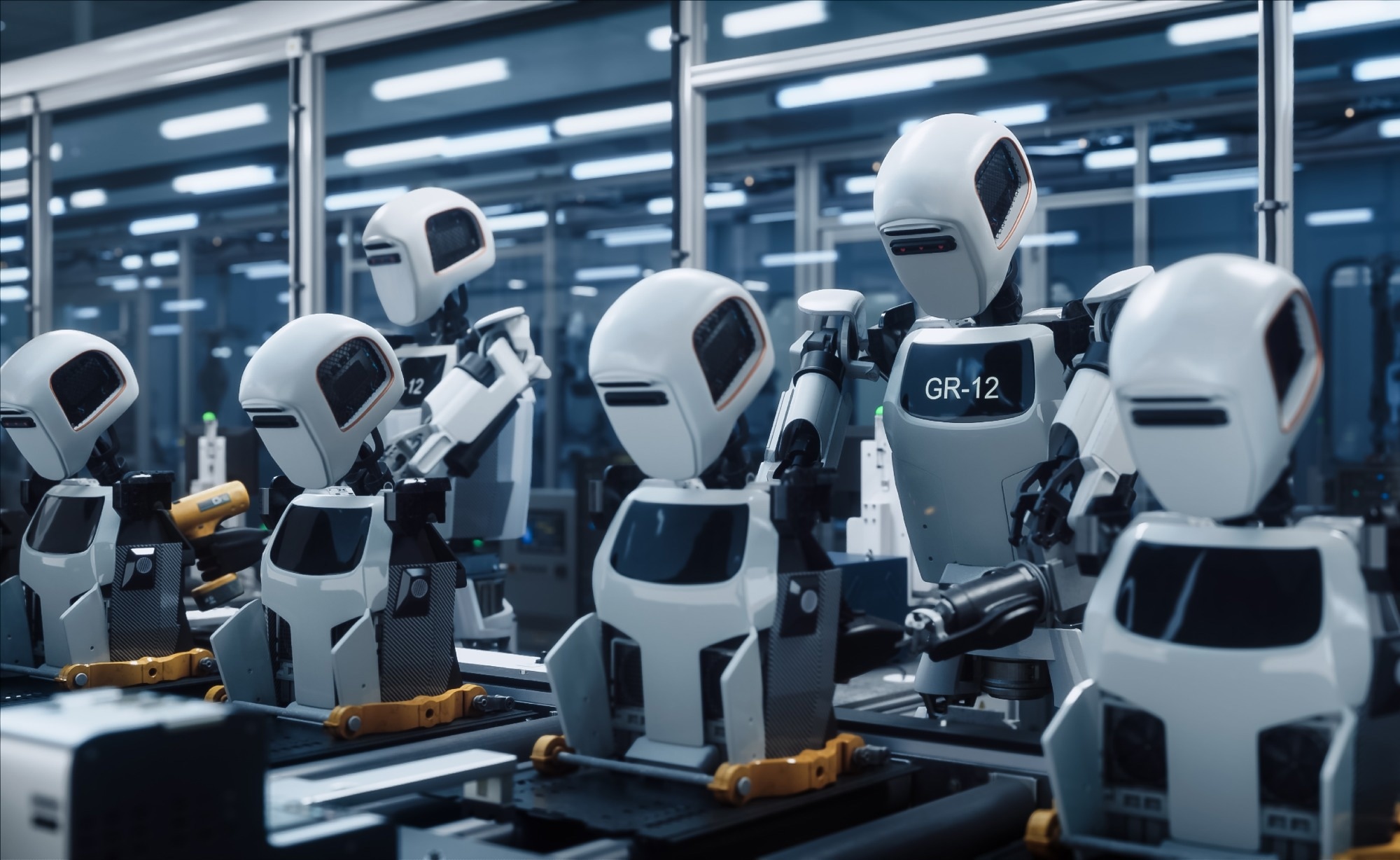 Study: Managing supply risks for critical materials in drones and robotics. Image Credit: Gorodenkoff/Shutterstock
In a commentary published in the journal Chem Circularity, researchers examined the supply-chain risks posed by the rapid rise of autonomous machines, including aerial drones and humanoid robots. The authors analyzed 18 critical materials used across key subsystems of these machines and found that while large-scale adoption could put meaningful pressure on global supply chains, the risks are largely manageable.
The Scale of the Challenge
The world is racing toward an era of autonomous machines. Advances in artificial intelligence and robotics have created widespread expectations that millions of drones and humanoid robots will be deployed across industries by the mid-2030s. Getting there, however, will require a dramatic scale-up in manufacturing.
That kind of growth does not happen in a vacuum. These machines are built from a complex mix of materials, many of them rare, geopolitically sensitive, or difficult to source in large quantities. Components such as motors, batteries, sensors, and structural frames each draw on a distinct set of elements, from rare-earth metals like neodymium and praseodymium to lithium, cobalt, graphite, carbon fiber, and a range of specialized semiconductor materials.
With all this in mind, the researchers set out to understand how serious the supply problem could become, and what steps manufacturers, policymakers, and researchers can take right now to get ahead of it. Their findings offer a detailed and surprisingly optimistic roadmap, but one that requires immediate action to stay on track.
Where the Risks are Greatest
To understand where supply chains could buckle, the researchers took a bottom-up approach, estimating how much of each critical material goes into the motors, batteries, electronics, and structural frames of four machine types: small and large copter drones, humanoid robots, and quadruped robots.
The starkest findings came from motors. Brushless electric motors rely on rare-earth permanent magnets, primarily neodymium-iron-boron (NdFeB). A single Tesla Optimus humanoid robot reportedly contains up to 3.5 kg of these magnets. Scaling to one million humanoid robots per year would add roughly 1,000 tonnes of neodymium-praseodymium (NdPr) metal to annual demand, about 20% of all current US usage.
Similarly, in the case of batteries, lithium demand would rise by a few percentage points at that same production level, notable but manageable. Cobalt exposure depends heavily on which battery chemistry manufacturers choose. Commercial pressure toward lower-cobalt alternatives makes a worst-case scenario unlikely.
Structural materials present a more straightforward picture. Carbon-fiber-reinforced polymers and aluminum dominate lightweight frame designs, and while carbon fiber supply chains could come under strain, the abundance of aluminum provides a meaningful cushion.
Electronics components pose the smallest risk overall, as the quantities of specialized materials such as germanium and ruthenium in individual devices are minuscule. However, tantalum, used in capacitors, could face longer-term pressure as adoption levels rise.
Three Strategies to Stay Ahead
The researchers identify three actionable strategies that, collectively, could prevent a supply crisis from materializing over the next decade.
The first is leveraging production synergies with existing industries. Supply chains for batteries, sensors, and lightweight materials already exist to serve the electric vehicle, consumer electronics, and aerospace sectors. Drone and robot manufacturers can plug into these established networks rather than building from scratch.
Tesla is reportedly already aligning its humanoid robot battery packs with its EV supply chain. The key is to ensure commercial compatibility and stay responsive to policy shifts, particularly the United States government’s efforts to reduce dependence on Chinese rare-earth magnet production.
The second strategy is designing for circularity from day one. Drones and robots have short product lifecycles, two to five years for small drones, meaning materials can be recovered and re-entered into supply chains far faster than those locked inside, say, a wind turbine for decades.
Building "design for recycling" principles into early-stage development and adopting closed-loop business models similar to aviation's maintenance-and-repair contracts, could make material recovery both practical and commercially viable.
The third approach is proactive technology development, qualifying alternative materials and component designs early, before supply constraints become acute. Incorporating supply-chain considerations into technology roadmaps across the industry would make this kind of preparedness standard rather than exceptional.
Cause for Cautious Optimism
The researchers suggest that existing supply chains can handle new demand through roughly the mid-2030s, but that window is not unlimited. Small shifts in market share or policy environments can rapidly create disruption under tight supply conditions.
Download the PDF of this page here
The authors conclude that acting now, through smarter industrial alignment, circular design practices, and forward-looking technology development, can transform a potential vulnerability into a manageable challenge. While the autonomous systems revolution may be inevitable, a supply chain catastrophe is not.
Journal Reference
Ku, A. Y., & Greig, C. (2026). Managing supply risks for critical materials in drones and robotics. Chem Circularity, 100019. DOI:10.1016/j.checir.2026.100019, https://www.cell.com/chem-circularity/fulltext/S3051-2948(26)00015-0
Disclaimer: The views expressed here are those of the author expressed in their private capacity and do not necessarily represent the views of AZoM.com Limited T/A AZoNetwork the owner and operator of this website. This disclaimer forms part of the Terms and conditions of use of this website.