Researchers have developed a miniature diving suit with an onboard oxygen generator that enables cyborg cockroaches to survive underwater for up to three hours, opening new possibilities for navigating confined and hazardous land-water environments. The research was published in Nature.
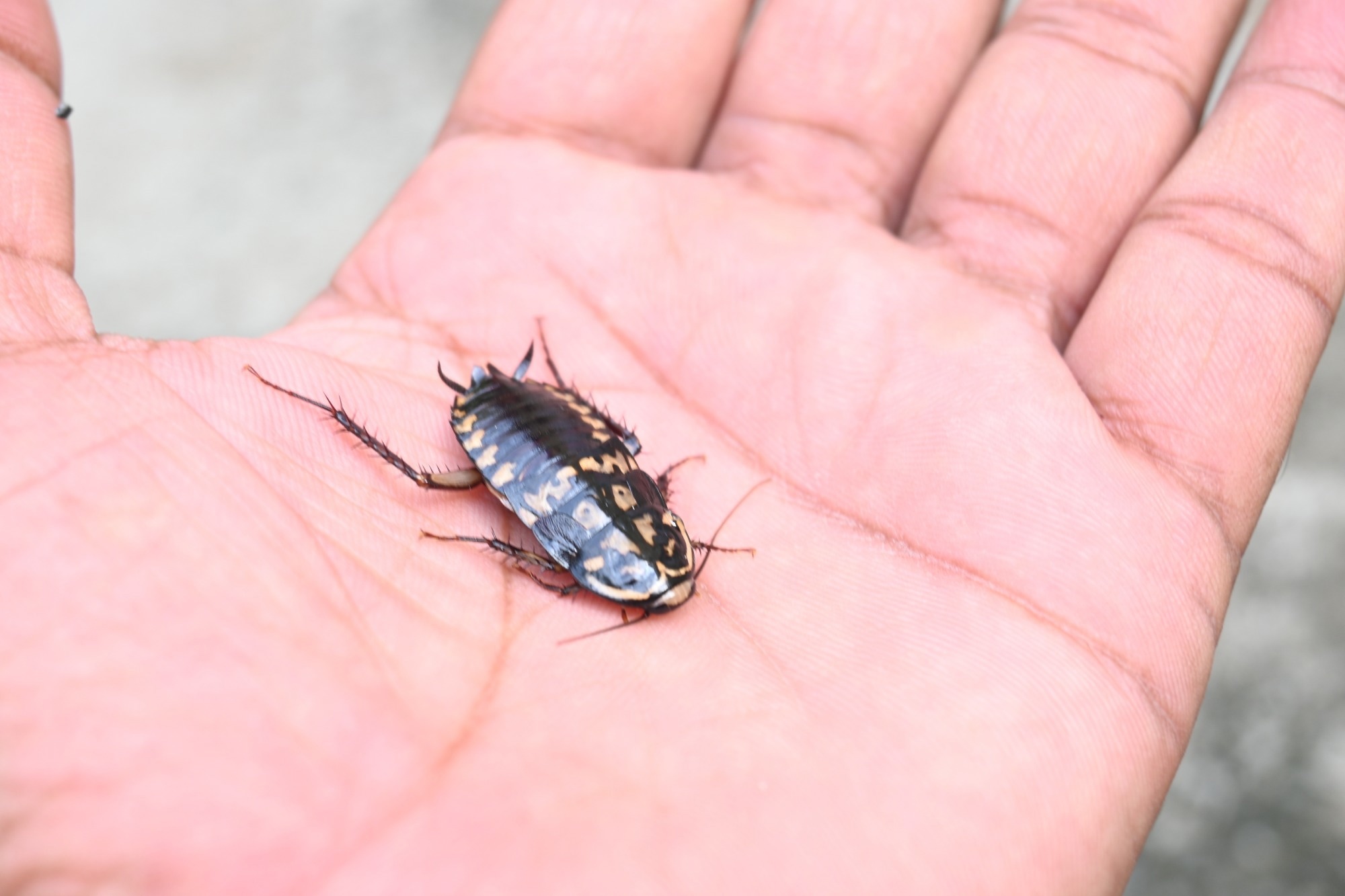
Study: Underwater Suit-Wearing Cyborg Insect Capable of Hours-Long Diving and Terra-Aqua Travel. Image Credit: SUBAS CHANDRA MAHATO/Shutterstock.com
Extending Cyborg Insects to Submerged Terrains
Cyborg insects are hybrid systems that integrate living insects with electronics to remotely induce movement, offering advantages over artificial robots through muscle-powered locomotion that minimizes power consumption.
Their adaptability enables access to confined, cluttered environments. However, their operation is constrained by the host’s physiological requirements, notably the inability of terrestrial hosts to absorb aquatic oxygen, preventing underwater functions. This limits continuous operation in terrains containing puddles or flooded zones.
To address this gap, the paper presented a compact, self-contained diving suit that supplies oxygen directly to the cockroach’s thoracic spiracles while preventing water entry. This system enables the terrestrial cockroach to achieve user-induced amphibious locomotion and to operate for prolonged periods in terrestrial-aquatic environments.
Click here to download a PDF copy of this page
System Assembly and Performance Testing
Adult Madagascar hissing cockroaches were reared at 25 °C and 60% humidity. The cyborg system comprised a miniature wireless stimulator backpack and a diving suit. The suit consisted of an oxygen-generation tank, a flexible shell, and four silicone oxygen-supply tubes.
The tank was three-dimensional (3D)-printed with PMMA-type resin and integrated a manganese dioxide (MnO2)-deposited cellulose sponge, with its lid vent covered by a hydrophobic PTFE microporous membrane. The flexible shell was customized to the cockroach’s abdominal morphology and sealed to the first abdominal segment.
Oxygen tubes connected the shell to the thoracic spiracles via 3D-printed spiracle connectors secured with adhesive. After assembly, immersion tests with water-sensitive paper verified sealing integrity. Oxygen was generated by introducing 1.0 mL of 3% hydrogen peroxide into the MnO2-deposited sponge, initiating catalytic decomposition.
For locomotion control, cockroaches were anesthetized with carbon dioxide, and Teflon-coated silver wires were implanted into both antennae, cerci, and the third abdominal segment, secured with beeswax, and connected to the wireless stimulator. The combined payload of the diving suit and waterproof-treated backpack remained below the insect’s maximum capacity of approximately 15 g.
In-suit oxygen concentration was monitored while cockroaches walked on a treadmill, using an oxygen and optical motion sensor at a 5 Hz sampling rate, with electrical stimulation applied every 30 seconds. The oxygen generation rate was measured via a water displacement apparatus, while the oxygen consumption rate was measured using an open flow respirometry system during induced locomotion.
Underwater locomotion performance was tested in a 50 × 50 cm water tank, with trajectories recorded by an overhead camera and analyzed using DLTdv8a software. Environmental adaptability was demonstrated through mixed-hazard tunnel traversal, where cyborg cockroaches navigated sections filled with carbon dioxide and water, and narrow-crevice traversal in an outdoor pond through a 2 cm-high stone passage.
Underwater Survival and Mobility Results
The diving suit integrated a chemical reactor-based oxygen generator, a flexible, waterproof shell, and customized oxygen-delivery tubes. Sealing stability was confirmed through vortex agitation tests, and no liquid leakage was detected. No noticeable temperature rise occurred during oxygen generation, and all suit-wearing insects survived a three-day observation period with normal behaviors.
The generator was positioned in the posterior abdomen within a flexible shell modeled after the cockroach’s morphology, thereby preserving a streamlined body profile and stable underwater locomotion. A nitrile rubber membrane sealed the shell to the first abdominal segment, preventing water ingress while accommodating movement.
Customized spiracle connectors achieved tight sealing at both prothoracic and mesothoracic spiracles. Waterproof integrity was validated after 30 min immersion with repeated joint bending, with minimal color change on internal test paper attributable to respiratory moisture. Multi-directional drop tests and depth tests up to 50 cm confirmed structural integrity and continued waterproof performance.
In-suit oxygen monitoring showed a peak concentration of 47.4% at 8 minutes, decreasing to 14.8% after three hours. Without oxygen supply, levels dropped to 6.2% within one hour. Oxygen-supplied cockroaches maintained induced speeds above 1.4 cm/s after two hours, while unsupplied cockroaches fell below 0.5 cm/s after 30 minutes.
Cyborg insects with diving suits survived two to three hours underwater, exhibited amphibious locomotion with terrestrial forward speed of 87.5 mm/s and underwater forward speed of 78.4 mm/s, and outperformed reported amphibious robots in normalized speed.
In simulated hazard demonstrations, suit-wearing cockroaches successfully traversed a carbon dioxide (CO2)-water tunnel, while unsuited cockroaches became immobilized. Fully implanted configurations enabled traversal through 2 cm-high underwater crevices.
From Terrestrial to Amphibious Cyborg Capability
This study demonstrated a wearable diving suit that transforms terrestrial cyborg cockroaches into amphibious robots. By integrating a compact MnO2-H2O2 oxygen generator, flexible waterproof shell, and customized spiracle connectors, the system supplied oxygen directly to thoracic spiracles while preventing water entry.
Suit-wearing cockroaches survived up to three hours underwater, maintained locomotor responsiveness, and outperformed reported amphibious robots in normalized speed. They successfully traversed CO2-water tunnels and 2 cm-high underwater crevices. This approach extends cyborg insect operation to submerged terrains, enabling exploration of confined, hazardous land-water environments previously inaccessible to terrestrial hosts.
Journal Reference
FAN et al. (2026). Underwater Suit-Wearing Cyborg Insect Capable of Hours-Long Diving and Terra-Aqua Travel. Nature Communications, 17(1), 5398. DOI:10.1038/s41467-026-74235-1, https://www.nature.com/articles/s41467-026-74235-1
Disclaimer: The views expressed here are those of the author expressed in their private capacity and do not necessarily represent the views of AZoM.com Limited T/A AZoNetwork the owner and operator of this website. This disclaimer forms part of the Terms and conditions of use of this website.