*Important notice: This news reports on an unedited version of an accepted paper and is awaiting final editing. Therefore, the paper should not be regarded as conclusive or treated as established information.
Researchers have presented a smart waste management system for the Institut Teknologi Bandung (ITB) Ganesha Campus that combines physical bin sensors with robotic process automation (RPA) to capture contextual data, such as academic calendars, weather, and events.
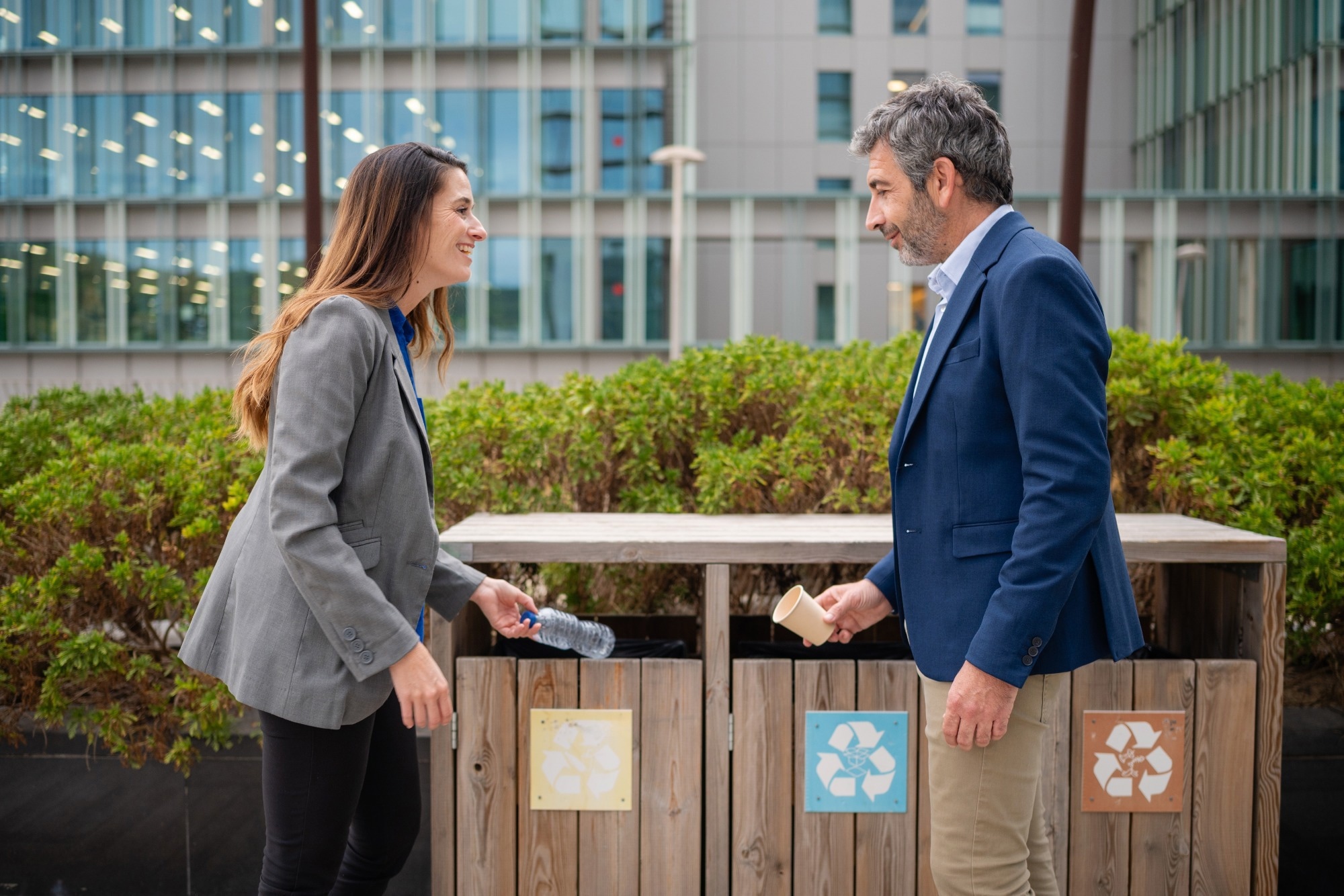 Study: Integrating robotic process automation as a complementary sensing layer in smart waste monitoring systems. Image Credit: Miguel Guasch/Shutterstock.com
Their proof-of-concept results, published in Scientific Reports, suggest that RPA-derived variables are among the strongest predictors of short-term bin overflow, enabling context-aware, predictive waste collection.
The Blind Spot in Smart Waste Systems
Smart waste monitoring systems typically rely on Internet of Things (IoT) sensors to track bin fill levels and environmental conditions. However, these sensor-based approaches face a fundamental limitation, as they cannot access external contextual data, such as weather forecasts, academic calendars, or event schedules. These parameters significantly influence waste-generation patterns, especially when such information resides in legacy systems or websites without application programming interface (API) support.
Previous studies have explored IoT sensors and external data integration separately, but no architecture has positioned RPA as a first-class sensing component alongside physical hardware.
This study addressed that gap by developing a platform where RPA bots operate within the sensing layer, automatically retrieving contextual data from non-API sources and feeding it into the same pipeline as sensor telemetry, thereby enabling context-aware predictive analytics and route optimization.
Download a free copy of this page here!
From Fixed Schedules to Predictive Pickups
This study followed a structured five-phase development approach. The phases were problem identification, system design, implementation, evaluation, and discussion.
The initial phase analyzed waste management practices at ITB's Ganesha Campus, where manual inspections at fixed intervals led to bin overflow during peak periods and unnecessary collection of partially filled bins. The absence of real-time monitoring and centralized data integration further limited analysis of waste-generation patterns.
The system design centered on a layered architecture built around the sensing-understanding-acting framework. In the sensing stage, load cell and ultrasonic sensors measured bin volume and weight in real time, while environmental sensors captured temperature, humidity, pressure, and gas levels.
Critically, RPA bots retrieved external contextual data (weather forecasts, academic calendars, and event schedules) from public non-API sources, feeding this information into the same pipeline as physical sensor telemetry. Global positioning system (GPS) data was limited to vehicle-level tracking for operational purposes.
During implementation, 10 smart waste bins were deployed at strategic campus locations, including two flagship models with advanced sensing in high-traffic areas and eight basic models elsewhere. Data were transmitted via real-time protocols to a cloud-based platform using MySQL and an object-relational mapping (ORM) layer.
A random forest model handled short-term overflow prediction, while Dijkstra and open-source routing machine (OSRM) algorithms supported route optimization. The evaluation phase comprised functional testing and scalability testing under concurrent user loads. The predictive module was assessed as a proof of concept to validate heterogeneous data integration rather than to establish benchmark performance.
Functionality, Scalability, and Predictive Power
The study employed three testing approaches: functional testing, scalability testing, and predictive evaluation.
Functional testing verified all core features, including sensor data transmission, RPA-based retrieval of academic calendars and event schedules, GPS route data, error handling for unreachable sources, and prediction-influenced route adjustments.
All 12 test scenarios passed. The system successfully stored sensor readings without errors, integrated external data retrieved via RPA, displayed clear error messages when sources failed, and generated daily reports, trend charts, and optimized route recommendations.
Scalability testing used two scenarios. Scenario A increased concurrent dashboard users from five to 50, revealing stable performance up to 30 users, after which response times and error rates climbed noticeably. At 50 users, errors reached 8% and central processing unit (CPU) usage exceeded 80%.
Scenario B combined 20 to 30 concurrent users with scheduled RPA tasks and sensor ingestion from 10 bins. CPU usage spiked to 75–80% during RPA data pulls, with error rates reaching 5% at peak stress, though the system remained operational.
Predictive evaluation employed a random forest model on a synthetic dataset of 28,800 rows, seeded from 120 days of real pilot data from two flagship bins. Results showed RPA-derived variables (rainfall intensity and campus events) ranked among the most influential predictors of short-term bin overflow, supporting the system's core design premise.
Smarter Bins, Clearer Limits
The study demonstrates that RPA can function effectively as a complementary sensing layer within smart waste-monitoring systems. Functional testing confirmed seamless integration between sensor data and RPA-retrieved contextual information, while predictive evaluation showed that variables such as rainfall and campus events play a central role in anticipating short-term bin overflow.
However, scalability testing revealed performance degradation beyond 30–40 concurrent users, highlighting the need for scaling strategies and migration toward APIs or webhooks where available.
Future work should expand data collection across more bins and over longer periods, explore advanced machine learning techniques, and strengthen hardware resilience to enable broader, more sustainable deployment.
Journal Reference
Falih, N., et al. (2026). Integrating robotic process automation as a complementary sensing layer in smart waste monitoring systems. Scientific Reports. DOI:10.1038/s41598-026-66058-3. https://www.nature.com/articles/s41598-026-66058-3.
Disclaimer: The views expressed here are those of the author expressed in their private capacity and do not necessarily represent the views of AZoM.com Limited T/A AZoNetwork the owner and operator of this website. This disclaimer forms part of the Terms and conditions of use of this website.