Researchers at Birmingham City University (BCU) have been awarded nearly £120,000 to help make eye disease screening more accessible by using smartphones and AI.
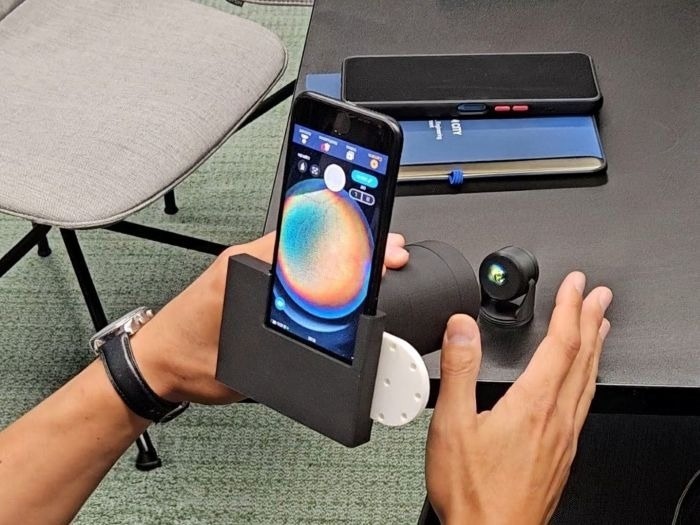 AI software will be used to screen for eye disease on mobile phones. Image Credit: BCU
The research, funded by Innovate UK, aims to make it easier and safer to detect serious eye conditions outside traditional clinical settings, potentially bringing screening to people who may not have easy access to an eye clinic.
Glaucoma, diabetic retinopathy and age-related macular degeneration are among the leading causes of preventable blindness worldwide. These conditions are treatable if caught early, but access to screening remains limited in many low-income and rural settings.
Working with Black Space Technology and OUI Inc., BCU’s SIGHTMARK-AI research project aims to standardize infrastructure for healthcare testing across the world.
“Eye disease takes something from people that can never really be given back, and I find it hard to accept that so much of it is preventable if it's just caught in time,” said BCU Principal Investigator, Dr Martin Esugo.
“The work we do here, such as ensuring the data is correct, and making sure annotations are trustworthy, could be the difference between someone getting diagnosed early or not at all, especially in places where a proper eye clinic is simply out of reach.”
The goal of the research is to create an evaluation framework that other researchers and companies can use to test smartphone fundoscopy AI systems, raising the bar for clinical safety and accelerating trustworthy adoption of these tools.
“Our work demonstrates how advanced digital innovation can directly transform healthcare,” said Professor Junaid Arshad, Head of Department of Computing at BCU.
“By turning accessible mobile imaging into reliable, clinical-grade diagnostics, we are proud to deliver on BCU Strategy 2030's mission to create knowledge for good.
“We are setting new standards for patient safety and driving the trustworthy adoption of AI in modern medicine.”