Diabetes is one of the most common chronic conditions worldwide, and managing it can be really challenging. But artificial intelligence (AI) has starting to change that.
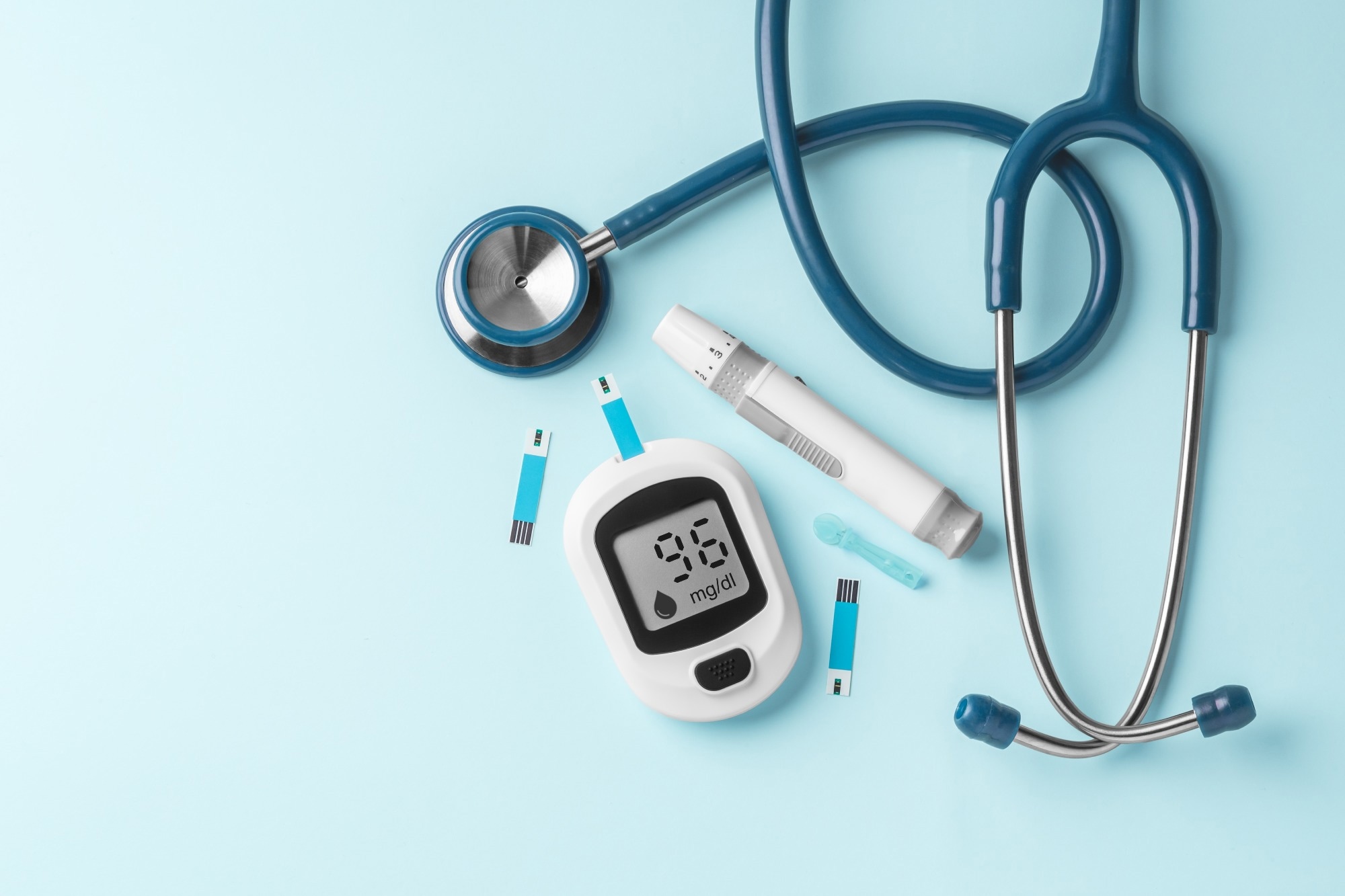
Image Credit: everydayplus/Shutterstock.com
By analyzing huge amounts of health data, from electronic records to real-time glucose monitoring, AI can help predict when diabetes is likely to develop, how it might progress, and what complications could arise.1-4
Want all the details? Download your free PDF of the content here!
Early Detection and Risk Stratification
Spotting diabetes early before it causes serious health issues isn’t an easy job; in fact, it's something we have struggled with for decades. But machine learning (ML) is starting to make it easier.
Recent studies show that certain ML models, like XGBoost and random forest, can predict someone’s 10-year risk of developing diabetes with an accuracy that is often better than traditional methods like logistic regression. These models analyze a mix of personal health data, including BMI, A1c levels, and even genetic info, to flag who’s most at risk.
What makes these systems so powerful is the way in which they bring together data from different sources, whether that be health records, wearable devices, or lab tests. With the right input, they can detect early warning signs that might otherwise go unnoticed, helping doctors offer more targeted, timely care.1
Personalized Care and Complication Prevention
Managing diabetes nowadays is actually a lot more complex than simply monitoring blood sugar levels. Now it’s also about preventing the serious complications that can come with it, and AI is helping make that a lot more manageable.
ML models can track things like medication use, glucose patterns, and daily activity in real time. Some systems can even send alerts when something looks off, helping reduce sudden health issues by up to 40 %.1 When this data is combined with tools like meal logs and continuous glucose monitors (CGMs), insulin doses can be adjusted more precisely - based on what someone is eating, doing, or even how they're sleeping.
Beyond day-to-day management, AI is being used to predict longer-term risks. For example, models like XGBoost are able to flag early signs of kidney disease by analyzing biomarkers such as albumin levels and estimated glomerular filtration rate (eGFR). These same approaches are being adapted to monitor related conditions, like diabetes-hypertension and diabetic cardiomyopathy, by connecting insights from wearables, lab results, and electronic health records.
Diabetes Complication Management
AI is also playing an increasingly active role in preventing some of the most serious complications linked to diabetes.
In conditions like diabetic retinopathy (DR), which can cause vision loss if left untreated, machine learning models are helping spot early warning signs. Trained on large-scale health datasets, these models have reached AUROC scores as high as 0.93 for 10-year risk prediction, giving clinicians a better chance to intervene before permanent damage occurs.
For diabetic foot ulcers (DFUs), another high-risk complication, convolutional neural networks (CNNs) paired with thermal imaging are being used to classify severity with impressive accuracy (AUC of 0.89). That level of detail helps healthcare providers make more timely and targeted decisions, potentially preventing infections and amputations.
AI is also improving everyday diabetes management. Platforms that integrate data from wearables, glucose monitors, and EHRs support real-time treatment adjustments. In one 24-week study, patients using an AI-assisted nutrition system saw weight loss of 1.5 to 2.3 kg and HbA1c reductions up to 0.49 %. This is actually quite a major shift in just a matter of a few months. These systems can adjust meal planning and insulin dosing based on an individual’s habits, activity levels, and glucose trends.
Even devices like the Eversense CGM are benefiting from AI. By tracking glucose in interstitial fluid with 92 % accuracy over a 90-day period (and no need for fingerstick calibration), it’s becoming easier to manage diabetes with less effort and more personalization.1
Type 2 Diabetes (T2D) Progression Prediction Models
T2D is a long-term condition that affects millions of people worldwide, and its progression can look very different from one person to the next. Genetics, lifestyle, age, and other health factors all influence how the disease develops over time, which makes it hard to manage with one-size-fits-all strategies.
Progression isn’t limited to rising blood sugar levels; it can also mean moving from pre-diabetes to full diagnosis, dealing with complications, changes in medication, or loss of glucose control. The challenge is knowing when and how these shifts will happen. Continuous monitoring and timely interventions are essential to slow progression and reduce the risk of complications, as delays can result in therapeutic inertia and costly health consequences.2
Traditional prediction methods often fall short. They rely heavily on clinician judgment and static check-ins, which can miss early signs of progression. So, as you may have guessed, this is where AI-based models are starting to step in.
Using machine learning, researchers have developed tools that can forecast how T2D might evolve for individual patients. Models like random forest (RF), support vector machines (SVM), logistic regression (LR), XGBoost, and decision trees are frequently used to analyze patterns in patient data. These tools not only predict disease progression but also estimate how someone might respond to different treatment options.
By identifying high-risk patients earlier, these models identify patients at high risk for disease progression, predict responses to various treatments, and support personalized management plans, ultimately improving patient outcomes.2
DR Progression Prediction System
DR is the leading cause of preventable blindness worldwide. It mostly affects adults with diabetes and often progresses without obvious symptoms (especially in the early stages). That makes personalized screening and early intervention difficult, but also incredibly important.
Current guidelines recommend annual DR screenings for anyone with no or mild signs of the disease. But in reality, not everyone progresses at the same rate. Some people could go longer between screenings, while others might need more frequent check-ins. The problem is, we haven’t had reliable tools to predict who’s most at risk. But the good news is that’s starting to change.3
A recent study published in Nature Medicine introduced DeepDR Plus, a deep learning system designed to predict a person’s risk and timeline for DR progression over five years using only fundus images.
Initially, the system was pretrained on 717,308 fundus images from 179,327 patients with diabetes and later refined using clinical and retinal data from diverse populations across multiple countries. To evaluate its practical applicability, DeepDR Plus was further tested in real-world prospective cohorts. The findings showed that the system could accurately predict personalized DR progression timelines solely from baseline fundus images, achieving concordance indexes between 0.754 and 0.846 and integrated Brier scores ranging from 0.153 to 0.241 over five years.
Real-world validation confirmed the system’s robustness and its ability to integrate into clinical workflows. What’s especially promising is how DeepDR Plus could be used in practice. It may allow doctors to safely extend the screening interval from every 12 months to around 32 months for low-risk patients without increasing the risk of missing serious cases. In the study, delayed detection of vision-threatening DR was just 0.18 %. The system also helped personalize care, recommending follow-up intervals ranging from one to five years depending on the patient’s risk profile.
By adjusting screening schedules and focusing on those most likely to progress, DeepDR Plus could reduce unnecessary exams, prioritize resources, and help prevent vision loss, all while fitting into existing clinical workflows.
A second study, published in JAMA Ophthalmology, tested whether automated machine learning (autoML) could predict DR progression using ultra-widefield (UWF) retinal images. The study analyzed 1179 de-identified images from eyes with mild or moderate nonproliferative DR (NPDR), with at least three years of follow-up.
Using a training-validation-test split and a separate validation set of 328 images, the model identified progression in 50 % of cases. It performed particularly well at predicting significant disease advancement, achieving a precision-recall score (AUPRC) of 0.717 for mild NPDR and 0.863 for moderate NPDR. It correctly identified 75 % of mild NPDR and 85 % of moderate NPDR eyes that progressed two steps or more. Most notably, it detected all mild NPDR and 85–89 % of moderate NPDR eyes that advanced within one year.4
These findings suggest that autoML models using UWF images could be a valuable clinical tool for helping providers stratify risk, tailor screening schedules, and intervene earlier for patients who need it most.4
Conclusion
As with everywhere else, AI is becoming more embedded in healthcare, and its role in diabetes management is, in fact, highlighting a shift in how we think about chronic disease. It's no longer something that we have to react to, but instead something we can predict and shape as and when it happens.
This technology is expanding what’s possible when data, pattern recognition, and human decision-making work together. For a condition as personal and variable as diabetes, that collaboration opens the door to more adaptive, individualized care where interventions happen earlier, and patients are supported in ways that feel less generic and more relevant.
Want to Learn More?
If you're interested in how AI is shaping the future of healthcare, here are a few directions worth exploring:
References and Further Reading
- Fahmy, A. M. (2025). Exploring the role of AI in predicting chronic disease progression: diabetes and cardiovascular diseases. Methodology, 2(3). DOI: 10.70389/PJPH.100021, https://premierscience.com/wp-content/uploads/2025/08/5-pjph-25-891.pdf
- Nazirun, N. N. N. et al. (2024). Prediction models for type 2 diabetes progression: A systematic review. IEEE Access. DOI: 10.1109/ACCESS.2024.3432118, https://ieeexplore.ieee.org/document/10606225/
- Dai, L. et al. (2024). A deep learning system for predicting time to progression of diabetic retinopathy. Nature Medicine, 30(2), 584-594. DOI: 10.1038/s41591-023-02702-z, https://www.nature.com/articles/s41591-023-02702-z
- Silva, P. S. et al. (2024). Automated machine learning for predicting diabetic retinopathy progression from ultra-widefield retinal images. JAMA Ophthalmology, 142(3), 171-178. DOI: 10.1001/jamaophthalmol.2023.6318, https://jamanetwork.com/journals/jamaophthalmology/fullarticle/2814752
Disclaimer: The views expressed here are those of the author expressed in their private capacity and do not necessarily represent the views of AZoM.com Limited T/A AZoNetwork the owner and operator of this website. This disclaimer forms part of the Terms and conditions of use of this website.