Data centers are becoming pivotal with the rising global demand for digital services. However, these facilities are among the highest energy consumers and major greenhouse gas emitters within the information and communication technology sector.1-4
Thus, novel approaches are required to reduce the environmental impact of data centers by curbing carbon emissions and energy consumption without compromising high reliability, security, and performance standards.1-4
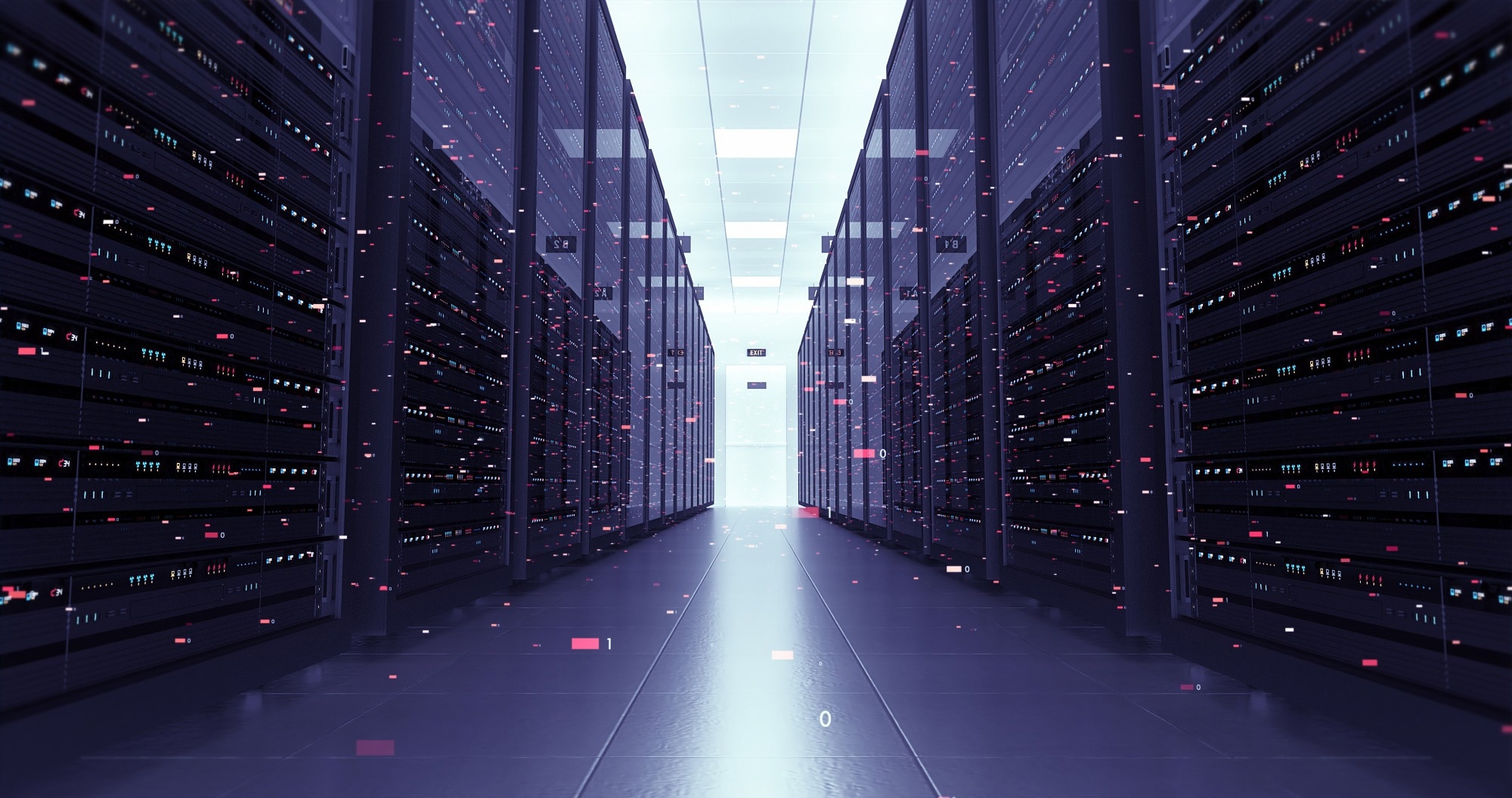 Image Credit: yucelyilmaz/Shutterstock
Data Center Energy Impact
A data center hosts several computational resources that collectively process, store, transmit, and manage large amounts of data. Common data center components include servers, storage systems, networking equipment, cooling systems, and power supply systems. Every component is crucial for the seamless operation, reliability, and security of data centers, enabling them to support diverse digital activities.2,3
Servers, which handle data management and run software applications, are the primary powerhouses within data centers. They consistently consume electricity due to their constant activity, which directly contributes to carbon emissions, particularly when the electricity is generated from fossil fuels.2,3
Cooling systems regulate humidity and temperature levels to ensure optimal data center functioning. However, these systems compound the direct emission issue, as conventional heating, ventilation, and air conditioning (HVAC) systems and certain advanced cooling methods employ coolants and refrigerants that, if leaked, can have a greater greenhouse effect than carbon dioxide.2,3
Although these emissions are not as frequent as carbon dioxide emissions, many refrigerants have high global warming potential, resulting in disproportionate environmental impact. Power supply systems provide uninterrupted power to devices like servers for continuous operation.2,3
Among them, backup generators are critical for data center operational reliability. These diesel-powered generators generate direct emissions when used during routine tests or power outages. While their operational hours may be limited compared to the primary power supply, the diesel fuel combustion leads to significant greenhouse gas emissions.2,3
In a data center, cooling systems and servers consume 43% of the total energy usage, followed by storage units and network devices. Traditionally, cooling depended on HVAC systems, which consume large amounts of energy owing to their mechanical refrigeration cycles. Thus, thermal management remains one of the top energy-intensive and complex issues in data centers.2,3
Reducing Server Energy Impact
Many servers incorporate advanced technologies that reduce energy consumption without affecting performance through dynamic energy management, such as Dynamic Voltage and Frequency Scaling, which adjusts a processor’s operating frequency and voltage based on the workload. Thus, the server consumes less power during periods of lower demand, resulting in substantial energy savings.2-4
Additionally, efficient servers also use components optimized for low power consumption. For instance, high-efficiency processors provide significant computing power while consuming much less energy.2,3
Similarly, high-efficiency power supplies typically achieve over 90% efficiency by converting power from the main supply to necessary voltages with minimal waste. Moreover, higher-efficiency power supply usage yields secondary savings due to lower cooling system and uninterruptible power supply (UPS) loads.2,3
Managing Environmental Conditions
Within data centers, temperature and humidity management are crucial for optimal equipment performance while improving overall operational sustainability. Data centers can achieve energy savings through environmental-condition optimization, thereby reducing their environmental impact.3
The American Society of Heating, Refrigerating, and Air-Conditioning Engineers (ASHRAE) has established guidelines outlining allowable and recommended humidity and temperature ranges for different IT equipment classes. These guidelines evolve with technological advances, gradually relaxing thermal limits to reduce cooling costs. This progressive adjustment enables data centers to implement strategies such as raising temperature set points to ASHRAE's upper limits, thereby curbing the cooling system’s energy demand.3
Although operating-condition adjustments yield substantial energy savings, balancing these benefits against potential equipment reliability risks is crucial. Environmental monitoring software and sensor deployment are a critical part of this strategy, as these tools offer real-time alerts and data, allowing operators to identify and respond quickly to deviations from optimal conditions.3
Novel Cooling Solutions
Novel cooling solutions eliminate or reduce mechanical cooling. For instance, free cooling uses ambient air or water for cooling the data center, avoiding the need for energy-intensive systems. In real-world applications, big tech companies have already implemented such solutions.2
For instance, Google, with its extensive data center network, deployed its DeepMind AI solution to optimize cooling. By analyzing sensor data, the artificial intelligence (AI) system makes real-time decisions about cooling configurations. This approach resulted in a 40% reduction in cooling system energy consumption.2
Similarly, Facebook’s data center located in Luleå, Sweden, capitalizes on its location in the Arctic by employing free cooling. The servers are cooled by external cold air, while any excess heat is repurposed to warm the office. As a result, the need for mechanical cooling is drastically reduced.2
Improvements in Architectural Design
A data center’s architectural footprint has a key role in energy requirements. Designs incorporating thermally conducive materials, optimizing server layouts, and emphasizing natural ventilation reduce artificial cooling needs. Reflective coatings on painted roofs, the use of thermal buffers such as double-wall construction, and green roofs with vegetation collectively make a data center inherently energy-efficient.2
Additionally, novel layout approaches also increase energy efficiency. For instance, hot/cold aisle containment involves aligning server racks to consolidate cold intakes in one direction and hot exhausts in another. This segregation prevents inadvertent recirculation of hot air by servers, making cooling energy efficient and effective.2
Another layout approach is vertical server stacking in place of conventional horizontal alignment. This configuration and strategic vent placements collectively harness the natural heat rising physics to aid in cooling.2
Using Renewable Energy
Efficiency strategies can only reduce energy consumption. However, the source of energy must be considered to thoroughly reduce the data center's environmental footprint in the long term. Transitioning to renewable sources from fossil-fuel-based power could drastically reduce data center carbon footprint. Renewable energy sources like wind and solar must be integrated as per requirements to realize the transition.2,4
Tech giants have already begun integrating renewable energy sources into their data centers as part of their environmental responsibilities. For instance, Apple announced that its data centers have been powered by 100% renewable energy since 2014, leveraging solar, wind, and other sources. Similarly, Amazon Web Services has initiated large-scale wind farms to offset the energy consumption of its data centers.2
Download the PDF of this page here
Software Efficiency and Optimization
Software efficiency determines the environmental impact of data centers, particularly distributed systems. Resource-aware programming techniques incorporating energy considerations into software design decisions improve sustainability through more efficient resource utilization. Algorithmic efficiency improvements lead to significant energy savings in data-intensive applications, as optimized algorithms require fewer resources to perform equivalent tasks.4
Runtime and compiler optimizations also improve efficiency, with advanced compilation techniques optimizing code execution for energy efficiency without extensive developer intervention. Application-specific optimizations, tailoring distributed systems for specific workload features instead of using generic configurations, eliminate unnecessary resource consumption.4
Eco-friendly Materials and Recycling
Data centers depend on materials such as metals, plastics, and electronic components, whose life cycles from extraction to disposal harm the environment through habitat destruction, resource depletion, and pollution.3
To reduce these impacts, sustainable data center practices focus on responsible sourcing, using eco-friendly materials, and structured recycling programs. These strategies minimize the overall material footprint by ensuring that outdated or end-of-life equipment is disposed of properly or recycled in an efficient and environmentally responsible manner.3
Importance of Sustainable Data Center Strategies
Reducing the environmental impact of modern data centers requires a combination of strategies across hardware, software, architecture, and energy sourcing. Improvements in server efficiency, advanced cooling methods, optimized environmental control, and AI-driven systems significantly reduce energy consumption.
Architectural innovations and layout designs further enhance cooling efficiency, while renewable energy adoption helps lower carbon emissions. Additionally, software optimization and eco-friendly material use with recycling programs reduce resource waste. Together, these approaches ensure reliable, secure, and sustainable data center operations.
References and Further Reading
- How to make AI data centres more sustainable [Online] Available at https://www.unep.org/technical-highlight/how-make-ai-data-centres-more-sustainable (Accessed on 21 April 2026)
- Ewim, D. R. E., Ninduwezuor-Ehiobu, N., Orikpete, O. F., Egbokhaebho, B. A., Fawole, A. A., & Onunka, C. (2023). Impact of data centers on climate change: a review of energy-efficient strategies. The Journal of Engineering and Exact Sciences, 9(6), 16397-01e. DOI: https://www.researchgate.net/publication/373295068_Impact_of_Data_Centers_on_Climate_Change_A_Review_of_Energy_Efficient_Strategies
- Vaccaro, V., Tagliabue, L. C., & Aldinucci, M. (2025). Sustainable data centers: advancing energy efficiency and resource optimization. 2025 33rd Euromicro International Conference on Parallel, Distributed, and Network-Based Processing (PDP), 486-493. DOI: 10.1109/PDP66500.2025.00075, https://ieeexplore.ieee.org/abstract/document/10974813
- Agarwal, A. (2025). The Environmental Impact of Distributed Data Centers: Challenges and Sustainable Solutions. Journal of Computer Science and Technology Studies, 7(5), 999-1006. DOI: 10.32996/jcsts.2025.7.5.115, https://al-kindipublishers.org/index.php/jcsts/article/view/9925
Disclaimer: The views expressed here are those of the author expressed in their private capacity and do not necessarily represent the views of AZoM.com Limited T/A AZoNetwork the owner and operator of this website. This disclaimer forms part of the Terms and conditions of use of this website.