Artificial intelligence (AI) is evolving from purely digital systems into embodied machines that interact with the physical world. Embodiment allows AI systems to perceive surroundings, adapt through experience, and respond autonomously to dynamic conditions.
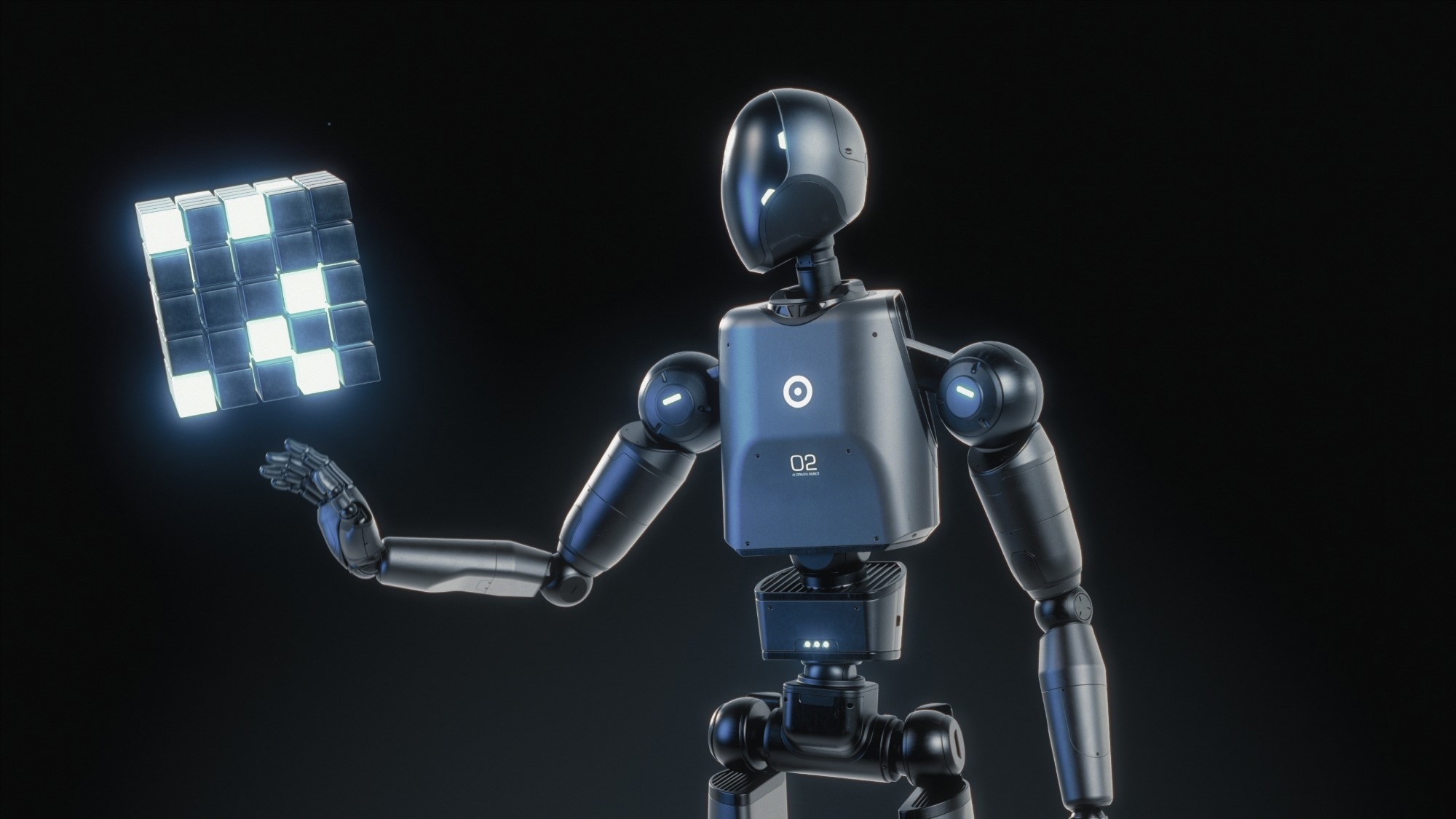 Image Credit: Frame Stock Footage/Shutterstock
An Overview of Physical AI
The evolution of robotic intelligence from symbolic AI, which defines intelligence as rule-based symbol manipulation abstracted from physical interaction, to behavior-based systems highlighting real-time responsiveness through direct sensorimotor coupling.1
These developments resulted in embodied intelligence, a concept grounded in biology and cognitive science that defines cognition as emerging from the dynamic interaction among the body, its control systems, and the environment, rather than from a centralized processor alone.1
Based on this foundation, physical AI is the practical implementation of embodied intelligence in engineered systems such as autonomous vehicles, robots, and virtual agents equipped with actuators and sensors. These systems achieve situated and autonomous behavior by integrating morphology, control architectures, and learning algorithms.1,2
Core principles of physical AI include situatedness, in which cognition depends on environmental context, and grounding, which connects internal representations to sensory experience and addresses the symbol-grounding problem in classical AI. Recent developments in learning-based control, data-driven sensing, and generative design provide the foundation for systems that interpret, decide, and act adaptively.1,3
Thus, physical AI systems generalize across tasks, learn affordances, and adapt in real time, enabling applications in logistics, autonomous mobility, healthcare, and human-robot collaboration. Recent advances in robotics, machine learning, and computing hardware have accelerated its development.1
Physical AI vs Traditional AI
The distinction between physical AI and traditional/digital AI lies in how intelligence is conceived, developed, and applied. Digital AI, such as recommendation systems, large language models, and image classifiers, primarily operates in an abstract domain and excels at pattern recognition, symbolic manipulation, and language processing.1
They are trained on massive datasets collected from digital environments, and shielded from the unpredictability and variability of the physical world. Inputs such as text, images, and structured data are sanitized, free of the latency, noise, or mechanical limitations that characterize real-world actuation and perception.1
Thus, digital AI has achieved remarkable benchmarks in content classification, generation, and semantic search, in which the system’s outputs are refined iteratively without immediate physical consequences, and the environment is controlled.1
Physical AI focuses on continuous interaction between action, perception, and learning within real-world environments, where systems operate under partial observability, sensor noise, uncertainty, and strict real-time constraints.1
Unlike digital AI, which relies on slower computation and large centralized datasets, physical AI agents like robots make rapid, millisecond-level decisions while accounting for limitations such as friction, energy, and hardware precision, marking a shift from purely optimal solutions to robust, safe, and feasible behaviors.1
Architecturally, physical AI uses hybrid approaches that combine learning with physics-based models or heuristics to bridge the simulation-to-reality gap. It learns incrementally from noisy, sparse interaction data instead of static datasets. While more challenging, this grounding in the physical world enables better adaptability and generalization, though at the cost of increased system and engineering complexities.1
Fundamentals of Physical AI
Physical AI is based on six fundamentals, including embodiment, sensory perception, actuator and motor action competence, learning ability, autonomy, and context sensitivity. Collectively, they describe intelligence as an emergent property arising from their continuous interaction, rather than as a single capability.2
Embodiment provides the physical grounding of the system, connecting it in the material world and enabling real interaction with the environment. Sensory perception converts external energy and signals into useful internal representations. Then, actuator and motor action competence translate these representations into physical movement, allowing the system to impact its surroundings.2
Learning ability enables the system to extract structure from experience, gradually improving performance through interaction with the environment, while autonomy organizes behavior according to decision-making principles and internal goals, ensuring that actions are self-directed. Context sensitivity combines situational and social awareness, enabling behavior to remain proper and adaptive across varying conditions.2
These fundamentals operate as a dynamic, circular network instead of a linear pipeline. Perception influences action, action generates new experiences, and these experiences reshape learning and autonomy.2
This cycle forms a closed control loop in which energy flows from the environment into the system through perception, is processed and transformed through embodied learning, and is ultimately returned to the environment through action. Thus, intelligence emerges as a self-regulating equilibrium, in which each movement alters the state of the system and its surroundings.2
Perception, Localization, and Mapping
Modern perception systems depend on self-supervised and semi-supervised learning methods, reducing dependence on large labeled datasets. Hardware like light detection and ranging and red, green, blue–depth cameras has improved depth sensing, enabling better performance in domains like autonomous driving and robotic manipulation.1,2
Situational awareness is further improved through multimodal sensor fusion, allowing AI systems to integrate diverse streams of information for more reliable decision-making. Architecturally, techniques like graph neural networks and attention-based models help robots form structured, relational representations of their environments.1
A key stage following perception is localization and mapping, often addressed through simultaneous localization and mapping (SLAM). SLAM jointly estimates an agent’s position and constructs an environmental map because the two processes are interdependent. This spatial understanding is foundational, directly supporting downstream planning, control, and adaptive behavior in physical AI systems.1
Planning and Reasoning
Planning and reasoning are key to the autonomy of physical AI systems, which rely on tight integration of task and motion planning. Task planning defines the goal, like navigation or object manipulation, while motion planning determines the physically feasible sequence of actions based on sensor feedback, kinematics, and environmental physics.1
Modern systems incorporate contextual awareness, enabling adaptive responses to obstacles, lighting, and task-specific constraints, particularly in instruction-following agents.
Download the PDF of this page here
Current research aims to build agents that generalize across environments and tasks while maintaining safety and efficiency. Key challenges include combining symbolic and sub-symbolic methods, improving robustness under uncertainty, and scaling reasoning without high computational cost.1
Control and Adaptation
Control is a key aspect of embodied intelligence, allowing physical AI systems to convert perception and decisions into real-world actions. Since these systems operate in uncertain, dynamic, and partially observable environments, they continuously adapt through low-level actuation. Conventional control methods based on fixed models and hand-crafted rules struggle with scalability, adaptability, and generalization in complex settings.1,4
This has led to the adoption of learning-based approaches, particularly reinforcement learning (RL). RL enables agents to learn control policies through interaction with the environment, effectively handling high-dimensional, nonlinear systems for tasks such as manipulation, locomotion, and navigation.1
Imitation Learning and Human Interaction
Imitation learning (IL) offers a framework for training physical AI agents, particularly when designing explicit reward functions is difficult or unsafe. IL provides a direct mapping from human intent to robotic behavior by learning from demonstrations, making it suitable for embodied systems operating in complex environments.1
However, basic approaches such as behavioral cloning face challenges such as error accumulation and poor generalization to new contexts. These limitations are intensified in physical systems where perception and control are tightly coupled, and real-time decision-making is required.1
To address this, more interactive IL methods have emerged, keeping humans in the learning loop through feedback and corrective guidance. These approaches improve sample efficiency and adaptability in unstructured environments.1
Human–robot interaction is enhanced through augmented reality, which overlays digital information onto physical spaces. Augmented reality enables clearer communication of robot intentions, like planned motions or goals, improving transparency, trust, and situational awareness, while also supporting intuitive, spatially grounded teaching and collaboration.1
What Embodiment Adds to Autonomy
Physical AI differs from traditional AI by embedding intelligence in bodies that perceive, act, and learn within real environments, rather than operating solely on abstract digital data. This embodiment adds autonomy by grounding decision-making in sensorimotor feedback, enabling systems to respond to uncertainty, constraints, and physical consequences in real time.
Unlike traditional AI, which optimizes within static datasets, embodied systems continuously adapt through interaction, producing more robust behavior in dynamic settings where perception, action, and learning form a closed loop.
References and Further Reading
- Thakur, A., Kaipa, K., Banerjee, A. G., Cappelleri, D. J., Krovi, V. N., & Gupta, S. (2025). Physical artificial intelligence for powering the next revolution in robotics. Journal of Computing and Information Science in Engineering, 25(12), 120809. DOI: 10.1115/1.4070122, https://asmedigitalcollection.asme.org/computingengineering/article-abstract/25/12/120809/1225298/Physical-Artificial-Intelligence-for-Powering-the
- Salehi, V. (2025). Fundamentals of Physical AI. ArXiv. DOI:10.48550/arXiv.2511.09497, https://arxiv.org/abs/2511.09497
- Zhang, J., Wang, L., & Gao, R. X. (2025). Embodied AI: A Foundation for Intelligent and Autonomous Manufacturing. Engineering. DOI: 10.1016/j.eng.2025.12.026, https://www.sciencedirect.com/science/article/pii/S209580992500815X
- Zhao, Z., Wu, Q., Wang, J., Zhang, B., Zhong, C., & Zhilenkov, A. A. (2024). Exploring Embodied Intelligence in Soft Robotics: A Review. Biomimetics, 9(4), 248. DOI: 10.3390/biomimetics9040248, https://www.mdpi.com/2313-7673/9/4/248
Disclaimer: The views expressed here are those of the author expressed in their private capacity and do not necessarily represent the views of AZoM.com Limited T/A AZoNetwork the owner and operator of this website. This disclaimer forms part of the Terms and conditions of use of this website.