Ray-inspired robots are getting faster and smarter, but a new study reveals the key breakthroughs still needed to make them truly autonomous underwater explorers.
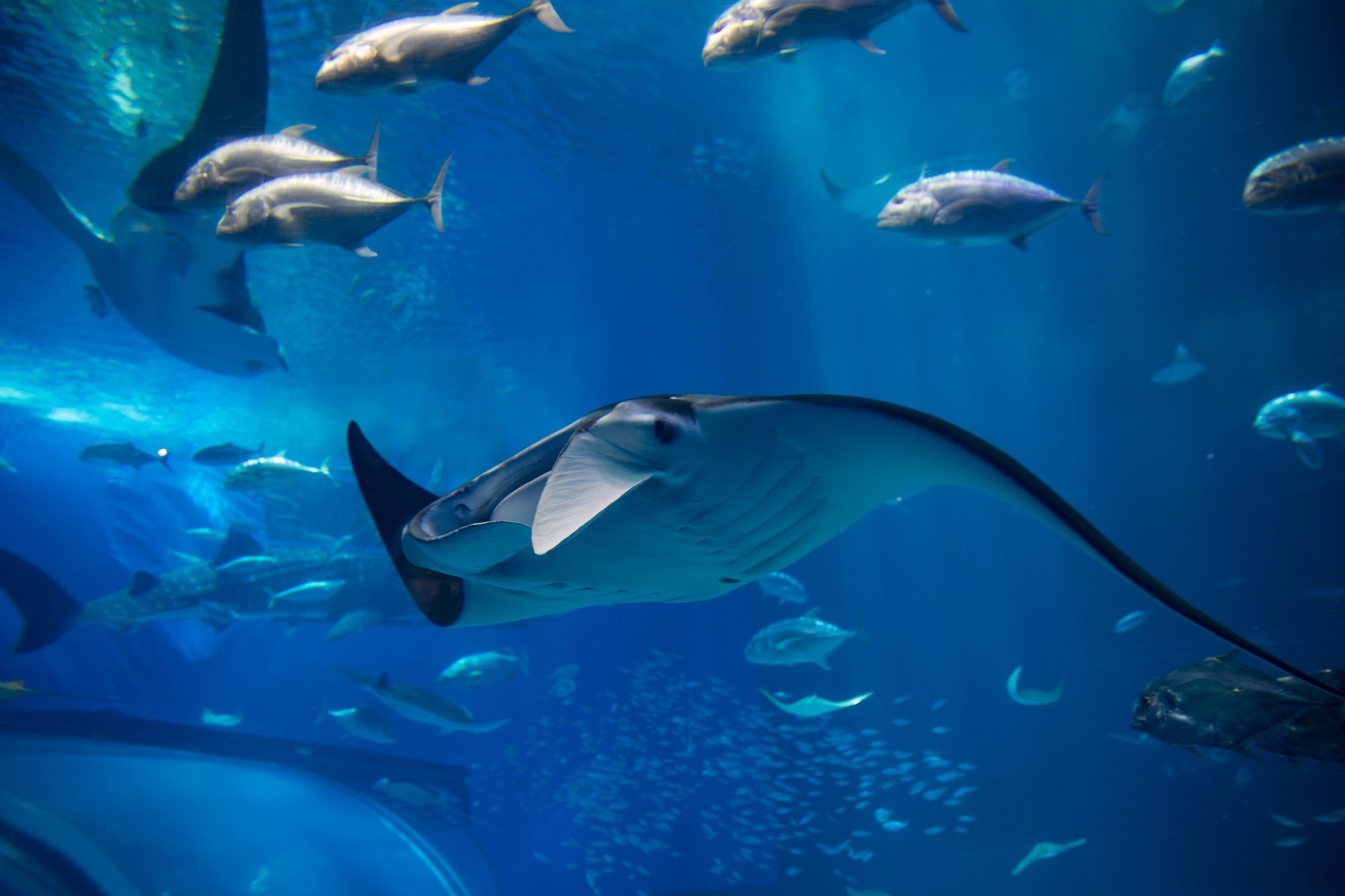
Image Credit: Benoist/Shutterstock.com
A new study published in Nature highlights the progress and key remaining challenges in the development of ray-inspired robots designed for underwater exploration.
These biomimetic robots, modeled after the efficient and graceful movement of batoid rays, are becoming faster and more sophisticated. But despite major strides in actuation and control, researchers say breakthroughs are still needed to make them truly autonomous tools for deep-sea discovery.
Why Do We Need Ray-Inspired Robots?
Oceans remain one of the least explored regions on Earth, largely due to the limitations of current underwater robotics. Traditional systems can be bulky, inefficient, or disruptive to sensitive marine environments.
Ray-inspired robots offer an alternative.
Their unique fin-based propulsion allows for smooth, efficient, and highly maneuverable swimming, traits that are ideal for navigating complex underwater landscapes.
Over the past decade, researchers have experimented with various actuation strategies and robot designs inspired by rays. However, most existing systems still fall short of replicating the complex fin motions and adaptive behaviors found in nature.
This recent paper offers an insightful review of the field, mapping out how far the technology has come and where it still needs to go.
Actuation and Mechanical Design: The Speed-Control Trade-off
The review categorizes ray-inspired robots by their actuation complexity.
- Simpler systems, such as single-servo designs, use passive fin bending to achieve top speeds of up to 1.78 body lengths per second (BL/s). These are fast, but limited in control and maneuverability.
- More complex robots incorporate multiple servos or mechanical drivetrains to actively shape the fin's motion. While this often reduces top speed, it greatly improves directional control and mimics the natural motions of real rays more closely.
Beyond servos, a growing range of alternative actuators are being explored:
- Cable-driven and tensegrity systems allow for large-amplitude, energy-efficient motion, though often at the cost of mechanical complexity.
- Soft actuators, such as IPMCs, SMAs, DEAs, and HASELs, bring advanced flexibility and miniaturization. Notably, HASEL actuators have demonstrated the highest speed to date (up to 2.22 BL/second) along with impressive agility.
However, there are a few consistent trade-offs: simplicity favors speed, while complexity enables control. And as the authors note, these trade-offs are scale-dependent. Servo systems perform best at larger sizes, while soft electrostatic actuators are more effective at smaller scales.
Control and Sensing: Toward Autonomy
While actuation has progressed rather quickly, control systems have lagged behind, especially in terms of real-world autonomy.
Most current robots use open-loop control (basic oscillators or bio-inspired central pattern generators (CPGs) that modulate fin movements for basic navigation). CPGs can support advanced swimming styles, like undulation and gliding, but they don’t react to the environment in real time.
Closed-loop control, which adjusts motion based on sensory input, is far more challenging. Some advances have been made using fuzzy logic and neural network controllers, allowing for dynamic adjustments without complex hydrodynamic models. In one case, a robot responded to a 48° heading disturbance in just two seconds using a fuzzy control system.
Still, the field is in its early stages.
Most ray-inspired robots use only basic internal sensors, such as IMUs, gyroscopes, and depth sensors, for pose estimation and stability. A few include cameras for visual tasks like optic flow or target tracking, but environmental sensing (e.g., salinity, temperature, chemical gradients) is rarely integrated.
Expanding sensor capabilities is a critical next step to support long-range navigation, mapping, and adaptive mission planning in real ocean environments.
Discussion and Insights
One of the paper's standout contributions is its identification of natural design patterns shared by both biological and robotic rays. For instance, robots with high aspect ratios tend to perform better in open-water oscillatory swimming, while lower aspect ratios are better suited for bottom-dwelling undulatory movement, mirroring real batoids.
Despite growing diversity in design, however, robotic performance still trails behind biological benchmarks, especially in mid-sized robots (15–35 cm) where actuator options are currently limited. This size range represents a notable performance gap that future designs must address.
Other persistent limitations include:
- Lack of dynamic control models
- Limited spanwise bending capabilities
- Tethered systems due to power or fluidic constraints
Together, these bottlenecks restrict the robots’ potential for long-duration, autonomous missions in variable, real-world marine conditions.
Conclusion
Ray-inspired robots represent a promising tool for underwater exploration, offering the potential for energy-efficient, quiet, and highly agile movement. But this review makes clear that a few significant engineering challenges remain.
Progress in actuation has outpaced developments in control, sensing, and autonomy. Bridging these gaps (especially in the mid-sized range) will be key to unlocking their full potential.
Future research should focus on:
- Integrating more advanced sensor suites
- Developing responsive closed-loop control algorithms
- Creating untethered soft actuation systems suitable for real-world deployment
With these advancements, the next generation of batoid-inspired robots could become essential tools for exploring Earth’s vast, uncharted oceans.
Journal Reference
Freyhof et al. (2026). Ray-inspired robots: recent advances in actuation and control. Npj Robotics, 4(1). DOI:10.1038/s44182-025-00064-x. https://www.nature.com/articles/s44182-025-00064-x
Disclaimer: The views expressed here are those of the author expressed in their private capacity and do not necessarily represent the views of AZoM.com Limited T/A AZoNetwork the owner and operator of this website. This disclaimer forms part of the Terms and conditions of use of this website.