A team at Keio University has developed a way for robots to adjust their grip based on what they’re holding - soft, hard, heavy, delicate - without needing endless hours of training data. It’s all thanks to a clever bit of statistical modeling known as Gaussian process regression.
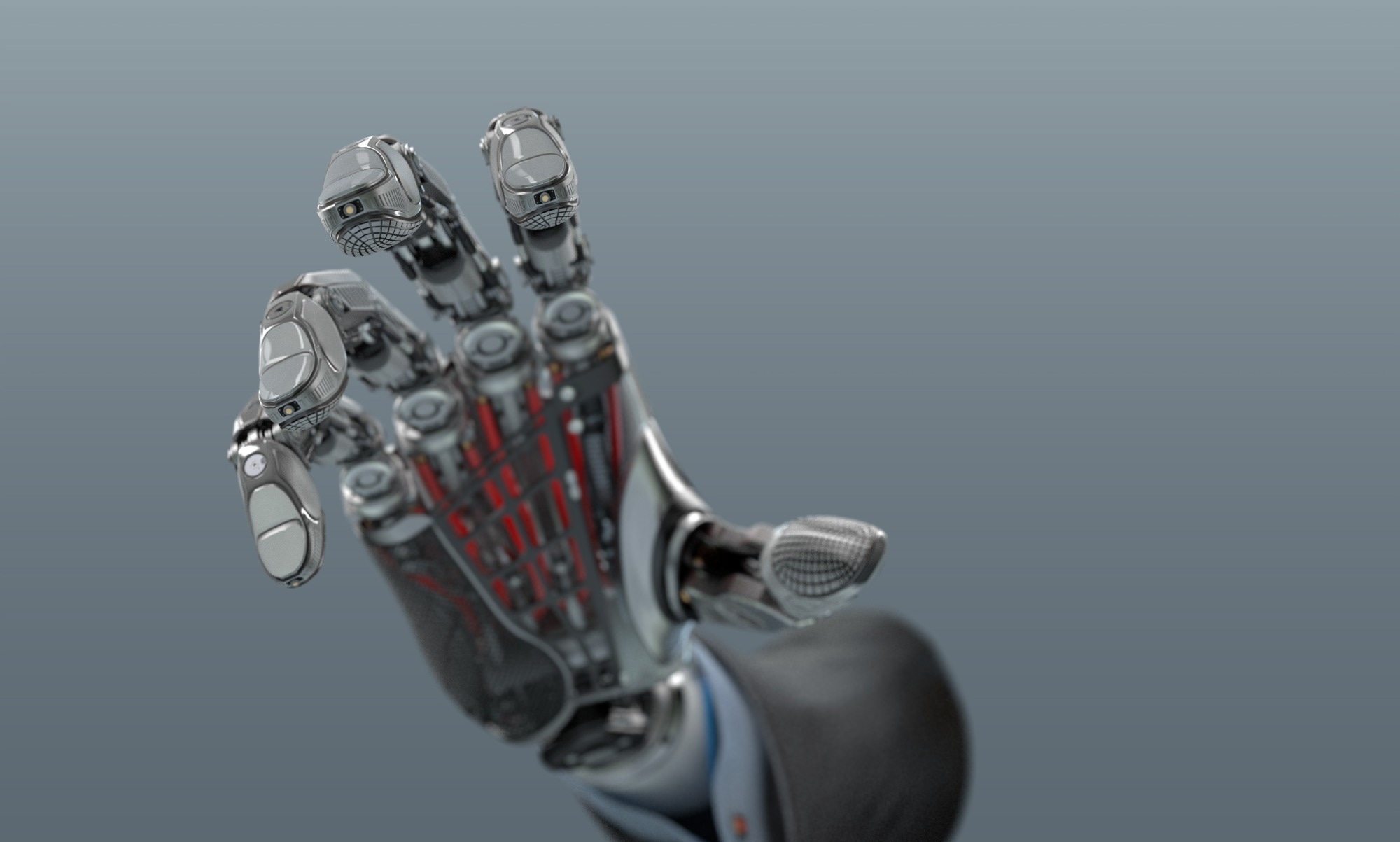
Study: Motion Reproduction System for Environmental Impedance Variation via Data-Driven Identification of Human Stiffness. Image Credit: Will Falcon/Shutterstock.com
Teaching Robots the Art of Subtlety
Robots are excellent at repeating the same action over and over. That’s what makes them so useful in factories. But when it comes to everyday tasks, helping an elderly person sit up, handling fresh fruit, or opening a sticky cupboard, they tend to fall short. The world, after all, doesn’t always behave exactly as expected.
That’s the problem researchers at Keio University set out to solve. Their goal was to give robots a sense of how to adapt, like a human might, when things don’t go exactly to plan.
To do this, they developed a motion reproduction system (MRS) that learns from human movement. But rather than simply copying what a person does, this system learns to understand why we move the way we do when we interact with different objects. The key lies in modeling how we adjust our grip and motion based on an object’s stiffness. This is something we as humans do instinctively, without a second thought.
Most Robots Are Stuck in Their Ways
Traditional robots tend to rely on pre-programmed movements. They work well in stable, predictable environments, but change a single variable, say, swap out a plastic cup for a glass one, and the whole system can fail.
Some motion reproduction systems try to work around this by recording human movements and replaying them later. But these systems are limited. They don’t generalize well because they don’t capture what’s really driving the human’s response, like whether the object is soft or resistant or unexpectedly heavy.
Previous efforts to introduce adaptability used linear models to estimate things like stiffness and damping. But human interaction with the physical world isn’t linear. It’s nuanced, fluid, and often unpredictable. Linear models just don’t cut it.
Learning From Less, Thinking More
That’s where Gaussian process regression (GPR) comes in. It’s a statistical method that shines when data is limited, but complexity is high, which is perfect for situations like this, where collecting extensive demonstrations is impractical.
The researchers recorded how people gripped and moved objects of various stiffness levels. These recordings included both the object properties and the force and position commands issued by the human hand.
With this data, the GPR model learned to predict what kind of movement a person would make in response to a new object, one it had never seen before. So, when the robot encounters something unfamiliar, it doesn’t panic or freeze. It estimates the right response based on what it’s learned and acts accordingly.
The result is a robot that can cradle a ripe peach or lift a cast-iron pan, all without needing to be explicitly trained on either.
Tested, Compared, and Proven
To test their system, the researchers used a robotic manipulator guided by a human operator. High-precision sensors captured how the operator adjusted their motion based on the object’s feel.
They then compared the performance of their GPR-based system with three alternatives: a non-adaptive motion system, a traditional linear interpolation model, and a standard imitation learning approach.
The results were compelling:
- For known object types, the new system cut position errors by 40 % and force errors by 34 %.
- For new, unseen objects, it reduced position errors by 74 %, which is a major leap in adaptability.
What made the difference was GPR’s ability to capture the underlying nonlinear patterns in human movement. Where other systems saw straight lines, this one saw curves and handled them gracefully.
More Than Just a Clever Trick
What’s exciting here isn’t just that the robot gets better at holding things. It’s that it does so using very little data. That makes the approach more practical, scalable, and cost-effective. You don’t need thousands of hours of training footage. You just need a few smart examples and a model that knows what to do with them.
There are clear applications in assistive robotics, where robots need to support people in day-to-day tasks, whether it’s pouring a glass of water or opening a stubborn door. And while this study focused on stiffness, the same approach could be extended to other qualities like slipperiness or fragility, broadening what robots might one day handle with confidence.
A Step Toward More Intuitive Machines
In the end, this isn’t about teaching robots to be more human. It’s about helping them become more aware of the world they move through; more responsive, more thoughtful, and ultimately more useful in everyday life.
By combining a light data footprint with a powerful model, this research marks a shift in how we think about robot training and adaptability. It suggests a future where robots are able to do more than just follow instructions; they can understand them in context.
Journal Reference
Takakura, A., Yane, K., Kitamura, T., Adachi, S., & Nozaki, T. (2025). Motion Reproduction System for Environmental Impedance Variation via Data-Driven Identification of Human Stiffness. IEEE Transactions on Industrial Electronics, 1–11. DOI:10.1109/tie.2025.3626633. https://ieeexplore.ieee.org/document/11319205
Disclaimer: The views expressed here are those of the author expressed in their private capacity and do not necessarily represent the views of AZoM.com Limited T/A AZoNetwork the owner and operator of this website. This disclaimer forms part of the Terms and conditions of use of this website.