This breakthrough in 3D-printed hydrogel cilia brings soft microrobots one step closer to mimicking the speed, control, and complexity of living systems at the smallest scales.
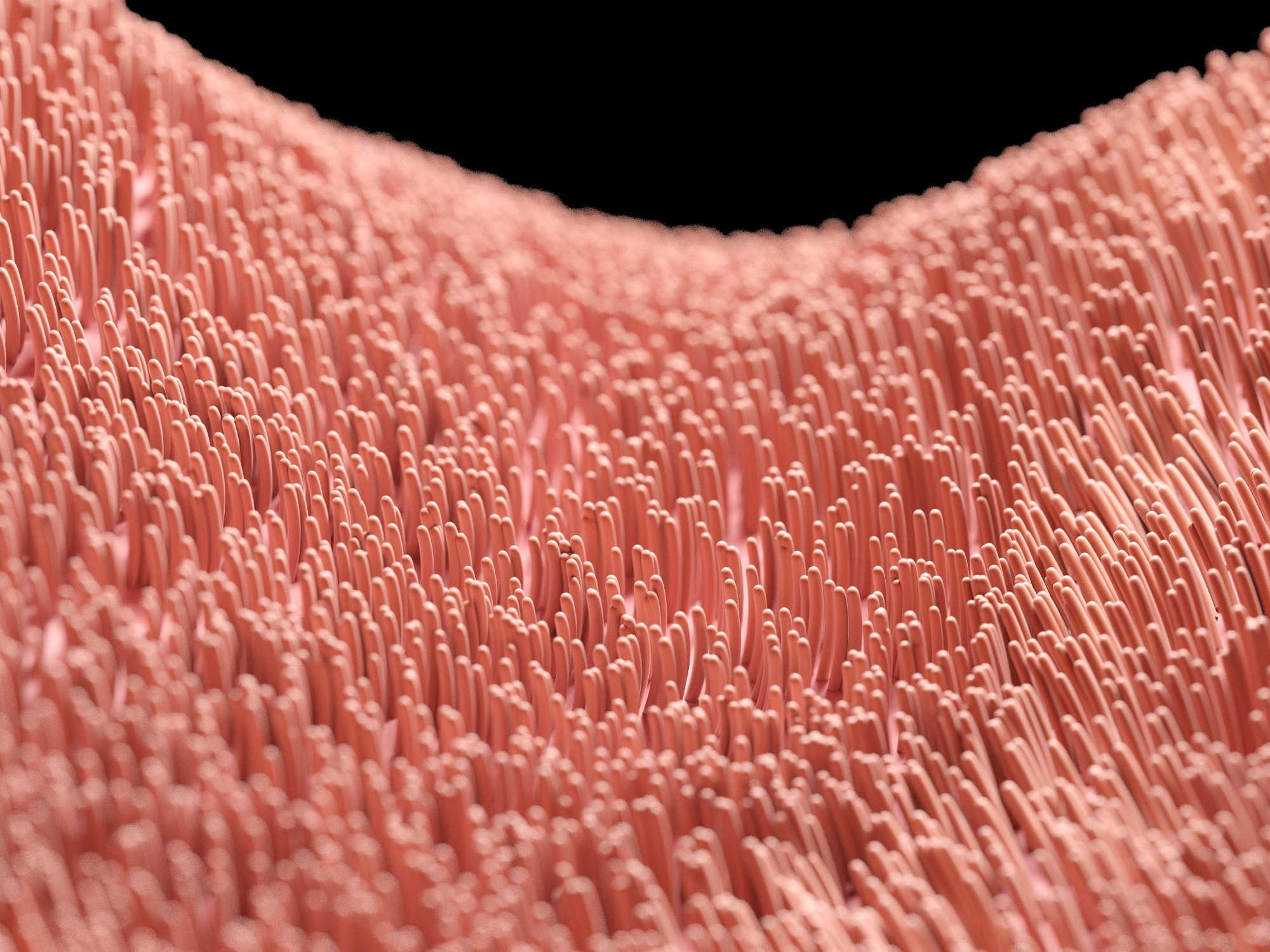
Study: 3D-printed low-voltage-driven ciliary hydrogel microactuators. Image Credit: 3dMediSphere/Shutterstock.com
A new study in Nature introduces a major advancement in soft microrobotics: fast, programmable artificial cilia made from 3D-printed hydrogels that bend in three dimensions using low-voltage electrical signals. These tiny actuators bring researchers closer to replicating the speed, coordination, and complexity of biological systems, unlocking new possibilities for manipulating fluids and particles at the microscale.
Recreating Nature’s Precision at the Microscale
In nature, microscopic cilia (hair-like structures found on cells) generate complex, synchronized movements to propel organisms or move fluids. Replicating these dynamic behaviors in artificial systems has long been a challenge, especially at small scales where viscous forces dominate, and precise control is essential.
Past approaches have run into trade-offs. Pneumatic actuators are difficult to miniaturize. Magnetic and optical systems struggle with precise local control. Other techniques, like ultrasound or electrochemical actuation, often suffer from limited speed, durability, or compatibility with biological fluids.
The team behind this study tackled these limitations head-on, introducing soft hydrogel microcilia that respond quickly and reliably to electrical inputs.
Printed using high-resolution 3D techniques, these actuators achieve fast, reprogrammable 3D motion, operate in fluid environments, and can be manufactured in large arrays, setting the stage for a new generation of bio-inspired microsystems.
How it Works: Fabrication and Materials
The process begins with fabricating flexible microelectrodes on a thin polyimide film. Using light-based patterning and metal deposition, the researchers created highly precise platinum circuits capable of individually controlling each cilium.
Next came the microcilia themselves, 3D-printed atop the electrodes using two-photon polymerization, a technique that allows for extreme precision at the microscale. The hydrogel material, a tailored blend of acrylic acid and acrylamide, was chosen and optimized for both printability and performance. Once developed and hydrated, the structures were ready for electrical actuation.
One of the study’s key findings was how differently these hydrogels behave at the microscale. In larger systems, hydrogel bending typically relies on slow ion diffusion across surfaces. But at the microscale, the dense nanometer-scale pore network within the printed gel allows ions to move quickly through its interior. This internal ion migration generates bending forces up to 100 times faster than in traditional setups.
To better understand the mechanics, the team combined simulations of electrochemical behavior with experimental flow analysis using particle tracking. This allowed them to correlate internal ion movement with the resulting 3D motion and surrounding fluid dynamics.
Fast, Durable, and Directionally Programmable Motion
This research successfully fabricated high-speed artificial cilia using a novel microscale hydrogel. The key advance was the use of two-photon polymerization 3D printing, which creates a hydrogel with a nanoscale porous network. This structure dramatically enhanced ion transport compared to larger, traditional hydrogels.
The microcilia, made of an acrylic acid-acrylamide hydrogel, were printed atop flexible microelectrodes. When a low voltage (1.5 volts (V)) was applied, ions migrated rapidly inside the gel's nanoscale pores, causing it to bend.
The bending direction is programmable. In pure water, hydrogen ion migration causes shrinkage, bending the cilium toward the cathode, whereas in saline, sodium ion migration causes swelling, bending it toward the anode. This internal ion migration mechanism is fundamentally different and enables bending responses within milliseconds, which is over 100 times faster than the surface-driven processes in larger hydrogels.
The result was a soft microactuator capable of complex, non-reciprocal 3D motions that closely mimic natural cilia. These arrays are durable, surviving over 330,000 actuation cycles, and can be fabricated at a large scale for precise microscale fluid manipulation.
From Individual Motion to Complex Flow Control
Beyond individual actuation, the researchers explored how arrays of microcilia could be programmed to create synchronized motion and sophisticated flow patterns. Actuation performance depended on variables such as hydrogel composition and cilium diameter, with certain formulations showing strong bending even at high frequencies (up to 50 Hz).
The actuators functioned well in simple biological fluids like human saliva, though more complex environments, such as mouse plasma, reduced performance due to ion competition. The team suggests that modifying the gel chemistry or scaling down the cilia could help overcome this limitation in future iterations.
Using individually addressable electrodes, the team demonstrated synchronized 3D rotations, metachronal wave generation, and programmable flow fields. They fabricated arrays ranging from 5×5 to 106 elements, using scalable lithographic techniques. These cilia could move particles, generate vortices, and even mimic biological pumping behaviors.
One particularly striking demonstration featured a soft robotic starfish larva. The artificial cilia recreated natural vortex patterns seen in marine larvae, showcasing the potential of these systems for studying biofluid dynamics or developing functional soft robotic swimmers.
What’s Next
By combining fast internal ion transport with scalable, high-precision 3D printing, this work opens new opportunities for microscale actuation in soft robotics. These hydrogel microcilia offer an elegant solution to a long-standing challenge of being able to merge speed, programmability, and biocompatibility in a single, flexible platform.
While more work is needed to maintain performance in highly complex fluids, this platform lays the groundwork for future advances in microfluidics, diagnostics, and targeted therapeutic systems.
Journal Reference
Liu et al. (2026). 3D-printed low-voltage-driven ciliary hydrogel microactuators. Nature, 649(8098), 885–893. DOI:10.1038/s41586-025-09944-6. https://www.nature.com/articles/s41586-025-09944-6
Disclaimer: The views expressed here are those of the author expressed in their private capacity and do not necessarily represent the views of AZoM.com Limited T/A AZoNetwork the owner and operator of this website. This disclaimer forms part of the Terms and conditions of use of this website.