A robotic hand with reversible fingers can now crawl, grasp multiple objects, and reattach to an arm, combining manipulation and mobility in a single device.
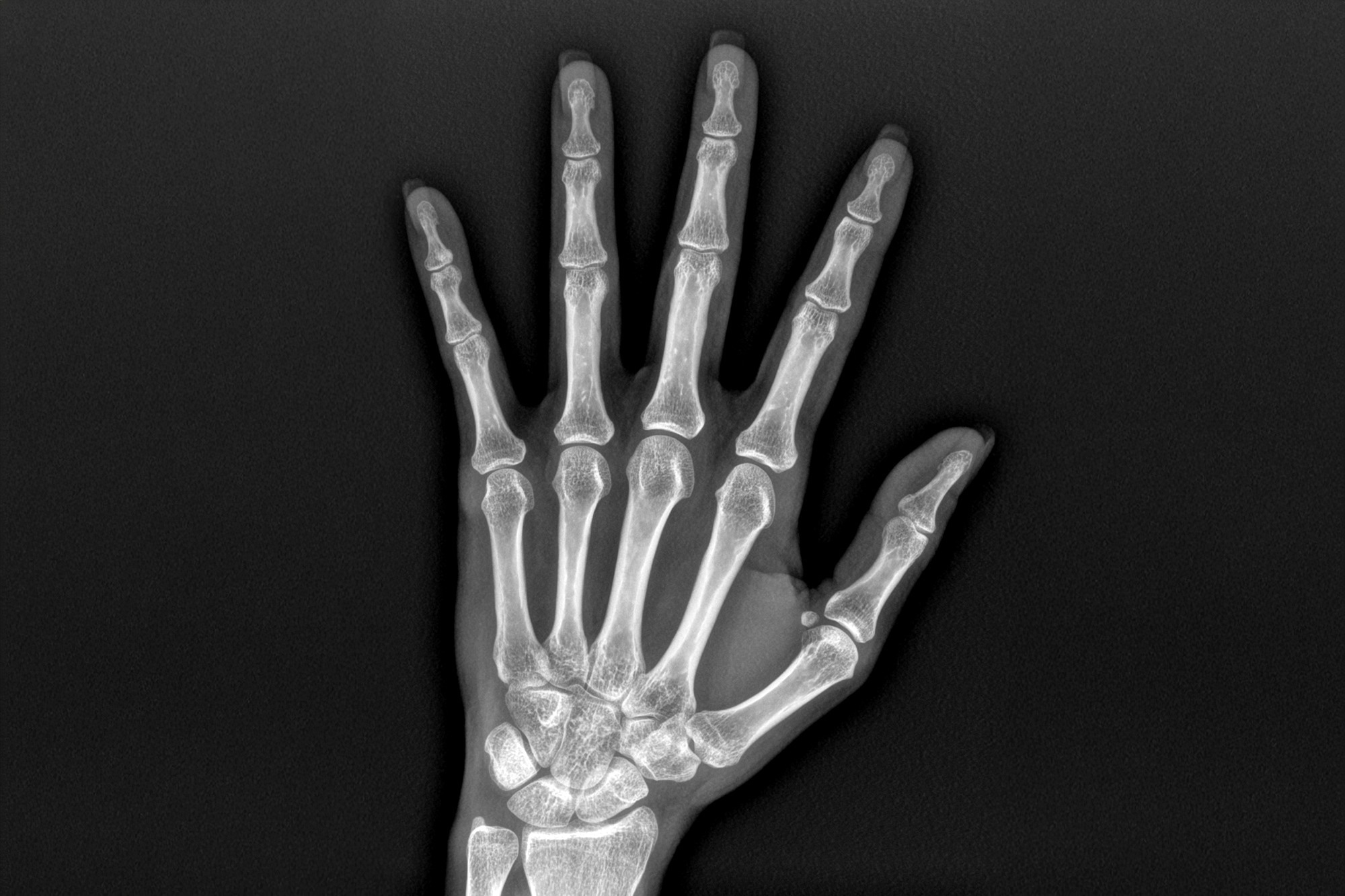
Study: A detachable crawling robotic hand. Image Credit: ArtPhoto21/Shutterstock.com
In a new article published in Nature Communications, researchers introduced a robotic hand with a novel reversible-finger design, addressing the constraints of traditional, human-like asymmetric hands. This system allows the hand to grasp from both sides, move autonomously, handle multiple objects, and dock itself, merging multiple functions into one cohesive platform.
Rethinking the Robotic Hand
Robotic hands have historically mimicked the human hand’s form: asymmetric, thumb-centric, and fixed in place. While this approach has enabled many dexterous tasks, it also brings inherent limitations, particularly when it comes to symmetric grasps, multi-object handling, or navigating tight spaces.
To break free from these constraints, the research team looked to nature’s generalists (like the octopus and mantis shrimp) whose limbs perform multiple functions. Their solution was to create a fully modular, symmetric hand with reversible fingers that double as legs. Each finger can grasp or support locomotion depending on the task, and the palm detaches and reattaches autonomously via a magnetic docking mechanism.
By discarding the blueprint of the human hand and leaning into the design freedoms offered by robotics, the team created a tool that isn’t just a better hand - it’s a more capable, self-sufficient robotic platform.
How it Works: Design and Control
To unify manipulation and mobility, the researchers developed a co-optimized system encompassing hardware, motion planning, and control.
1. Grasping While Moving
A virtual “grasp taxonomy” was built to support grasping mid-locomotion. Instead of assigning whole fingers to specific tasks, finger segments were dynamically mapped to functional roles. This allowed different parts of the same finger to contribute to crawling and grasping simultaneously, a key feature for carrying multiple objects without halting movement.
2. Coordinated Motion Planning
To guide movement, the team used a dynamical systems approach that generates velocity fields in real time, enabling obstacle-aware crawling and docking. Finger trajectories were driven by a central pattern generator (CPG), which produced stable, cyclic joint motions that adapt to desired directions and terrain.
3. Hardware and Optimization
The hand’s structure was optimized using a genetic algorithm, which tested various finger placements, roles (grasping vs. crawling), and locomotion gaits. Simulations revealed that configurations with three to six fingers delivered the best performance, balancing dexterity and mobility while avoiding excess weight and collisions.
The resulting prototype includes modular, reversible fingers actuated by commercial servos, mounted on a detachable palm secured by neodymium magnets and a motorized bolt. A vision system handles real-time object detection, while the robot relies on position-based control for precise tracking.
What it Can Do: Key Results
The robotic hand was put through four core experiments to validate its functionality.
1. Optimized for Grasp-and-Crawl
The co-designed system confirmed that three to six fingers strike the best balance. More than five resulted in diminishing returns due to increased mass and risk of collisions.
2. Broad Grasp Capabilities
The symmetric fingers achieved all 33 grasp types in the Feix GRASP taxonomy, including pinch, tripod, and spherical grasps. The hand handled up to four objects at once and lifted loads up to 2 kg. Its range of joint motion far exceeded that of a human hand, expanding its workspace and flexibility.
3. Autonomous Role Switching
The hand successfully detached from its arm, crawled to retrieve scattered items (even stacking them during transport), and re-docked, all without external intervention. This showed that the system can operate independently, then reintegrate with larger robotic systems as needed.
4. Resilience and Self-Recovery
Its reversible design allowed the hand to grasp from either side and recover from being flipped over by righting itself using its fingers, demonstrating a level of autonomy and adaptability crucial in unstructured environments.
Why it Matters: Broader Implications
Unlike biological systems, which evolve under anatomical and developmental constraints, robotic systems can explore entirely new design spaces. This project exemplifies that freedom, replacing a fixed thumb with fully reversible fingers and uniting traditionally separate modules into a compact, versatile platform.
Performance gains were notable:
- 5–10 % improvement in crawling over asymmetric configurations
- Any finger pair could act as opposable thumbs
- Multi-object planning became simpler and more efficient
- Shared hardware between crawling and grasping reduced system complexity
The potential applications are wide-ranging. From disaster response and industrial inspection to assistive robotics, the ability to manipulate and move autonomously within tight or unpredictable environments is invaluable. The design also opens doors for prosthetic technologies or supernumerary limbs, where adaptability and intuitive control are essential.
Conclusion
This research challenges the long-held notion that robotic hands should mimic human anatomy. By prioritizing function over form, embracing symmetry, reversibility, and modularity, the team created a robotic hand that doesn’t just grasp well, but moves, recovers, and adapts independently.
In doing so, they’ve blurred the line between manipulator and mobile robot, offering a cohesive solution for environments where traditional hands or crawling systems alone would fall short. As robotics continues to mature, this kind of integrated, co-designed system may point the way forward.
Journal Reference
Gao, X., Yao, K., Junge, K., Hughes, J., & Billard, A. (2026). A detachable crawling robotic hand. Nature Communications, 17(1). DOI:10.1038/s41467-025-67675-8. https://www.nature.com/articles/s41467-025-67675-8
Disclaimer: The views expressed here are those of the author expressed in their private capacity and do not necessarily represent the views of AZoM.com Limited T/A AZoNetwork the owner and operator of this website. This disclaimer forms part of the Terms and conditions of use of this website.