An AI-powered search of the Hubble archive reveals hundreds of strange, previously unseen objects, proving that space still has plenty of surprises hiding in plain sight.
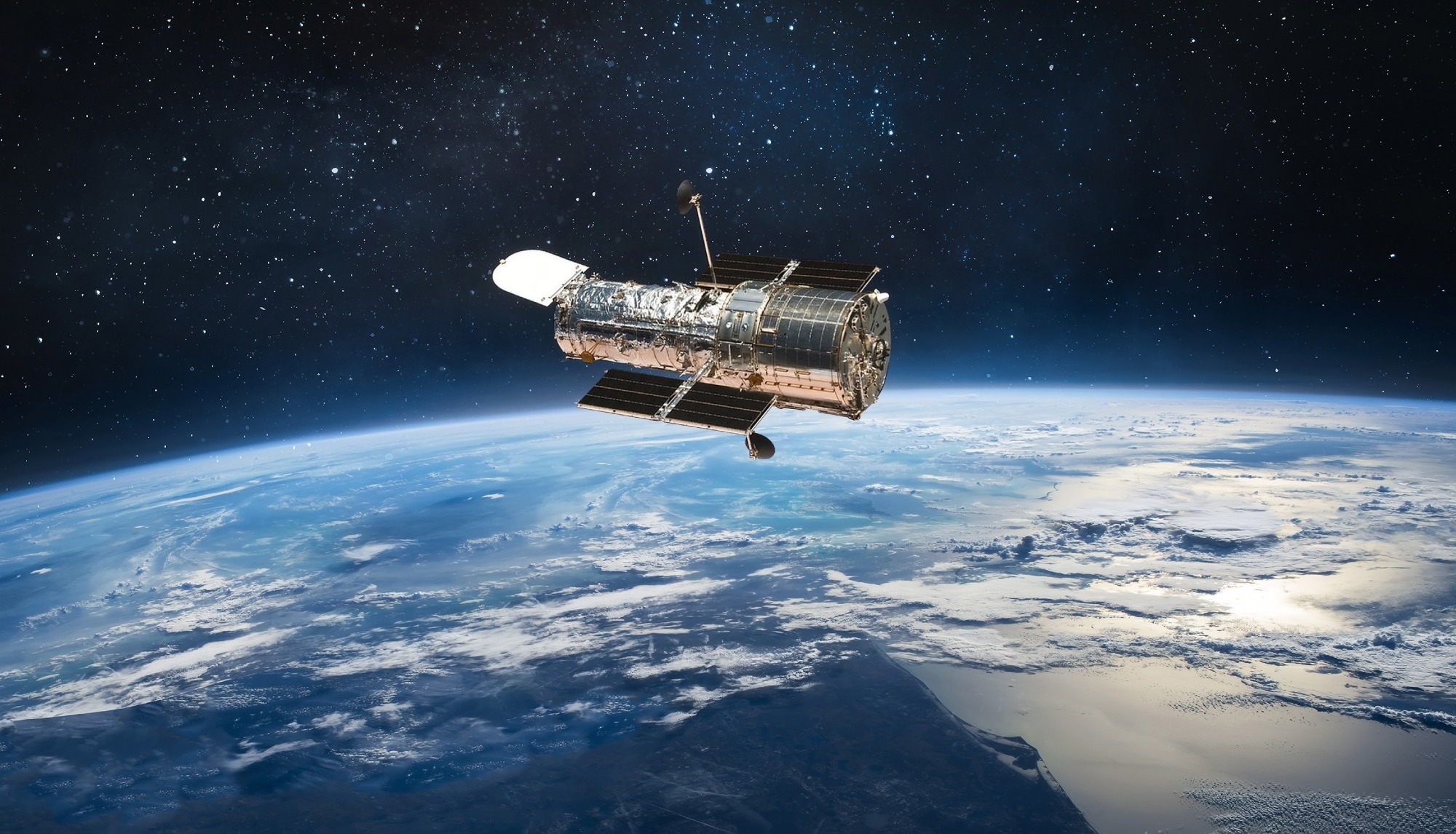
Image Credit: Dima Zel/Shutterstock
NASA has reported that artificial intelligence (AI) has uncovered more than 1300 cosmic anomalies hidden in NASA's Hubble Space Telescope archives, over 800 of which had never been documented in scientific literature.
Using a neural network called AnomalyMatch, developed by researchers at the European Space Agency (ESA), the team sifted through nearly 100 million image fragments from Hubble in just a few days, a task far beyond the reach of human astronomers working alone.
Background
Launched in 1990, NASA's Hubble Space Telescope has become a pillar of modern astrophysics, delivering discoveries that have reshaped our understanding of the cosmos. From measuring the universe's expansion to analyzing the atmospheres of exoplanets, Hubble's legacy is vast and ongoing. But that legacy comes with a challenge: a massive, ever-expanding trove of observational data known as the Hubble Legacy Archive.
This archive contains millions of images, each a possible gateway to new discoveries. Its size, however, makes thorough manual analysis nearly impossible.
While expert astronomers and enthusiastic citizen scientists have made valuable serendipitous finds, the majority of the archive remains largely unexamined. That leaves countless potential discoveries effectively buried. Enter AI.
AI has not been used as a replacement for human insight, but as a tool to scale it. With the right approach, AI makes the impossible not only manageable but immensely productive.
AnomalyMatch: How it Works
At the heart of the study is AnomalyMatch, a convolutional neural network created by ESA researchers David O’Ryan and Pablo Gómez. Inspired by the human brain's pattern recognition skills, AnomalyMatch wasn't trained to look for specific celestial objects. Instead, it learned what "normal" astronomical images look like and flagged anything that stood out.
The team fed AnomalyMatch nearly 100 million small image cutouts from Hubble data, each just a few dozen pixels wide. In just two and a half days, the system scanned them all, assigning each an "anomaly score." The top-scoring anomalies were passed on to astronomers for manual review.
This hybrid workflow proved remarkably effective. In less than a week, researchers had identified over 1300 cosmic anomalies, a level of productivity that's virtually impossible with traditional methods, which often rely on random discovery or the efforts of volunteer-based citizen science.
What Was Found - And Why it Matters
Most of the identified anomalies are galaxies caught in intense interactions or mergers, bending and twisting into dramatic shapes. The system also detected numerous gravitational lenses, where massive foreground galaxies warp and magnify the light from distant background sources into arcs and rings.
Other discoveries include galaxies rich with giant star-forming clumps, so-called "jellyfish galaxies" trailing streams of gas, and even edge-on protoplanetary disks within the Milky Way that strikingly resemble hamburgers.
But perhaps most intriguing are the several dozen objects that defy existing classification. These outliers may hint at astrophysical processes or stages of cosmic evolution that we don't yet understand, and could direct future research efforts.
The implications go well beyond Hubble. With upcoming missions like NASA's Nancy Grace Roman Space Telescope, ESA's Euclid, and the Vera C. Rubin Observatory expected to generate exponentially more data, manual review simply won't be feasible. Tools like AnomalyMatch will be essential for navigating this tidal wave of information, helping astronomers uncover rare and complex phenomena at scale.
Conclusion
Applying AI to Hubble's archive has done more than surface a trove of new cosmic curiosities. It has introduced a scalable, efficient model for discovery that pairs machine learning with human expertise.
As astronomical datasets grow ever larger and more intricate, this kind of collaboration ensures that the potential for meaningful discovery grows with them.
Disclaimer: The views expressed here are those of the author expressed in their private capacity and do not necessarily represent the views of AZoM.com Limited T/A AZoNetwork the owner and operator of this website. This disclaimer forms part of the Terms and conditions of use of this website.