A new steering-based control method significantly improves autonomous robot tracking accuracy in open environments while offering practical, geometry-specific insights for safety-critical navigation in chemical processing facilities.
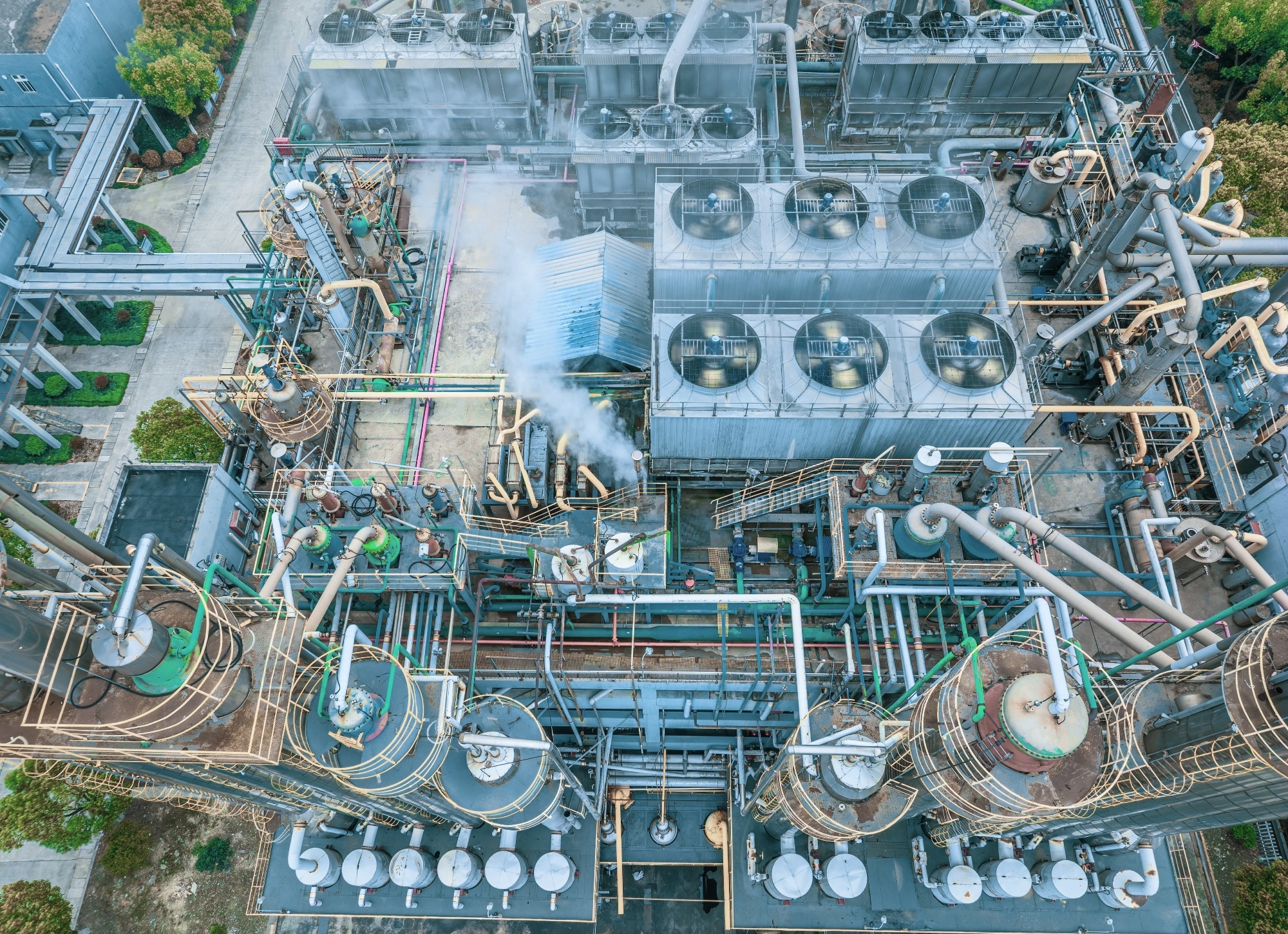
Study: Enhanced pure pursuit with dynamic steering control for autonomous mobile robots and application to safe navigation in chemical plants. Image Credit: dongfang/Shutterstock.com
In a study published in Scientific Reports, researchers introduced pure pursuit with dynamic steering control (PP-DSC), an algorithm that adjusts both speed and lookahead distance in response to steering demand.
In open-field testing, the method clearly outperformed conventional approaches. In industrial simulations, however, performance proved more dependent on path geometry: stronger in moderate curves, but less consistent in tight-radius sections.
Addressing a Known Limitation in Pure Pursuit
Autonomous mobile robots (AMRs) depend on accurate localization and stable trajectory tracking to operate safely, particularly in structured outdoor and process-industry environments. While sensor fusion techniques (combining GNSS real-time kinematic (GNSS-RTK), inertial measurement units (IMUs), and wheel encoders) provide centimeter-level positioning, tracking performance ultimately depends on the control algorithm.
The pure pursuit algorithm remains popular because it is simple and computationally efficient. However, its fixed lookahead distance creates a persistent trade-off: stable behavior on straight segments but oscillation and lateral deviation on curved paths. In environments governed by Fire and Explosion Index (F&EI) constraints, even modest deviations can increase operational risk.
Previous refinements have typically modified a single parameter, such as adjusting lookahead based on velocity. The researchers instead focused on the interaction between steering intensity and speed.
Their solution, PP-DSC, links both lookahead distance and velocity to a steering percentage metric - the ratio of the current steering angle to its maximum. As curvature increases, the robot automatically slows down and shortens its lookahead. As curvature decreases, speed increases and lookahead extends. A Lyapunov-based analysis confirmed local asymptotic stability under bounded curvature and actuator limits.
Experimental Platform and Evaluation Design
To validate the approach, the team deployed PP-DSC on a four-wheeled, car-like robot built on Ackermann steering geometry.
The platform measured 600 millimeters wide by 1000 millimeters long, with a 613.5 millimeter wheelbase. It was equipped with GNSS-RTK positioning capable of 1.5 centimeter accuracy, an onboard IMU, wheel encoders, brushless direct current motors, and an industrial computer running Robot Operating System (ROS) 2 Jazzy.
Electrical separation between motor and sensor systems minimized interference, while controller area network (CAN) communication and wireless telemetry supported integration.
Three control strategies were compared:
- Standard PP with a fixed 5.0-meter lookahead
- PP with dynamic lookahead (PP-DL), adjusting lookahead between 0.5 and 5.0 meters based on velocity
- PP-DSC, adapting both lookahead and velocity using steering percentage
When steering demand exceeded 70 % of maximum, PP-DSC reduced speed to 0.5 meters per second (m/second). Below 20 %, speed increased to 3.0 m/second, with linear interpolation between thresholds.
Field tests were conducted in a 64 × 20 meter open area across straight, loop, and figure-eight trajectories at speeds ranging from 1.0 to 5.0 m/second. Industrial performance was then evaluated through simulations of an empty fruit bunch (EFB) biodiesel plant incorporating F&EI-based safety constraints.
Clear Gains in Open-Field Testing
In open terrain, the advantages of coordinated adaptation were evident.
On straight paths, PP-DSC reduced the mean lateral deviation from 0.19 meters (standard PP) to 0.05 meters. That is a 77 % reduction in root mean square error (RMSE).
On loop trajectories, the deviation dropped from 0.52 meters to 0.07 meters, representing roughly an 84 % improvement. Figure-eight paths showed approximately 70 % improvement, depending on configuration.
These gains stem from dynamic velocity modulation. Rather than maintaining constant speed through sharp turns, PP-DSC reduced velocity by as much as 2.50 m/second when steering demand increased. This prevented overshoot and stabilized lateral error, while allowing higher speeds on straight segments.
In spacious environments with gradual curvature transitions, this adaptive behavior consistently improved tracking precision.
Industrial Simulation Reveals Geometry Sensitivity
The industrial simulations introduced tighter turns and more complex layouts, and with them, a shift in relative performance.
In sections with 5–9 meter turning radii, standard PP outperformed safety-integrated PP-DSC by approximately 15.6 %.
Around reactors in compact loop paths, a fixed 4.0-meter lookahead provided more predictable trajectory anticipation. In the pyrolysis section, standard PP achieved an RMSE of 0.040 meters compared to 0.080 meters for PP-DSC with safety integration. The separation section recorded the highest errors (0.70–0.94 meters), largely due to “path jumping” at figure-eight intersections where shortened dynamic lookahead occasionally selected incorrect waypoints.
However, this was not a universal limitation.
In moderate-curvature sections, safety-integrated PP-DSC reduced RMSE by 11–17 %. The F&EI-based safety factor remained between 0.84 and 0.87 in hazard zones, introducing less than 1 % tracking overhead while ensuring automatic velocity reduction aligned with Process Safety Management requirements.
Overall, there was a clear pattern. Tight inspection paths favor the predictability of fixed-lookahead control, while moderate-curvature transport routes benefit from adaptive steering-based velocity regulation.
Practical Implications
PP-DSC substantially improves tracking accuracy in open environments, reducing lateral deviation by up to 84 % depending on path geometry. In industrial settings, however, controller selection should reflect route characteristics.
Standard PP is better suited for tight-radius inspection paths requiring sub-0.10 meter precision, whereas safety-integrated PP-DSC offers stronger performance for moderate-curvature transport routes where hazard-zone velocity compliance is essential.
Rather than positioning one method as universally superior, the findings support geometry-aware controller selection and potentially adaptive switching strategies, as AMRs move deeper into safety-critical industrial applications.
Journal Reference
Promkaew, N., Junhuathon, N., Phuphaphud, A., Kulvanit, P., & Sukpancharoen, S. (2026). Enhanced pure pursuit with dynamic steering control for autonomous mobile robots and application to safe navigation in chemical plants. Scientific Reports. DOI:10.1038/s41598-026-38695-1. https://www.nature.com/articles/s41598-026-38695-1
Disclaimer: The views expressed here are those of the author expressed in their private capacity and do not necessarily represent the views of AZoM.com Limited T/A AZoNetwork the owner and operator of this website. This disclaimer forms part of the Terms and conditions of use of this website.