An electric, modular robot equipped with sensors, capable of moving non-invasively through orchards and vineyards and detecting crop diseases, is now available to farmers and agricultural producers. The solution, called Orioos, aims to provide address an issue across Europe: agricultural labor forces becoming increasingly scarce and ageing.
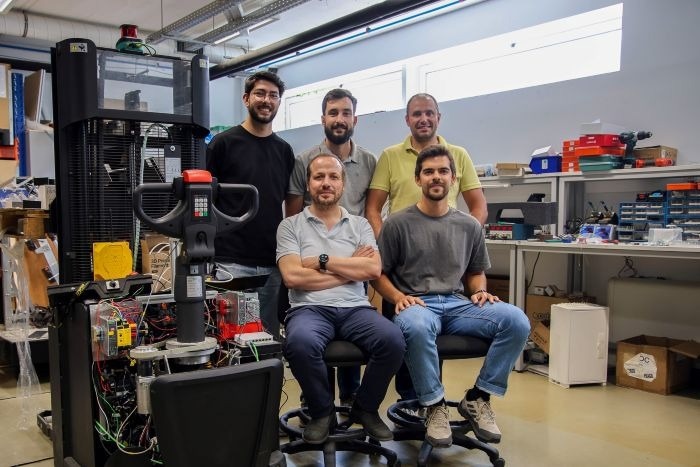 Image Credit: INESC TEC
The technology was developed over four years and can analyze permanent crops and estimate the productivity of a farm by “reading” the flower at an early stage of the harvest cycle. Currently, producers managing large-scale crops can only monitor a small portion of what is planted - and it is from that limited picture that they estimate productivity and allocate resources.
The robotic solution interprets crop conditions through Artificial Intelligence (AI) algorithms trained at one of Portugal’s leading agricultural robotics laboratories - the Institute for Systems and Computer Engineering, Technology and Science (INESC TEC).
Orioos was designed to operate in permanent crops such as orchards, pear trees and vineyards, providing producers with greater certainty in a context where reliable forecasts are rare.
“Instead of having only 10% of the crop manually monitored, we can now monitor vineyards and orchards across their entire area 24/7, through an autonomous process,” explained André Aguiar, researcher at INESC TEC (the institution where the spin-off ViField, responsible for Orioos, was established).
This continuous monitoring solution accurately identifies areas showing symptoms of disease, water leaks or the need for additional nutrients. Although drones also allow agricultural monitoring, Orioos stands out because of the proximity of analysis and the quality of the information collected. Equipped with several cameras, the robot processes data “on board” and stores memory and historical records of crop readings.
“We currently have a very extensive database covering different types of crops. We trained AI models capable of identifying crop conditions and detecting disease symptoms. This is possible thanks to the close-range analysis carried out by Orioos. The information we provide to decision-support systems - or directly to producers - has much greater added value,” highlighted André Aguiar.
The team is now focused on adding new features to the solution, which also stands out for being “extremely lightweight”, reducing agricultural soil compaction. Researchers are currently calibrating the system to estimate fruit weight and quality even before harvest. The goal is for Orioos’ repeated journeys through crop rows to allow more accurate forecasting of expected harvest conditions.
The first prototype emerged in 2022, when INESC TEC researchers dedicated to the development of advanced robotics, automation and IoT solutions won the EUSPA award in the “Best Idea” category with this permanent crop monitoring and phenotyping solution.
Since then, the technology has evolved and may also be applied outside the agricultural sector. “We have already received requests to test the robot in industrial environments, where monitoring would focus on perimeter inspection,” added André Aguiar.
ViField is one of INESC TEC’s six active spin-offs, part of the Portuguese research and technology organization from which dozens of companies have already emerged. Orioos has already travelled hundreds of kilometers across Portuguese farms, and ViField’s goal is now to expand the technology into the European market.