Industrial robotics is increasingly defined by its ability to operate reliably across very different environments. While technical requirements vary, shared capabilities such as precision, flexibility, and system integration are enabling robotics to deliver value across multiple industries.
In this interview, industry experts Irina Rau, Josh Russell and Jay Wong examine how advanced robotics is being applied in distinct sectors, highlighting its role in improving quality, safety, and scalability while adapting to distinct operational and environmental constraints.
I. Robotics in Pharma
II. Robotics in Solar PV Construction
III. Looking Ahead: The Future of Robotics Across Sectors
I. Robotics in Pharma
To get started, can you give us an overview of how robotics is reshaping modern pharmaceutical manufacturing?
Irina Rau: In pharmaceutical manufacturing, especially in sterile fill-finish environments, there’s a constant push for greater precision, flexibility, and compliance. Robotics helps by automating delicate steps where human contact needs to be limited. This is an important factor for controlling contamination.
At the same time, manufacturers are dealing with smaller batch sizes and more high-value products. Robotics brings the consistency and repeatability needed to handle these efficiently, maintaining tight tolerances that support better yields, safer products, and more reliable operations overall.
What unique opportunities does robotics offer pharmaceutical companies working with sterile injectable products?
Irina Rau: Robotics gives manufacturers the ability to combine precision with flexibility as robotic systems can manage different container formats and process conditions on a single platform without compromising accuracy. That’s a big advantage as more facilities shift toward multi-product lines and smaller batch production.
Robotics also plays a key role in advanced isolator-based workflows, where factors like cleanability, material compatibility, and highly repeatable motion are critical to maintaining aseptic conditions and meeting regulatory requirements.
Hygiene and cleanroom compatibility are critical in pharma. How are robotic systems designed to meet these requirements?
Irina Rau: Cleanroom compatibility is a core requirement when designing robots for pharmaceutical environments. That means smooth surfaces, sealed joints, carefully chosen materials, and full compatibility with hydrogen peroxide vapor (HPV) bio-decontamination processes.
Mechanical design is just as important. Robots need to minimize particle generation while still allowing for thorough, repeatable cleaning. When done right, these design principles support long-term operation inside aseptic isolators without impacting sterility or regulatory compliance.
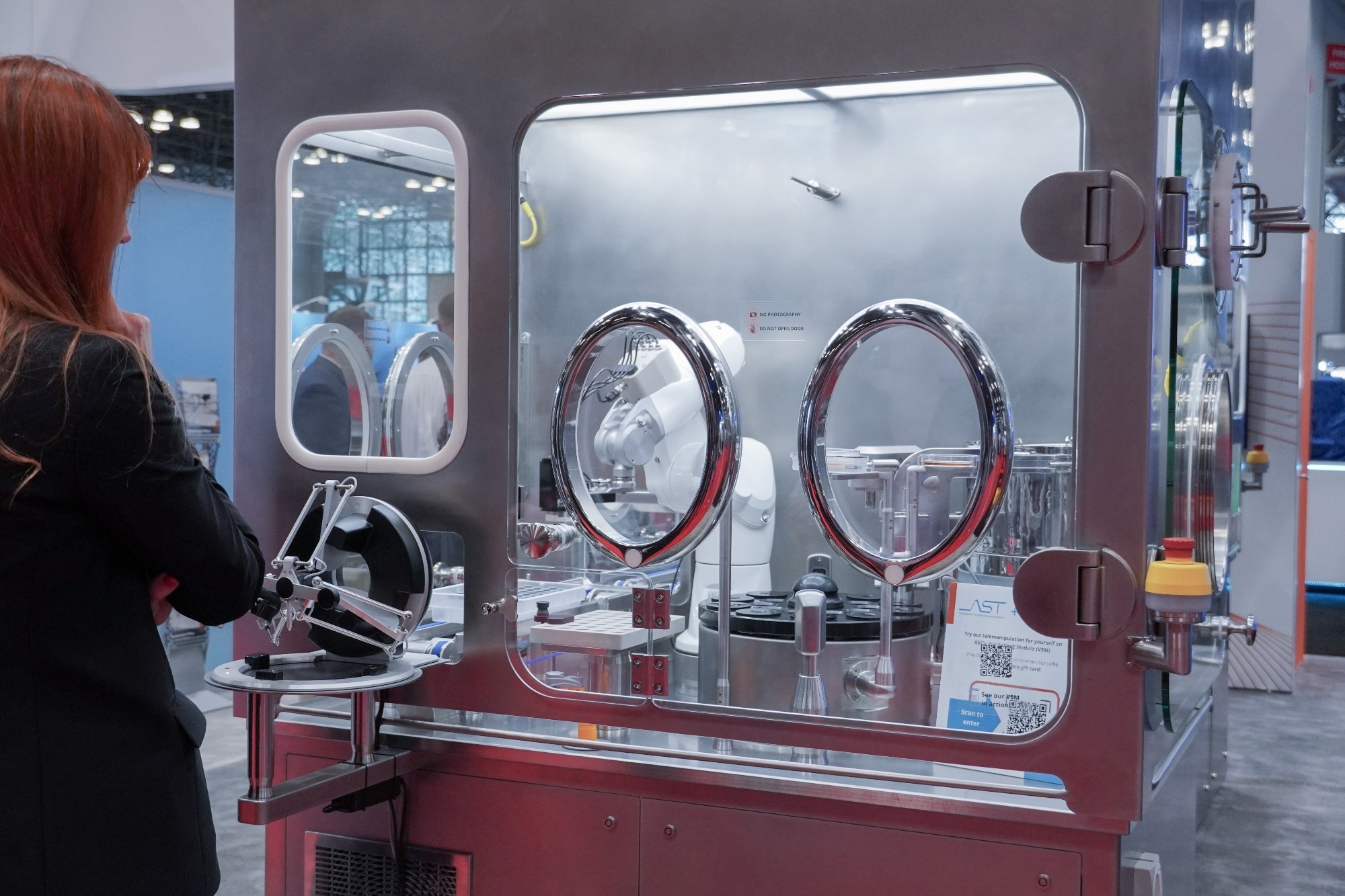
Image Credit: Stäubli Robotics
To understand how these design principles translate into real-world pharmaceutical systems, it is valuable to hear from an equipment manufacturer with long-standing experience in sterile production.
AST has worked closely with Stäubli to develop advanced fill-finish platforms and offers a system-level perspective on how robotics supports both compliance and productivity.
Can you provide some background on AST and the role robotics plays within your systems?
Josh Russell: AST is a US-based manufacturer of advanced automated fill-finish equipment for sterile injectable products and other critical sterile materials. In fact, we marked our 60th anniversary in 2025. This milestone reflects decades of innovation and commitment to patient safety.
We deliver turnkey systems that include aseptic isolators, bio-decontamination technology, and adaptive automation designed to handle ready-to-fill containers while meeting the highest regulatory standards. Robotics is at the heart of these systems, providing the precision, flexibility, and repeatability needed for reliable performance, particularly in aseptic environments.
How did working with Stäubli Robotics help AST address key challenges in sterile fill-finish production?
Josh Russell: Partnering with Stäubli Robotics helped us tackle a key challenge in sterile fill-finish: delivering flexibility without sacrificing precision or yield. By integrating Stäubli robots, we developed a system that processes vials, syringes, and cartridges on a single machine.
This was especially valuable for smaller-batch, high-value drug products, where accuracy and yield are absolutely critical. The result was our ASEPTiCell system, first qualified in 2010, which went on to run reliably in aseptic production for over 15 years before being replaced by a more advanced, higher-throughput platform.
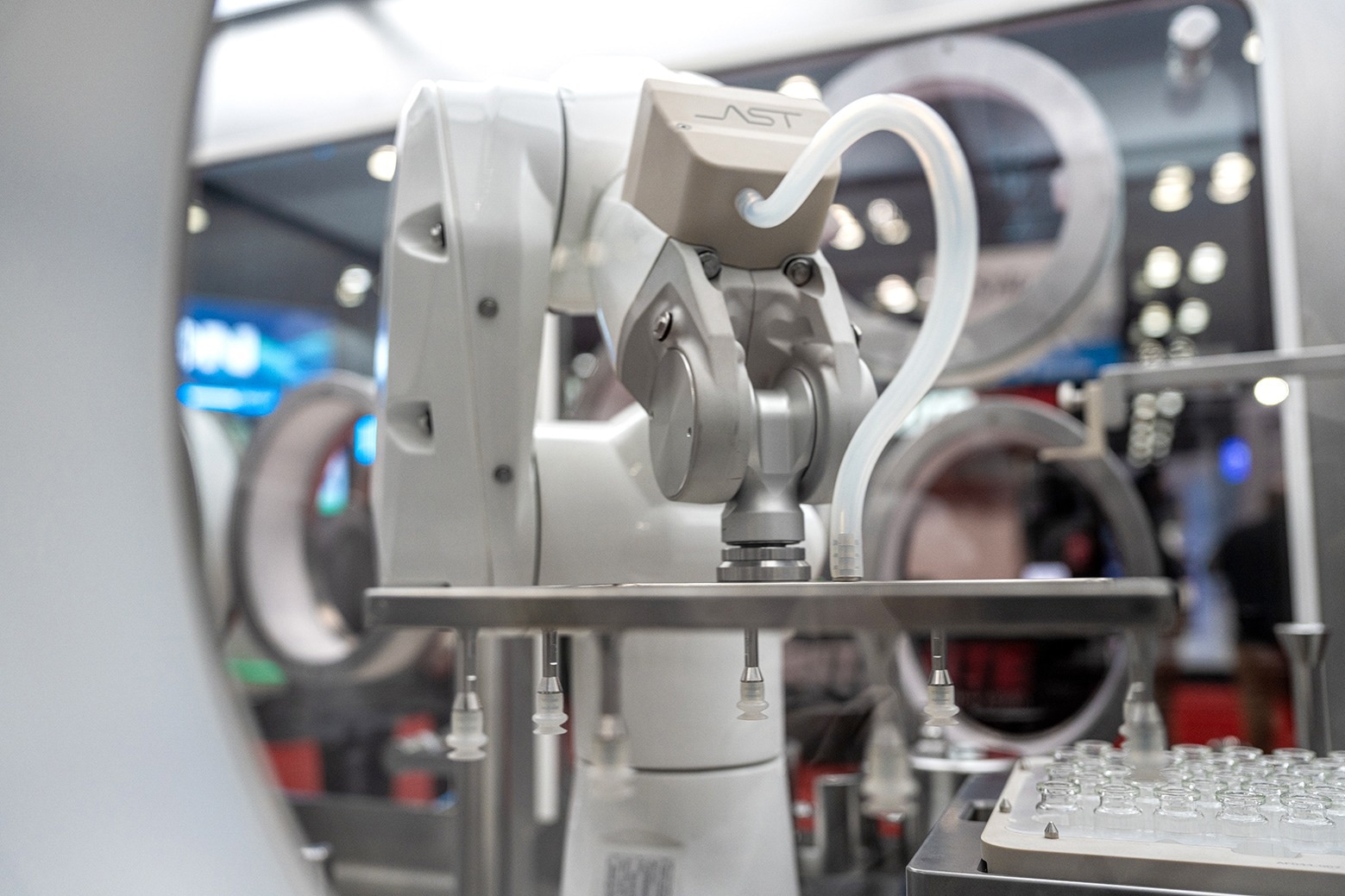
Image Credit: Stäubli Robotics
What specific aspects of Stäubli’s robotic platform made it suitable for long-term use in aseptic environments?
Josh Russell: It was actually several factors that helped make a difference. Stäubli robots met our strict requirements for cleanability and compatibility with hydrogen peroxide vapor, while also offering the durability needed for continuous use in demanding aseptic environments.
Equally important was the availability of a common robotic platform that could handle different applications and payloads. This allowed us to standardize across systems and streamline development.
Just as critical was Stäubli’s proven track record in pharmaceutical manufacturing, backed by data and long-term use cases that showed reliable performance throughout the full lifecycle of the equipment.
II. Robotics in Solar PV Construction
While pharmaceutical manufacturing relies on sterility and controlled environments, solar PV construction operates in open, outdoor settings where conditions are far less predictable.
Installation typically occurs across large sites exposed to dust, temperature extremes, uneven terrain, and changing workflows. Historically, automation adoption in this space has been limited by risk, particularly when solutions required major changes to established construction practices.
More recent approaches focus on integrating robotics directly into existing workflows, using mobile systems that work alongside human crews to improve safety, consistency, and productivity.
For readers unfamiliar with the space, can you explain what Luminous does and how robotics fits into your approach?
Jay Wong: Luminous develops mobile robotic systems designed specifically for utility-scale solar construction. Our systems are built to integrate directly into active job sites without requiring changes to existing workflows.
The robots work alongside installation crews, handling physically demanding tasks such as lifting, positioning, and installing solar modules. By offloading repetitive and heavy work, we help improve installation speed, reduce injury risk, and increase consistency across large-scale projects.
When evaluating robotic solutions for solar construction, what led you to partner with Stäubli Robotics?
Jay Wong: Risk reduction was a key driver in our design decisions. Mobile manipulation imposes strict constraints on size, weight, and power, and Stäubli’s robots stood out with an exceptional payload-to-mechanical-mass ratio. This meant that we were able to design LUMI as a compact system (about one-third the footprint of other robotic solutions in solar construction).
That efficiency opened the door to a more flexible and easily deployable platform. Stäubli’s arm design helped us turn tight constraints into practical advantages, resulting in a system that integrates seamlessly into real-world construction environments.
Also, we believe that, over time, there will be a convergence between mechanical and electrical installation steps in solar construction. With Stäubli also being a leader in solar cable connector technologies, this creates a unique opportunity to think more holistically about automation, bringing together precise mechanical handling and reliable electrical interconnection as part of a truly integrated installation workflow.
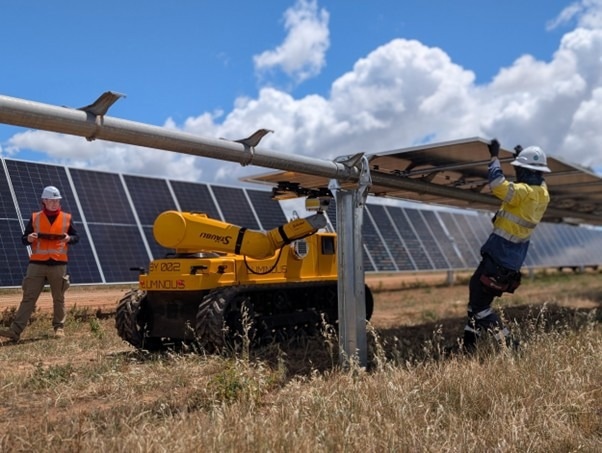
Image Credit: Stäubli Robotics
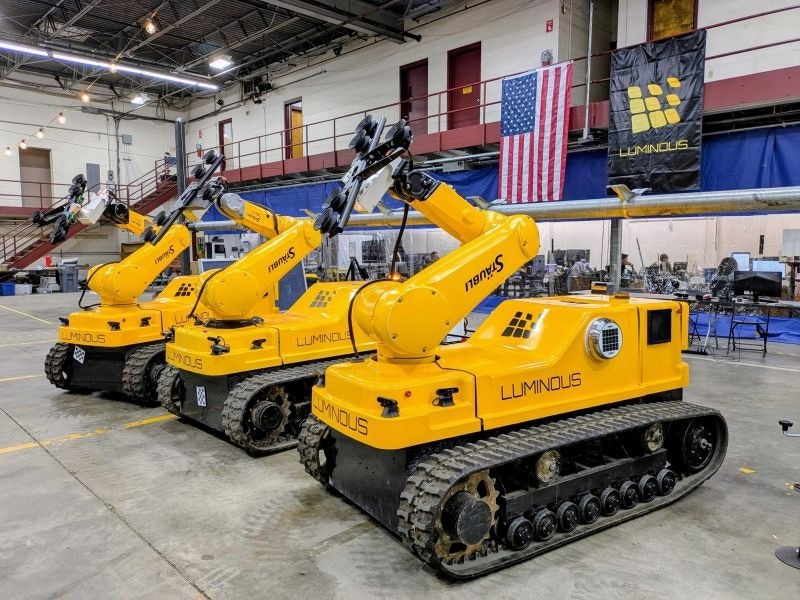
Image Credit: Stäubli Robotics
Solar construction sites are harsh and unpredictable. How does LUMI maintain reliability under these conditions?
Jay Wong: Construction environments expose robots to dust, moisture, temperature swings, and dynamic loading, especially on tracker-based arrays. The Stäubli robotic arms used in LUMI are built with the right sealing, IP ratings, and rugged construction, which gave us confidence they could perform reliably in the field.
We applied those same design principles to the entire LUMI system, investing heavily in dust management and temperature control to ensure consistent performance across a wide range of site conditions.
How do Stäubli’s motion performance and software tools influence installation quality on LUMI?
Jay Wong: Motion performance is absolutely critical. Solar modules are sensitive to handling-induced defects like microcracks, so every movement matters. By using Stäubli’s precise motion capabilities, along with extensive analysis using OptimizeLab software, we developed and validated motion profiles that tightly control acceleration, contact forces, and trajectories.
After installing thousands of modules, third-party evaluations have confirmed that LUMI’s robotic handling results in significantly lower defect and microcrack rates compared to traditional methods. That level of control really is key when it comes to protecting long-term asset performance without slowing down installation.
LUMI Exceeds Production Targets on Lancaster Solar Farm (106 MWp)
Video Credit: Stäubli Robotics
III. Looking Ahead: The Future of Robotics Across Sectors
How do you see automation evolving in pharmaceutical manufacturing over the next decade?
Irina Rau: Pharmaceutical manufacturing is heading in a direction where flexibility is becoming more and more important, especially with all the new drug formats and therapies coming online.
Robotics is going to be a key part of handling that added complexity without losing sight of compliance. We’ll need systems that can switch over quickly, work with more integrated data, and stay reliable for the long haul, all while keeping cleanroom performance where it needs to be.
What role do autonomy and data-driven systems play in the future of solar construction?
Jay Wong: We’re seeing a clear shift toward more autonomy and AI-assisted decision-making. Thanks to large-scale deployments, including projects with government partners, we’ve gathered a huge amount of construction data. That data’s now helping us train models that can handle real-world variability and edge cases.
Over time, this will let robotic fleets like LUMI operate with even more precision, built-in redundancy, and scalability. This is exactly what’s needed to support the fast-paced rollout of solar infrastructure around the world.
About Irina Rau 
Irina Rau holds a BA in International Business from St Norbert College. She joined STÄUBLI Robotics in 2022 and currently serves as Global Account Manager for Pharma, supporting pharmaceutical and medical automation with advanced robotic solutions across manufacturing workflows.
About Jay M. Wong 
Jay M. Wong is the Founder and CEO of Luminous, where he leads the development of robotic fleets for large-scale energy infrastructure. He holds an academic background in robotics and machine learning from the University of Massachusetts Amherst and has conducted research at NASA, MIT, and Harvard University.
About Josh Russell 
Joshua Russell holds a BSME in Mechanical Engineering from Saint Martin’s College, with additional training in drafting and design engineering. At AST, he has held senior technical and commercial leadership roles, supporting aseptic manufacturing automation and driving the development and adoption of advanced fill-finish solutions.

This information has been sourced, reviewed and adapted from materials provided by Stäubli Robotics.
For more information on this source, please visit Stäubli Robotics.
Disclaimer: The views expressed here are those of the interviewee and do not necessarily represent the views of AZoM.com Limited (T/A) AZoNetwork, the owner and operator of this website. This disclaimer forms part of the Terms and Conditions of use of this website.