*Important notice: This news reports on an unedited version of the paper which has been accepted. and is awaiting final editing. Scientific Reports sometimes publishes preliminary scientific reports that are not fully edited and, therefore, should not be regarded as conclusive or treated as established information.
Adaptive DWA helps unmanned underwater vehicles navigate cluttered aquaculture waters by smoothing turns, adjusting obstacle-avoidance priorities in real time, and improving success rates while cutting energy use during open-water trials.
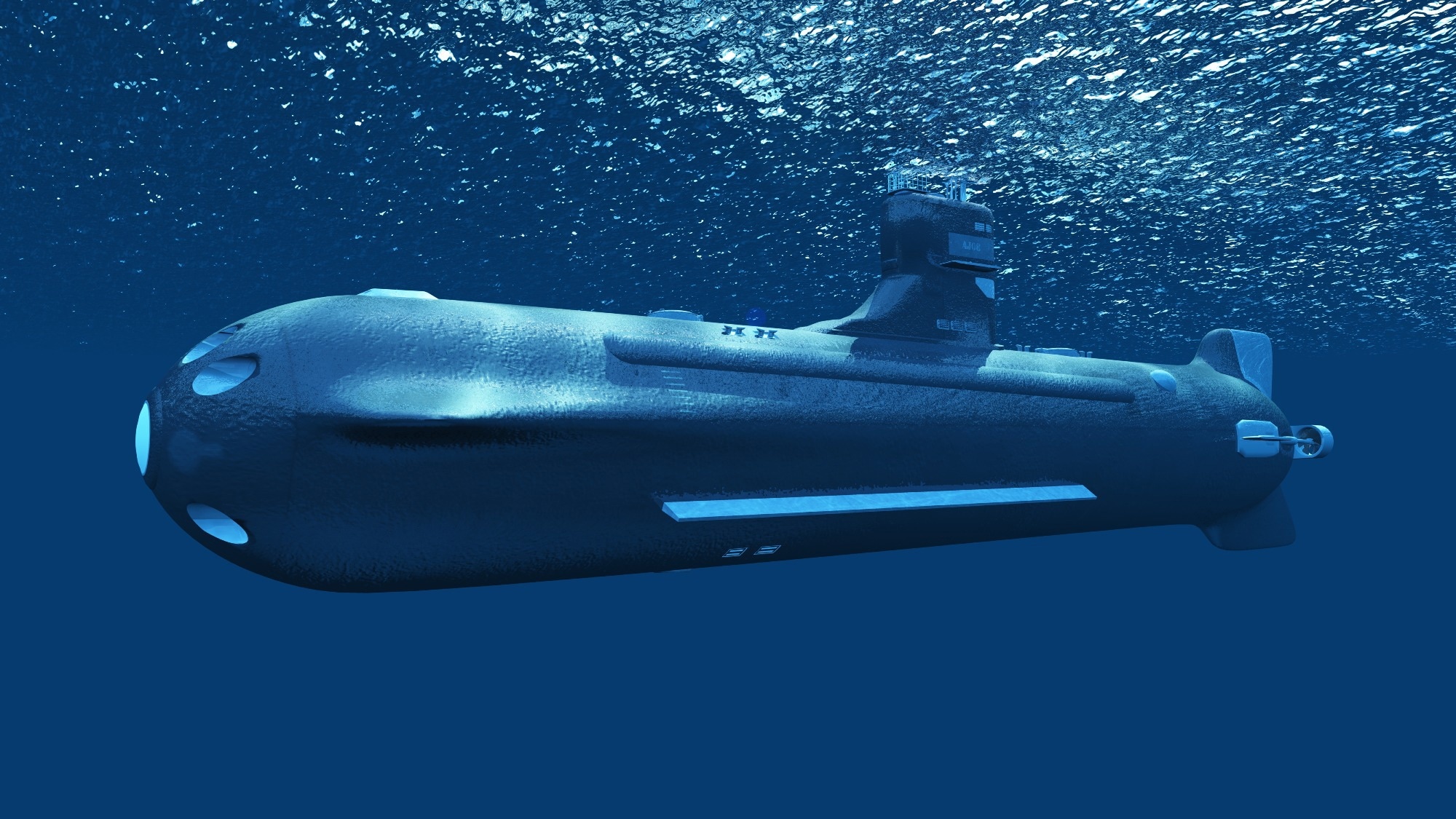 Study: Enhanced dynamic window approach for autonomous obstacle avoidance in unmanned underwater vehicles. Image Credit: tsuneomp/Shutterstock
In an article published in the journal Nature, researchers from Shandong University of Science and Technology have developed an enhanced dynamic window approach (DWA) for autonomous obstacle avoidance in unmanned underwater vehicles (UUVs).
Why UUVs Struggle Near the Shore
UUVs have become indispensable tools for marine resource exploration, environmental monitoring, underwater mapping, and aquaculture management. However, as their applications expand, so do the environmental challenges they face. Nearshore aquaculture environments are particularly demanding. Fixed structures like fish cages, buoys, and anchor chains create dense obstacle landscapes, while tidal forces, ocean currents, and dynamic obstacles introduce constant unpredictability.
Navigation strategies generally fall into two categories: global path planning and local obstacle avoidance. In nearshore settings, local approaches are essential, as they adjust trajectories in real time using sensor input. However, they must respond within milliseconds while accounting for heading, velocity, energy consumption, and proximity to obstacles simultaneously. Despite its computational efficiency, the conventional DWA algorithm remains prone to local optima, oscillatory paths, and poor adaptability when obstacle distributions shift rapidly.
Rethinking the Evaluation Function
The core of the proposed method lies in two targeted upgrades to the conventional DWA framework, namely, a redesigned objective function and a smarter weighting strategy. Together, these changes allow the UUV to make more informed, context-sensitive navigation decisions.
The original DWA algorithm evaluates candidate trajectories based on how well the vehicle is heading toward its target, how far it is from the nearest obstacle, and its current velocity. While effective in simple environments, this setup has a significant flaw, where its strong target-seeking behavior causes the UUV to make frequent, sharp angular adjustments in cluttered spaces. These abrupt turns result in non-smooth trajectories, unnecessary thruster fluctuations, and wasted energy.
To address this, the researchers introduced an angular velocity variation penalty term into the evaluation function. This new term penalizes large changes in angular velocity between consecutive control steps, effectively discouraging aggressive steering and encouraging smoother, more gradual turning. The result is a trajectory that is not only more stable but also less mechanically demanding.
The second enhancement targets the fixed weighting coefficients that govern how much each evaluation criterion influences trajectory selection. In the conventional DWA, these weights remain static regardless of environmental conditions. The researchers replaced this static system with a fuzzy inference-based dynamic weighting mechanism.
A fuzzy logic controller takes two real-time inputs, namely, a safety coefficient that captures the relative velocity between the UUV and any moving obstacle, and the current distance to the nearest obstacle.
Based on these inputs, the controller continuously adjusts the weights assigned to heading alignment and obstacle distance. When collision risk is high and obstacles are close, the algorithm prioritizes avoidance. When conditions are safe, it shifts focus back toward efficient navigation toward the target. This adaptive balance prevents the UUV from becoming stuck in local optima.
From Simulation to Open Water
The proposed algorithm was validated through extensive MATLAB simulations and real-world underwater experiments conducted in coastal waters near Qingdao, China.
In simulations, the algorithm was evaluated across progressively complex environments and subjected to multiple trap scenarios, including U-shaped obstacles, L-shaped corners, narrow corridors, and dead-end structures. These are standard stress tests for local path planners, as they represent situations where vehicles are most likely to become trapped.
The results were striking. In the most cluttered environment tested, the proposed method achieved an arrival rate of 96.7%, compared to just 36.7% for the conventional DWA. The trapping rate dropped from 56.7% to 3.3%. The oscillation index, a measure of angular velocity fluctuations between control steps, fell from 0.54 to 0.28, indicating smoother trajectories.
Dynamic obstacle scenarios further demonstrated the algorithm's advantages. Across four test conditions, single moving obstacle, double crossing obstacles, sequential obstacles, and a complex mixed environment, the proposed method consistently maintained larger safety margins, earlier obstacle response, and smoother paths, while also reducing path length in the most complex scenario from 27.3 m to 23.2 m.
The real-world trials were conducted along a 400-m route with four waypoints in a nearshore aquaculture setting, including both static and dynamic obstacles. Across 10 independent runs, the improved DWA reduced navigation distance by 2.9%, travel time by 3.9%, and energy consumption by 27.9%, while increasing the obstacle avoidance success rate from 50% to 90% compared to the conventional algorithm.
Deeper Waters Ahead
This study presents a meaningful step forward in the autonomous navigation of unmanned underwater vehicles. By combining trajectory-smoothness optimization with fuzzy-inference-based adaptive weighting and a safety-aware collision-risk model, the enhanced DWA algorithm addresses several critical shortcomings of existing approaches within a single unified framework.
Download the PDF of this page here
The results demonstrate clear improvements in navigation reliability, energy efficiency, and safety. The authors acknowledge current limitations, including the assumption of fixed-depth planar motion and the absence of explicit modeling of current. Future work aims to extend the approach to full three-dimensional trajectory planning, incorporate ocean current estimation, and account for real-world control delays.
Journal Reference
Fan, X., Kong, F., Xie, X. et al. Enhanced dynamic window approach for autonomous obstacle avoidance in unmanned underwater vehicles. Scientific Reports (2026). DOI:10.1038/s41598-026-50682-0, https://www.nature.com/articles/s41598-026-50682-0
Disclaimer: The views expressed here are those of the author expressed in their private capacity and do not necessarily represent the views of AZoM.com Limited T/A AZoNetwork the owner and operator of this website. This disclaimer forms part of the Terms and conditions of use of this website.