Advanced polymers, composites, and alloys enable space robots to withstand radiation, temperature extremes, and mechanical stress. Innovations like self-healing materials and novel actuators improve durability, efficiency, and performance in harsh extraterrestrial environments.
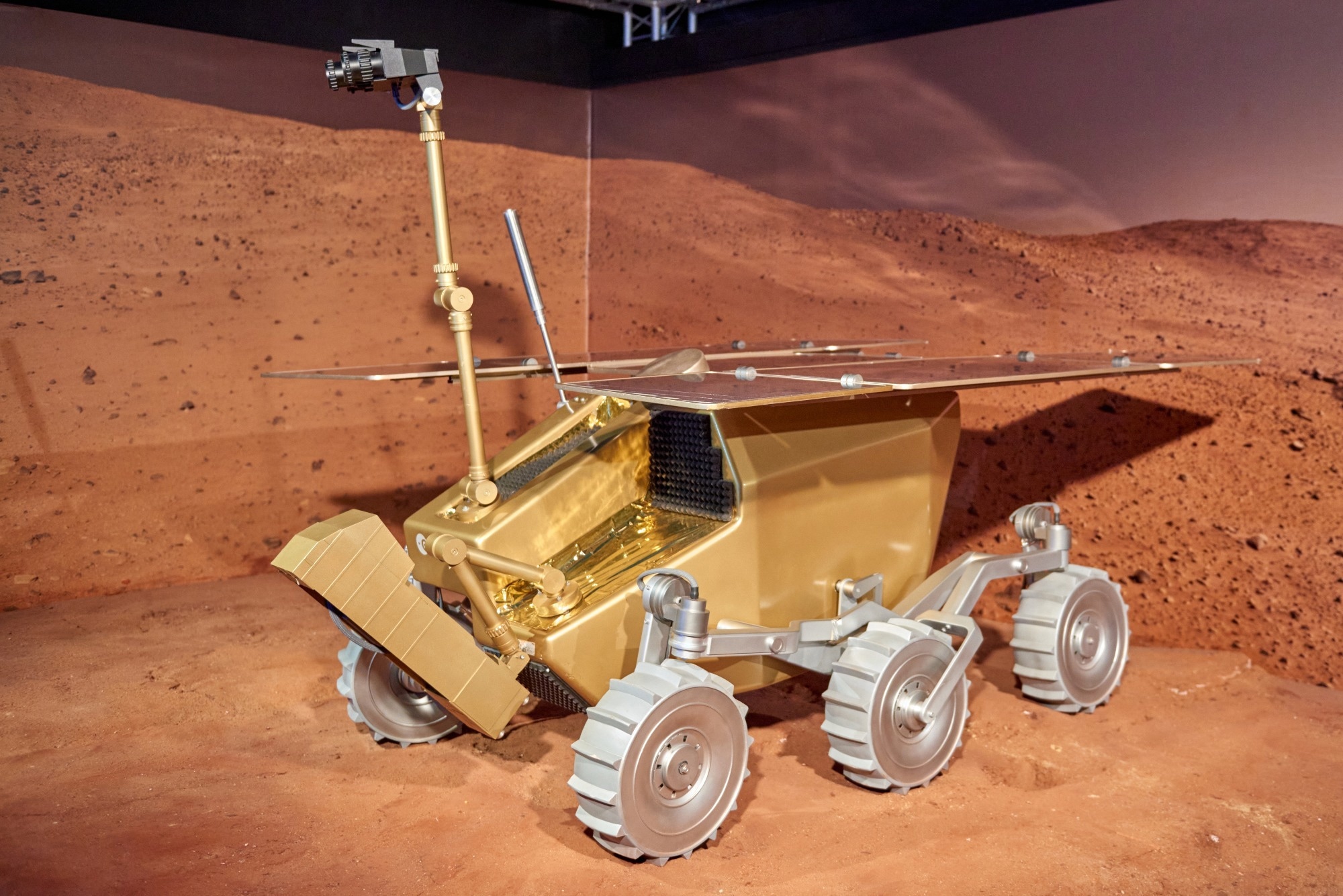 Image Credit: Andrii_K/Shutterstock
Space robots operate in some of the toughest conditions imaginable, from the Moon’s rugged surface to Earth's orbit. Every part of these robots must withstand intense wear and tear, making the work of materials scientists and engineers incredibly challenging. They face a complex web of competing demands, where they must reduce mass, maintain structural integrity, resist radiation, manage extreme temperatures, and enable precise motion all at once.
Saving this for later? Download a PDF here.
The Hostile Space Environment
The space environment confronts materials with a combination of threats that no single material family can fully handle. In low Earth orbit, materials are exposed to high-energy ionizing radiation, intense ultraviolet light, and atomic oxygen, all of which can contribute to damage.
Additionally, surface temperatures can swing drastically, from -120 to +120 °C within a single orbit, while in geostationary orbit the range extends to -150 and +150 °C. On Mars, unprotected robotic equipment is exposed to radiation levels about two and a half times higher than those on the International Space Station.
These harsh conditions break down organic chemical bonds, embrittle metal microstructures, cause outgassing from polymer composites, and alter the thermal and electrical properties of coatings and sensors. The combination of cumulative radiation damage, thermal stress, and vacuum-induced outgassing makes even careful material selection a process of managing predicted degradation rather than eliminating it.1
Polymers and Radiation Shielding
Polymer-based materials occupy a central role in space robotic structures. They provide low density, flexibility, and the ability to be chemically tuned for specific mission requirements. Polyimide, polyether ether ketone, and ultra-high-molecular-weight polyethylene each appear in roles ranging from structural substrates to thermal blankets to radiation shields.
When loaded with nanoparticles such as boron carbide or bismuth oxide, these panels provide substantial protection against neutrons, protons, and gamma rays, allowing thin, lightweight panels to guard onboard electronics.
A recent study published in Composites Science and Technology found that hydrogen-rich benzoxazine resins reinforced with amine-functionalized multi-walled carbon nanotubes deliver higher tensile strength and improved resistance to atomic oxygen and outgassing compared to standard epoxy-based shields.1,2
Carbon fiber-reinforced polymers are widely used in satellite structures and instrument benches due to their high specific strength, but prolonged irradiation can introduce electrostatic discharge risks and dimensional instability in the composite.
Another work published in Science Advances demonstrated that embedding a superlattice nanobarrier of diamond-like carbon within these composites absorbs energetic protons and electrons while preserving their bulk mechanical properties.1,3
Self-Healing Polymers and Shape Memory Materials
The autonomous repair of impact damage is one of the most practical objectives in space materials research, given that manual maintenance is impossible on most robotic missions. Ionomers are special materials that can heal from damage caused by impacts on their own, thanks to their unique chemical structure.
NASA has been exploring these materials to help protect spacecraft from space debris. To enhance their effectiveness, ionomers are often combined with other strong materials, such as Kevlar, in multi-layered protective walls. This design not only protects against impacts but also enables monitoring of the health of structures such as pressurized vessels.1
Another innovative material is a shape memory polymer, which can return to its original shape after deformation when exposed to heat or electromagnetic signals. This feature is very useful for robotic arms and solar panels, which must endure the stresses of launch into space.
Recent research has shown that even in the low-gravity environment of space, these materials maintain their ability to recover their shape. Moreover, polyimide-based shape memory polymers are attracting increasing research interest for their combination of chemical resistance, radiation tolerance, and mechanical flexibility, which suits them to flexible electronics and deployable shielding aboard robotic spacecraft.1
Ceramic Matrix Composites and Advanced Metal Alloys
Ceramic matrix composites are advanced materials designed to withstand high temperatures and harsh chemical environments, which are challenging for traditional plastic materials.
By embedding fibers of silicon carbide or alumina in a ceramic matrix, these composites can withstand extreme conditions such as atomic oxygen and high-energy impacts without losing their shape or strength. This makes them ideal for applications such as thermal protection tiles and protective enclosures on robotic spacecraft.
The fiber-reinforced architecture reduces the inherent brittleness of ceramics by allowing damage to propagate through controlled microcracking and fiber pull-out rather than sudden fracture, a behavior that contributes meaningfully to overall toughness under repeated impact and thermal cycling.1
On the metallic side, a recent study published in Advanced Materials described an ultrafine-grained aluminum alloy featuring a T-phase precipitate that stabilizes the microstructure. It also resists radiation-induced damage at levels that degrade conventional aerospace aluminum, offering a lighter and more radiation-tolerant option for spacecraft hulls.
In addition, metal matrix composites combine the flexibility of metals with the heat resistance of ceramics, which aids in thermal management. However, high production costs and concerns about long-term performance continue to slow their widespread adoption in aerospace applications.4
Actuator Design at Thermal Extremes
Actuators are the most mechanically stressed components in a space robot. Designing them for reliable operation across the thermal range of planetary and deep-space missions reveals fundamental limitations in conventional motor-and-gearbox solutions.
Standard greased gearboxes lose lubricant viscosity at temperatures found near the outer planets or in the permanently shadowed craters of the Moon, and the absence of convective heat dissipation in vacuum causes electromagnetic motors to overheat during sustained operation.
NASA developed magnetically geared actuators with engineered 0.25 mm air gaps that replace conventional lubrication entirely, enabling systems to operate at internal temperatures as low as -249 °C with efficiencies exceeding 80%.5
Recent Nature Communications research introduced vacuum-gap electrostatic actuators fabricated from space-compatible polyimide. These devices produce strong, fast, millimeter-scale motion while generating minimal self-heating, removing the need for thermal management hardware that adds mass and power consumption.
Moreover, studies on soft grippers for capturing space debris show that their grappling forces increase by up to 220% under cryogenic conditions, indicating that actuator designs must be adaptable to temperature changes for effective missions.6,7
Structural Architecture and Microgravity Dynamics
The structural architecture of a space robot is governed by constraints that have no direct equivalent in terrestrial robotics. In microgravity, every force a robot arm applies is transferred back to the robot itself. This can cause rigid designs to shake and lead to errors in positioning, which can harm performance over time.
On servicing missions in space, this issue becomes even more difficult because the objects being targeted may not cooperate. These objects can be spinning in unpredictable ways with unknown weights and movements, so the robot must dynamically compensate to handle these conditions.8
A comprehensive survey of on-orbit servicing manipulators published in Frontiers in Robotics and AI reported that current motion planning algorithms struggle with real-time obstacle avoidance, and that integrating machine learning into control loops remains limited by computational demands and the need for radiation-hardened processing hardware.
Structural materials for robotic manipulators must achieve high specific stiffness to minimize oscillation while remaining light enough to control launch costs. This combination drives designers toward carbon fiber-reinforced polymer booms and titanium alloy joints despite the associated fabrication complexity.8
In-Situ Resources and Future Directions
Reducing dependence on Earth-manufactured components changes both material selection and robotic design philosophy for planetary surface missions. Lunar and Martian regolith contain alumina, calcium oxide, silicates, and recoverable metals such as aluminum and magnesium, which can be used to feed surface-based additive manufacturing systems.
One exciting material is continuous basalt fibers, made from the abundant local rock, which are twice as strong as steel but much lighter. These fibers could be essential for building robots and permanent habitats on other worlds.
A report in Frontiers in Space Technologies concluded that while the material basis for in-situ resource utilization is well established scientifically, the processing technologies needed to convert raw regolith into mission-ready components remain at very low technology readiness levels and need more development.
Similarly, aerogel composites reinforced with quartz fibers are being tested for their effectiveness as thermal insulation for planetary surface robots, demonstrating performance even in harsh conditions, such as those found on Mars.1
References and Further Reading
- Pernigoni, L., & Grande, A. M. (2023). Advantages and challenges of novel materials for future space applications. Frontiers in Space Technologies, 4, 1253419. DOI:10.3389/frspt.2023.1253419. https://www.frontiersin.org/journals/space-technologies/articles/10.3389/frspt.2023.1253419/full
- Cha, J. et al. (2022). Functionalized multi-walled carbon nanotubes/hydrogen-rich benzoxazine nanocomposites for cosmic radiation shielding with enhanced mechanical properties and space environment resistance. Composites Science and Technology, 228, 109634. DOI:10.1016/j.compscitech.2022.109634. https://www.sciencedirect.com/science/article/abs/pii/S0266353822003761
- Delkowski, M. et al. (2023). Radiation and electrostatic resistance for ultra-stable polymer composites reinforced with carbon fibers. Science Advances. DOI:10.1126/sciadv.add6947. https://www.science.org/doi/10.1126/sciadv.add6947
- Willenshofer, P. D. et al. (2025). Radiation-Resistant Aluminum Alloy for Space Missions in the Extreme Environment of the Solar System. Advanced Materials, 38(20), e13450. DOI:10.1002/adma.202513450. https://advanced.onlinelibrary.wiley.com/doi/10.1002/adma.202513450
- Scheidler, J. J. et al. (2025). Design of a Magnetically-Geared Actuator for Extremely Cold and Dusty Space Environments. National Aeronautics and Space Administration. https://ntrs.nasa.gov/api/citations/20250004729/downloads/2025%20IEMDC%20-%20MDECE%20Final%20Design%20v2.pdf
- Sîrbu, I. D. et al. (2025). Vacuum-gap electrostatic multilayer actuators for space robotics. Nature Communications, 16(1), 11414. DOI:10.1038/s41467-025-66232-7. https://www.nature.com/articles/s41467-025-66232-7
- F, Ruiz. et al. (2024). Thermally-Resilient Soft Gripper for On-Orbit Operations. 2024 IEEE/RSJ International Conference on Intelligent Robots and Systems (IROS), pp. 14050-14055. DOI:10.1109/IROS58592.2024.10801537. https://ieeexplore.ieee.org/document/10801537
- Alizadeh, M., & Zhu, Z. H. (2024). A comprehensive survey of space robotic manipulators for on-orbit servicing. Frontiers in Robotics and AI, 11, 1470950. DOI:10.3389/frobt.2024.1470950. https://www.frontiersin.org/journals/robotics-and-ai/articles/10.3389/frobt.2024.1470950/full
Disclaimer: The views expressed here are those of the author expressed in their private capacity and do not necessarily represent the views of AZoM.com Limited T/A AZoNetwork the owner and operator of this website. This disclaimer forms part of the Terms and conditions of use of this website.