With record-breaking strain and speed, new origami-based actuators push soft robots beyond traditional limits, powering fast, untethered crawling, jumping, and sliding across complex terrain.
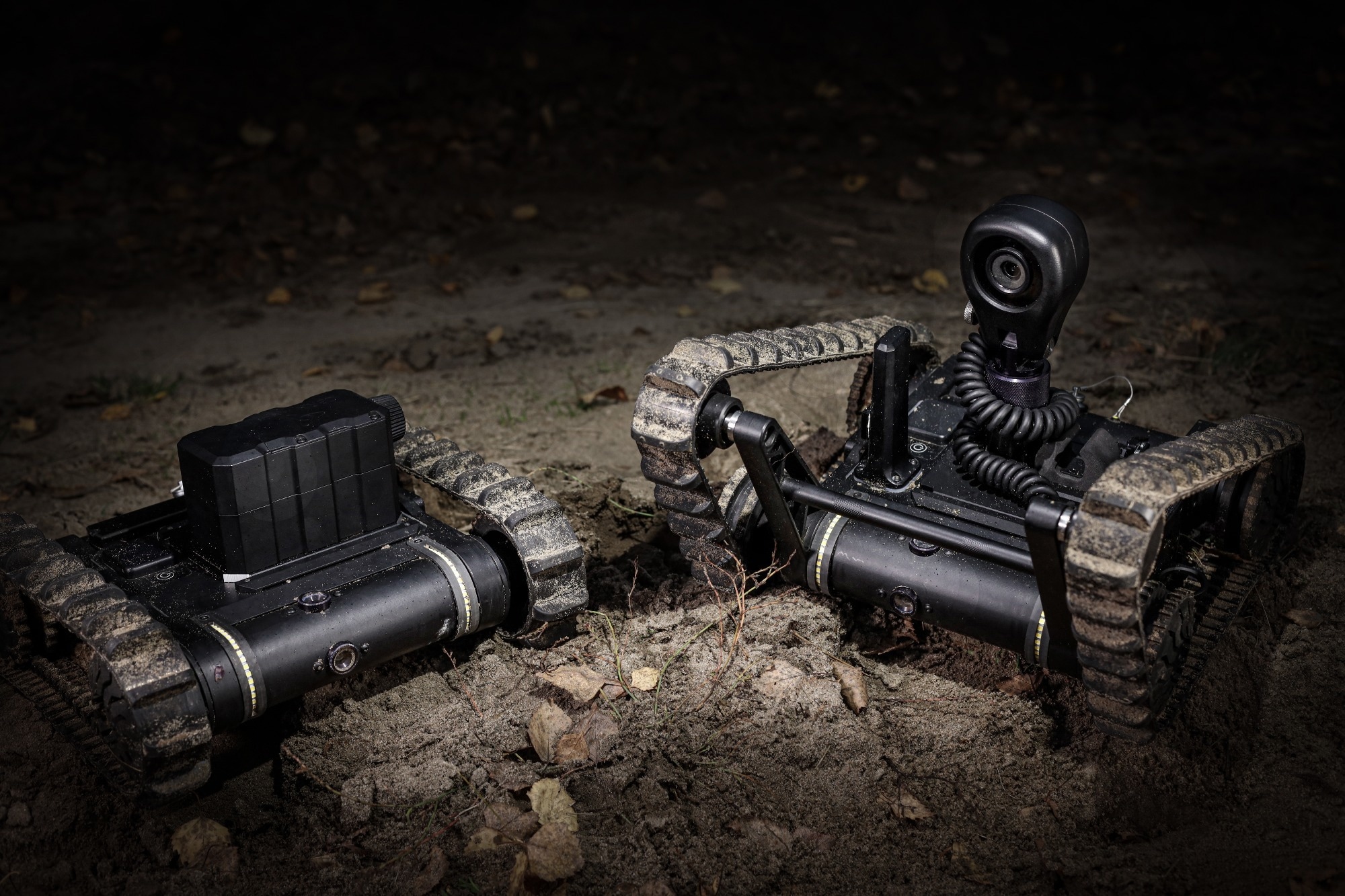
Study: Highly Dynamic Soft Electrohydraulic Origami Actuators for Agile and Multimodal Robotic Locomotion. Image Credit: Hadayeva Sviatlana/Shutterstock.com
In a recent SmartBot article, researchers introduced a novel actuator design (electrohydraulic origami (EHO) actuators) to tackle the long-standing agility challenges in soft robotics.
These actuators use origami structures to mechanically amplify the motion of soft electrohydraulic transducers, achieving extreme actuation strain (~3300 %) and peak strain rates exceeding 23,500 %/second.
This breakthrough enables fast, untethered robots with multimodal movement capabilities that outperform most existing electroactive soft robots in both speed and maneuverability.
Bridging the Gap Between Flexibility and Function
Soft robots are celebrated for their adaptability and safety, but they often lag behind in speed and force generation compared to animals. While recent advances have incorporated origami structures and hybrid rigid-soft components, the field still lacks actuators that combine high performance with mobility and versatility.
This study introduces EHO actuators, a new approach that integrates hydraulically amplified self-healing electrostatic (HASEL) actuators with lightweight, reconfigurable origami frames.
The result is a class of compact, fast, and highly dynamic actuators capable of driving untethered soft robots through diverse, agile motions, including crawling, jumping, and sliding.
Materials, Fabrication, and Experimental Methods
The electrohydraulic components were crafted from 20-micrometer-thick polyethylene terephthalate (PET) films. These were heat-sealed into flexible pouches, filled with low-viscosity silicone oil (1 cSt), and screen-printed with conductive electrodes. The origami structures were laser-cut from 1.5 mm-thick single-wall corrugated cardboard, assembled using double-sided PET tape, and reinforced with PET tape hinges to form reconfigurable joints.
After integrating the electrohydraulic pouches with the cardboard frames, the actuators were configured into modular units of varying sizes. These could be combined into more complex structures (like honeycombs and bellows) or embedded into specific robot designs.
For instance, a jumping robot was created by attaching a support leg to a single actuator, while a more sophisticated crawler used three actuators in series, along with silicone bands and 3D-printed platforms equipped with directional friction feet made from PET sheets and syringe needles.
To characterize performance, the team used high-speed video and laser displacement sensors to measure actuation strain, speed, force output, and shape changes. Lab experiments used a DC power supply, a commercial high-voltage amplifier, and an H-bridge relay circuit controlled via NI LabVIEW. For untethered operation, two compact, battery-powered high-voltage systems were developed: UCR 1 (single-channel) for straight crawling and UCR 2 (dual-channel) for directional control and turning.
Results and Demonstrations
Each EHO actuator features a hexagonal frame with four Peano-HASEL actuators, forming a six-bar linkage mechanism that amplifies motion. By controlling voltage across actuator pairs, the structure can be programmed for axial extension, rotation, or translation.
In extension mode, a 10 cm actuator achieved a remarkable strain of ~3300 % and a peak strain rate of over 23,500 /second. It also lifted loads 12.5 times its own weight. Performance was tunable through design parameters like hinge thickness and arm length.
These modular actuators were assembled into larger, reconfigurable systems. One bellows-type array of five actuators demonstrated a rapid fishtail-like oscillation and could strike ping-pong balls at speeds up to 0.88 m/second.
Three untethered robot prototypes showcased the actuators’ real-world capabilities:
- Slider robot: Achieved bidirectional motion using stick-slip friction from rotational oscillation.
- Jumper robot: Used a single actuator to perform continuous jumps at 8.89 cm/second across uneven terrain like grass and gravel.
- Crawler robot: Integrated three actuators with friction feet, reaching tethered speeds of 37.55 cm/second (9.39 body lengths/second) - among the highest reported for soft robots.
Untethered versions performed equally impressively:
- UCR 1 reached 10.9 cm/second and successfully climbed slopes.
- UCR 2 offered directional control, navigating S-shaped paths and showcasing precise maneuverability.
Conclusion
This study introduces a new class of high-performance actuators that address a critical shortcoming in soft robotics: agility.
By fusing electrohydraulic HASEL actuators with reconfigurable origami structures, the EHO platform achieves a rare combination of high strain, rapid actuation, and multimodal movement, all in compact, untethered formats.
The implications are significant.
These soft robots can now navigate challenging terrain with unprecedented speed and flexibility, opening new avenues for use in search and rescue, field exploration, and human-machine interaction.
Looking ahead, the team plans to tackle challenges such as charge retention and control system complexity by exploring better dielectric materials and closed-loop precision actuation.
Journal Reference
Li, W., Zhang, Y., Li, G., Li, H., Tao, K., Zhang, W., & Xu, J. (2026). Highly Dynamic Soft Electrohydraulic Origami Actuators for Agile and Multimodal Robotic Locomotion. SmartBot. DOI:10.1002/smb2.70018. https://onlinelibrary.wiley.com/doi/10.1002/smb2.70018
Disclaimer: The views expressed here are those of the author expressed in their private capacity and do not necessarily represent the views of AZoM.com Limited T/A AZoNetwork the owner and operator of this website. This disclaimer forms part of the Terms and conditions of use of this website.