*Important notice: This news reports on a paper which has been accepted and is awaiting final editing. Scientific Reports sometimes publishes preliminary scientific reports that are not fully edited and, therefore, should not be regarded as conclusive or treated as established information.
A multi-resolution frontier exploration algorithm enhances robotic navigation using polar sampling and Monte Carlo gain estimation, reducing redundancy and improving speed, coverage, and adaptability in complex, unknown environments.
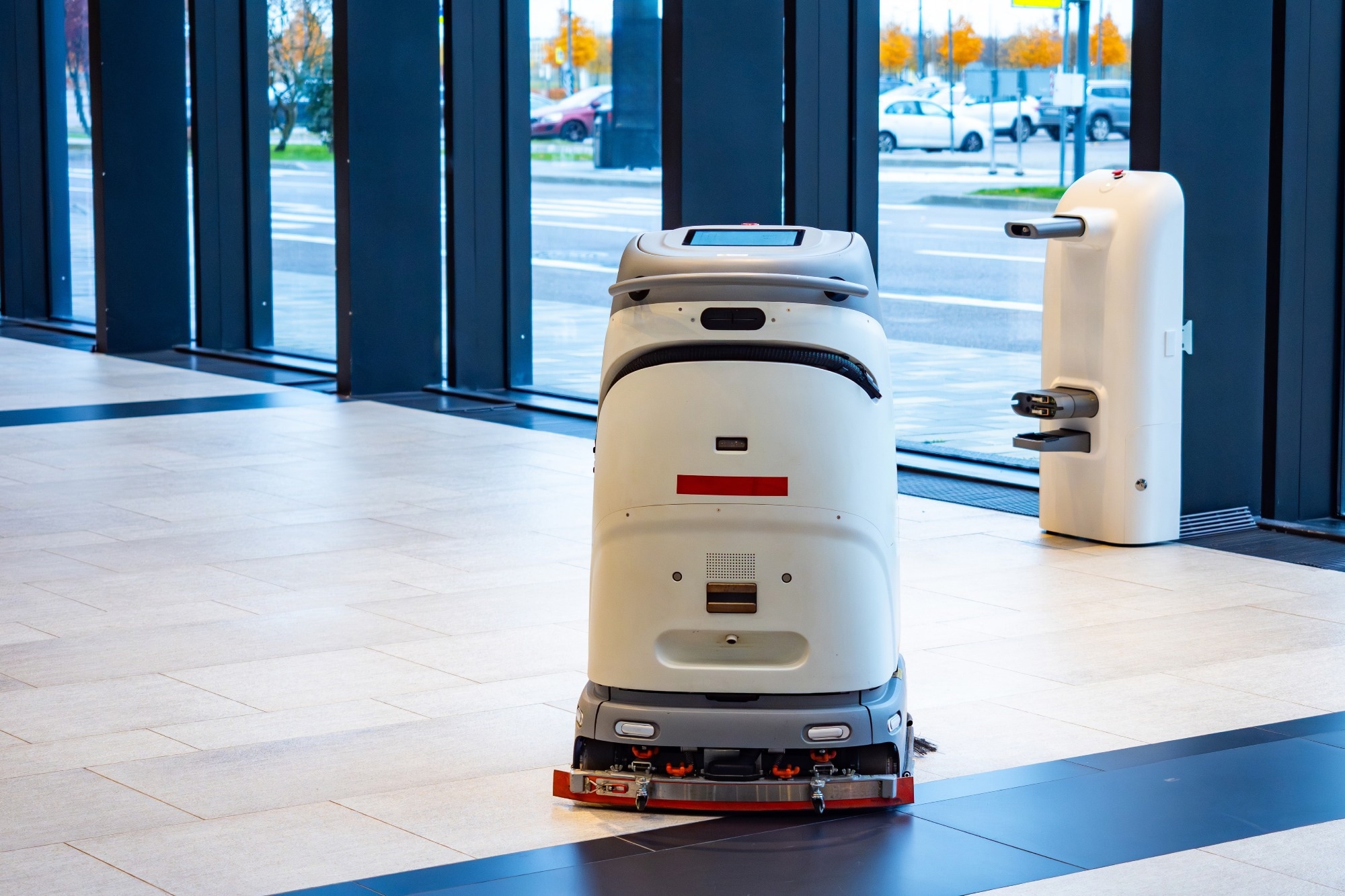 Study: Multi-resolution field-based algorithm for autonomous robot exploration. Image Credit: FOTOGRIN/Shutterstock
In an article published in the journal Nature, researchers presented a robot exploration method using multi-resolution maps and a coarse-fine frontier detection strategy. They employed polar sampling and distance decay to reduce path repetition, and Monte Carlo integration for accurate gain calculation. The approach improves movement efficiency, speed, and adaptability in complex, unknown environments compared to existing algorithms.
Challenges in Autonomous Robotic Exploration
Robots are increasingly deployed for autonomous exploration in unknown, complex environments such as disaster sites or planetary surfaces, where they must build accurate maps for subsequent tasks. However, existing methods often suffer from low efficiency, high path repetition, and limited adaptability.
Boundary-based approaches, like a hierarchical framework for efficiently exploring (TARE), reduce computational load using multi-resolution maps but still generate redundant frontiers and rely on discrete gain calculations. Sampling-based methods, derived from the next-best-view planner (NBVP), struggle with complete coverage and reciprocal searching. This paper addressed these gaps by coupling frontier quality with resolution for efficient detection, employing polar coordinate sampling to prevent repeated exploration, and introducing Monte Carlo integration for precise, continuous gain estimation.
Multi-Resolution Exploration Framework
This study presents a robot autonomous exploration methodology designed to efficiently navigate and map unknown environments. The system first converts sensor data from Lidar Odometry and Mapping into an OctoMap, a three-dimensional grid representation where each cube, or voxel, is labeled as free, occupied, or unknown based on probability updates.
The core of the method involves a multi-stage approach to identify exploration targets. First, frontier detection is performed using a two-tiered strategy: a coarse detection phase quickly identifies candidate boundary regions at a lower map resolution, and a subsequent fine detection phase refines these areas under view cone constraints to produce a precise set of frontier points without excessive computational load.
For selecting the next best viewpoint, the algorithm improves upon traditional random tree expansion. It uses these frontier points to guide the growth of a sampling tree, increasing the likelihood of exploring in promising directions. To prevent the robot from neglecting nearby areas or repeatedly traversing the same space, a scoring function is introduced that balances directional alignment with a distance decay factor, ensuring closer frontiers are prioritized.
Furthermore, a polar coordinate sampling method is employed to distribute candidate viewpoints uniformly around the robot, avoiding the clustering issues common with purely random sampling. Finally, the potential information gain of each viewpoint is evaluated using a Monte Carlo integration technique across mixed map resolutions.
This approach provides a more accurate and continuous estimation of unexplored space compared to simple voxel counting. The final decision combines this information gain with penalties for obstacle proximity and path efficiency, enabling the robot to select optimal waypoints that balance thorough exploration with safe, direct navigation.
Performance Validation in Simulated Environments
The research validates the proposed framework using two distinct simulation environments to ensure robustness and generality. Testing occurred in a structured indoor corridor setting with long hallways and obstacles, and a cluttered, unstructured forest featuring dense trees and high occlusion. The method was benchmarked against three state-of-the-art algorithms, namely dual-stage viewpoint planner (DSVP), NBVP, and modified boundary-based planner (MBP), with each configuration run ten times to ensure statistical reliability.
Metrics evaluated included total exploration time, travel distance, and volume coverage. In the indoor scenario, the proposed method was among the only two algorithms to achieve full environmental coverage. While NBVP and MBP left significant unexplored regions due to local entrapment and limited sampling coverage, the proposed approach reduced runtime by approximately 26.7% and travel distance by 8% compared to DSVP.
In the more challenging, large-scale forest environment, the method's advantages were even more pronounced, completing exploration with a 17.5% time reduction over DSVP and a travel distance reduction exceeding 19% against all comparative algorithms.
The consistent performance across both structured and unstructured terrains demonstrates that the integration of multi-resolution frontier detection, weighted scoring for boundary point selection, and precise Monte Carlo gain calculation significantly enhances navigation efficiency. By reducing backtracking and computational overhead, the algorithm determines optimal waypoints more rapidly, establishing its superior adaptability and overall exploration performance in complex, unknown environments.
Toward Efficient Autonomous Exploration
In conclusion, this paper proposed a multi-resolution autonomous exploration algorithm to address inefficiency and path instability in complex unknown environments. By integrating a coarse-fine frontier detection strategy with view-cone constraints, the method accurately identifies boundary points while reducing far-field computational burden.
The multi-objective scoring function, combining directional similarity and distance decay, effectively mitigates reciprocal searching. Experimental results across structured indoor and unstructured forest environments demonstrate that the proposed approach consistently outperforms classical algorithms such as NBVP, MBP, and DSVP in both runtime and travel distance. This work provides a more effective and adaptable framework for autonomous robot exploration in challenging real-world scenarios.
Download the PDF of this page here
Journal Reference
Zhai, Z., Xu, L., Zhang, Y., Zhang, G., & Chen, Y. (2026). Multi-resolution field-based algorithm for autonomous robot exploration. Scientific Reports. DOI:10.1038/s41598-026-46119-3, https://www.nature.com/articles/s41598-026-46119-3
Disclaimer: The views expressed here are those of the author expressed in their private capacity and do not necessarily represent the views of AZoM.com Limited T/A AZoNetwork the owner and operator of this website. This disclaimer forms part of the Terms and conditions of use of this website.