Researchers have designed, optimized, and evaluated the performance of a solar-powered, remote-controlled robot for precision seed planting. They integrated a photovoltaic energy system, an electric seed-metering mechanism, and an electronically controlled seed-depth adjustment unit, tested across four forward speeds and four seed spacings. Their findings were published in Scientific Reports.
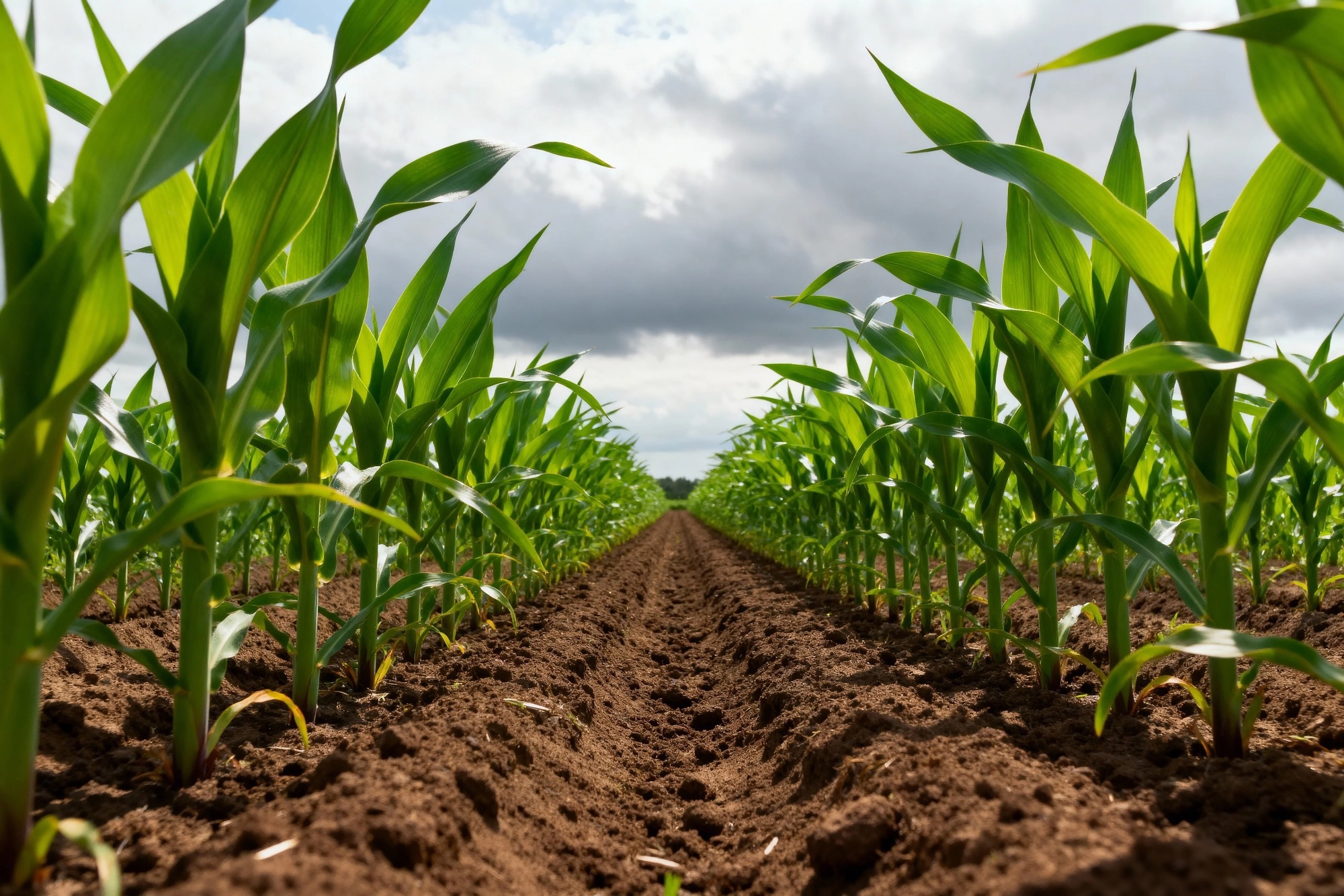 Study: Design and performance evaluation of a solar powered remote controlled robot for precision seed planting. Image Credit: ZeiMomArt/Shutterstock.com
Advancing Sustainable Agricultural Mechanization
The global agri-food system faces pressure to raise productivity to feed a population expected to reach around 10 billion by 2050, while reducing environmental impacts and coping with shrinking rural labor forces.
Traditional mechanization, still largely fossil-fuel dependent, contributes to soil compaction, greenhouse gas emissions, and economic barriers for small and medium farms. Precision seeding is critical to crop establishment and yield, yet conventional ground-driven metering systems suffer slippage and synchronization errors.
Electrically driven seed meters improve spacing accuracy, and solar-powered agricultural robots offer sustainable operation. However, seeding robots remain underexplored, and integrating solar power with precision seed-metering mechanisms remains limited.
This study addressed that gap by designing, developing, and evaluating a solar-powered remote-controlled robot with an electric seed-metering device for precision planting.
Robot Architecture and Control Systems
The robot's mechanical structure integrates several purpose-built subsystems. Steering is achieved through a brushed direct-current (DC) motor driving a lead screw, with chain-linked front wheels and
limit switches ensuring synchronized, repeatable directional control.
Propulsion comes from two 250 W DC motors powered by solar-charged batteries, transmitting torque to the rear wheels through a spur-gear gearbox, where speed is regulated using pulse-width modulation and a phase-locked loop, with encoder feedback maintaining stable low-speed operation and traction under varying loads.
The electric seed-metering unit synchronizes a rotating seed disc with the robot's forward travel using encoder pulses as reference signals. A closed-loop control strategy adjusts disc rotation to match travel velocity, while an infrared sensor monitors individual seed delivery.
An Arduino microcontroller serves as the central control unit, and a 2.4 GHz wireless link lets the operator adjust speed, spacing, and seed depth remotely, with a temperature sensor providing overheating protection.
Seed depth is controlled by a separate motor-driven lead screw mechanism that raises or lowers the opener. Power is supplied by a 100 W solar panel charging two 12 V batteries, with the solar power supply ratio used as an energy-balance indicator.
Performance was evaluated using maize seeds across four forward speeds and four target spacings, with planting quality assessed through standard ISO-based indices and analyzed using analysis of variance (ANOVA).
Evaluating Seeding Accuracy and Energy Performance
Preliminary trials identified a 35° seed-disc inclination angle as optimal, producing spacing closest to target with the lowest variability. Speed calibration confirmed a strong linear relationship between motor voltage and forward speed, enabling reliable operator monitoring and synchronization of disc rotation with travel speed.
A feasibility analysis showed that lower speeds provided ample time for seed release, while the highest speed combined with the smallest spacing approached a near-critical threshold, making the system more sensitive to vibration and soil irregularities.
Disc rotational speed increased proportionally with robot speed across all spacings, and measured values closely matched theoretical ones, confirming accurate encoder-based synchronization.
Metering performance was most stable at moderate speeds and intermediate spacings. Miss and multiple indices remained low, while spacing accuracy ranged from 98.08% to 98.80%. Statistical analysis confirmed that robot speed had the strongest influence on accuracy, followed by seed spacing. Wider spacings improved stability by reducing dispensing frequency.
The depth-adjustment unit showed a strong linear relationship between motor rotations and penetration depth, confirming precise, repeatable depth control.
Power consumption increased with speed under both no-load and loaded conditions, while the solar supply ratio indicated the photovoltaic system could meet demand at moderate speeds, with the battery supplementing at higher loads.
The robot produced no direct on-site emissions during operation, though the authors note a normalized area-based comparison is needed.
Toward Sustainable Robotic Seed Planting
This study designed and evaluated a solar-powered remote-controlled robot for precision seed planting, integrating a photovoltaic system, an electric seed-metering mechanism, and an electronic depth-control unit.
Across tested operating conditions, spacing accuracy ranged from 98.08% to 98.80%, with miss and multiple indices remaining below 2% and 2.5%, respectively, though both increased under some operating conditions, particularly at the lowest tested speed. Optimal metering occurred at forward speeds of 0.82–1.2 km h-1, while wider spacings of 20–25 cm improved the consistency of distribution.
Download a free copy of this page here!
The depth-adjustment unit demonstrated precise, repeatable control, and power consumption remained low at 48–84 W, with the solar supply ratio ranging from 95% to 167%. The robot produced no direct on-site carbon dioxide (CO2) emissions during operation.
Future work should integrate autonomous navigation such as RTK-GNSS or machine vision, conduct area-based emissions comparisons with field-capacity measurements, expand to multi-row planting for larger-scale use, and validate solar and battery performance under field conditions.
Journal Reference
Aboharg, S., et al. (2026). Design and performance evaluation of a solar powered remote controlled robot for precision seed planting. Scientific Reports. 16(1). DOI:10.1038/s41598-026-68946-0. https://www.nature.com/articles/s41598-026-68946-0.
Disclaimer: The views expressed here are those of the author expressed in their private capacity and do not necessarily represent the views of AZoM.com Limited T/A AZoNetwork the owner and operator of this website. This disclaimer forms part of the Terms and conditions of use of this website.