Nov 12 2026
The performance of an autonomous battery-powered agricultural robot (ABAR) has been evaluated for cradle-to-gate production of strawberries, onions, lettuce, and peanuts under both organic and non-organic management. Assessing the robot’s total cost of ownership and life cycle assessment, the researchers suggest the robot’s value depends less on the platform, and more on reducing input use and labor demand. These findings were published in Nature Communications.
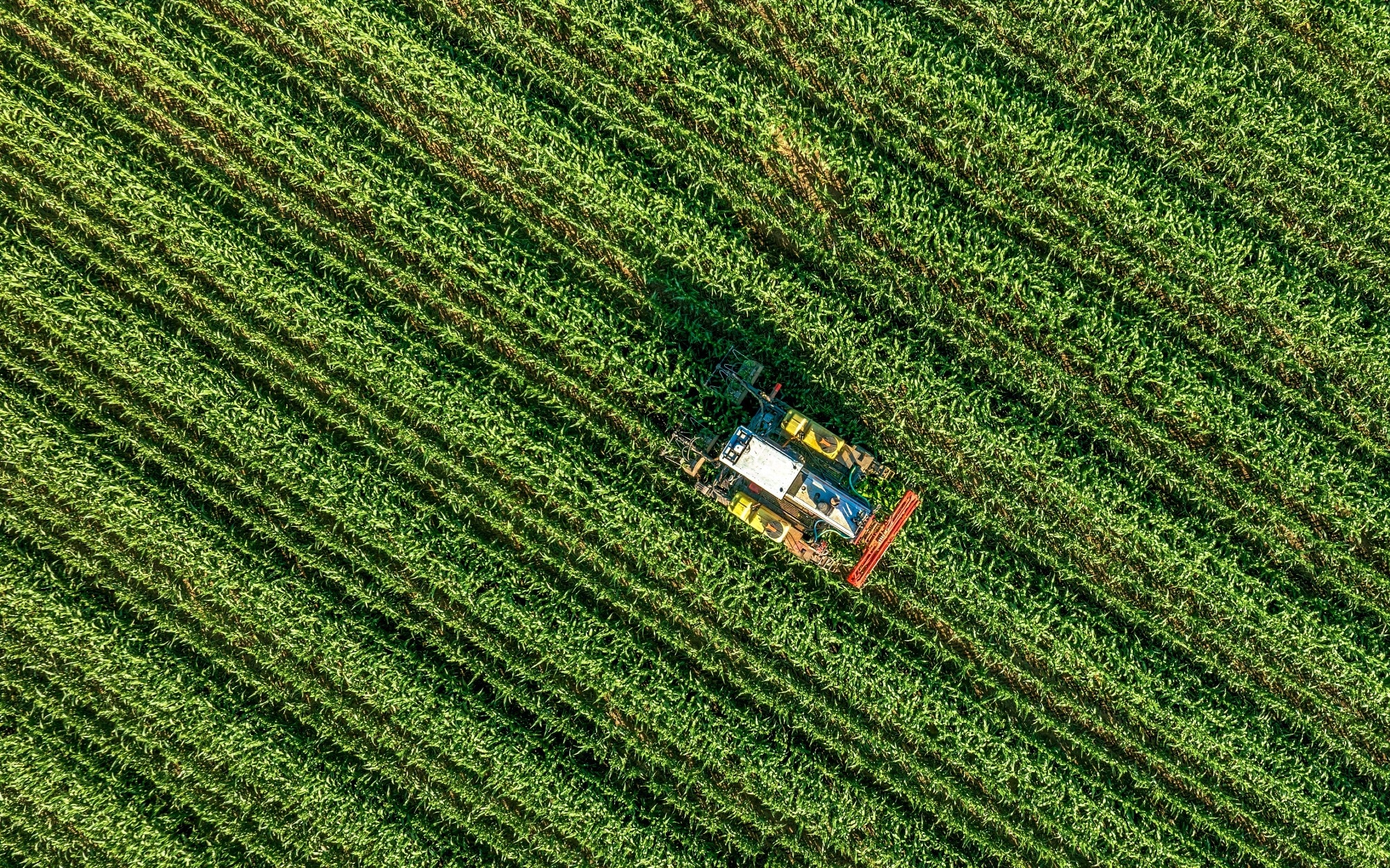 Study: Techno-economic and environmental assessment of next-generation battery-powered farming robots. Image Credit: Tibor.photo.Holczer/Shutterstock.com
The Growing Need for Sustainable Agriculture
The agriculture sector is under increasing pressure to increase output while cutting emissions and resource use. Food systems account for over one-fifth of global greenhouse gas emissions, and demand for agricultural products could rise by up to 50% by 2050.
ABARs are emerging as a route to more resource-efficient farming, potentially reducing labor and enabling more precise input application. Yet evidence remains fragmented, as existing studies assess specific robots, regions, or individual operations, or examine environmental and economic performance in isolation.
This study addressed that gap by integrating life cycle assessment and total cost of ownership in a single, consistent framework spanning multiple field operations for four crops under both organic and non-organic management.
Download a free copy of this page here!
Modeling Costs and Environmental Impacts
The study applied an integrated total cost of ownership and life cycle assessment framework to a single autonomous battery-powered agricultural robot performing preparation, sowing, mechanical and chemical weed control, irrigation, and fertilization, using a cradle-to-farm-gate boundary that excludes harvesting.
Because crop calendars differ in task frequency and timing, the robot's maximum annual coverable area is calculated crop by crop, constrained by the month with the smallest coverable area.
Costs are levelized to a cost per kg of crop by combining annualized capital expenditure, crop-specific operational expenditure, and annualized end-of-life recycling costs, divided by the expected annual yield based on average European Union (EU) and United States (US) yields.
Operational costs cover electricity, seeds, pesticides, water, fertilizers, and labor, with pesticide, fertilizer, and water use assumed 50% lower than conventional practice to reflect precision application, and labor set at 15% of the robot's annual working time to account for supervision.
The life cycle assessment follows the ISO 14040/14044 framework with an attributional cut-off approach, using data from academic literature and ecoinvent, and applies the Environmental Footprint 3.1 method across 16 impact categories, focusing on global warming potential over a 100-year horizon.
Sensitivity analyses group conceptually related parameters into scenarios, varying them simultaneously and averaging percentage deviations from the base case across all crops.
Assessing Robotic Farming Across Four Crops
The modeled robot is a simplified, parameterized representation rather than a copy of any specific product. It consists of a compact, 200 kg, battery-electric platform with a chassis, electric motor,
battery, four wheels, and five sensor types, alongside simplified proxy tools for preparation, sowing, mechanical and chemical weed control, and irrigation. Fertilization is assumed to occur alongside irrigation.
In the assessment, eight scenarios cover four crops under organic and non-organic management. On a per-kg basis, onions are the cheapest in both systems, followed by lettuce and peanuts, while strawberries are the most expensive. Organic production costs more across all crops, driven by lower yields and higher fertilizer costs.
In terms of global warming potential, the pattern differs, with onions having the lowest impact. No uniform difference emerges between organic and non-organic production, while irrigation water remains the dominant contributor in most scenarios because of the large volumes required.
However, it should be noted that the study did not include soil- and fertilizer-related emissions.
Variable components dominate both outcomes, accounting for 72–90% of costs and 72–95% of emissions, while fixed components, maintenance, and recycling contribute marginally. Sensitivity analysis shows variable components produce the largest deviations for both outcomes, and costs and emissions respond in broadly similar directions.
Benchmarking against conventional reference ranges, onions and lettuce remain below conventional costs, peanuts are mixed, and strawberries are slightly more expensive; emissions fall within the lower part of reported ranges or below. Coverable area varies by crop, lowest for strawberries and highest for lettuce.
Toward More Sustainable Robotic Agriculture
Combining total cost of ownership and life cycle assessment, this study found that ABAR-based production could be cost-competitive with conventional crop production, as reported in prior literature, while also potentially reducing greenhouse gas emissions per kg of crop, particularly where precision management lowers demand for variable inputs.
Across the four crops and two production systems modeled, variable inputs rather than the robotic platform itself drive both outcomes, suggesting the main benefits arise from more precise management, reduced labor, and lower seed, fertilizer, pesticide, and water use, though part of the benefit also reflects replacing diesel-powered machinery with an electrified platform.
Onions and lettuce emerge as particularly promising, especially under organic production, while crops with very high input requirements remain costly and emission-intensive. The authors caution that results reflect a single compact ABAR parameterization and modeled assumptions, and should be viewed as an exploration of plausible system-level outcomes rather than forecasts of actual farm-level performance.
Journal Reference
Schlehuber, S., et al. (2026). Techno-economic and environmental assessment of next-generation battery-powered farming robots. Nature Communications, 17(1). DOI:10.1038/s41467-026-78281-7. https://www.nature.com/articles/s41467-026-78281-7.