Liquid Metal Sloshing for Active Self-healing System
Self-regulated Self-healing Robotic Gripper
How Effective Is the Gripper?
Self-Healing and Stretchable Cross-linked Networks
Self-healing Supramolecular Magnetic Elastomer
How Self-healing Materials Improve Resilience
References and Further Reading
Self-healing materials could transform the future of robotics. These materials can repair themselves after damage, enabling robots to recover their functional performance.1-4
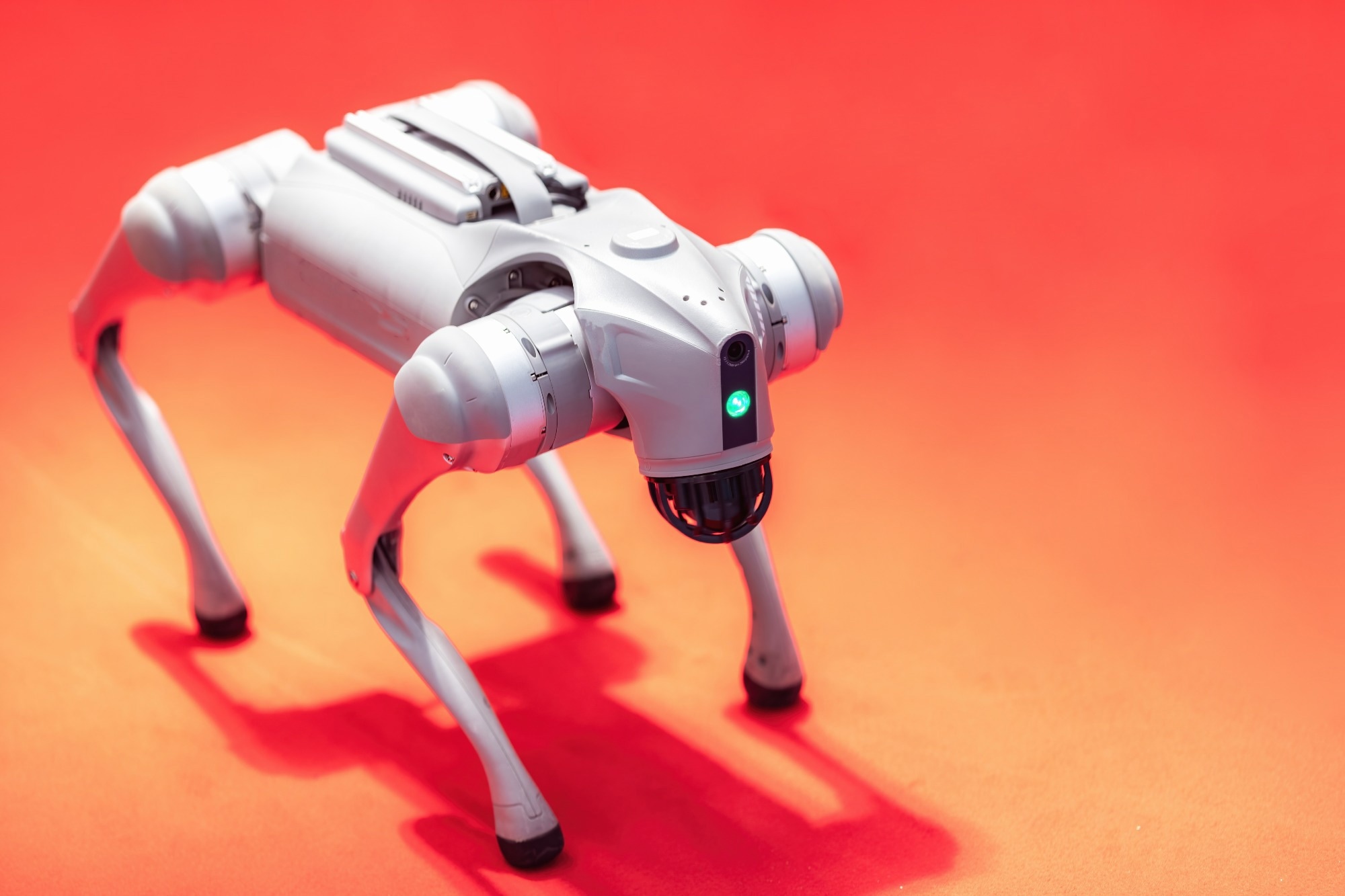 Image Credit: Microgen/Shutterstock
Using self-healing technology, robots could become more durable and reliable. This advancement can reduce maintenance costs, prolong robot lifespans, and improve their performance in challenging environments.1-4
In high-load robot applications, such as legged robots, self-healing is a suitable approach to damage management. While many self-healing tensile modules have been developed for tendon-driven robots in previous studies, these modules exhibit insufficient healing strength due to the formation of surface oxides.1
A paper recently published in Advanced Intelligent Systems proposed a biomimetic approach to improve self-healing performance. The approach triggers the sloshing of liquid metal by exploiting the robot's motion. This liquid metal sloshing decomposes surface oxides.1
In this work, a life-sized robot triggered sloshing using its actuator, thereby decomposing impurities such as surface oxides on the fracture surface. The low-melting-point alloy (LMPA) played the key role in the self-healing function.1
Researchers adopted a eutectic alloy of bismuth, lead, tin, cadmium, and indium as the LMPA, with a melting point of 47 °C. A tensile test was conducted using a motor-driven tendon module to verify the approach's performance.1
Additionally, a tendon-driven legged robot prototype was used to validate the system's feasibility. The sloshing motion significantly improved the strength of the self-healing module. Using a benchtop module test, the method was validated, resulting in a healed strength exceeding tens of kilograms.1
Moreover, the tendon-driven monopod testbed enabled by the self-healing module performed a squat motion 13 times after a landing-impact fracture and a self-healing sequence.1
The self-healing module did not break after or during the squatting motion. This study demonstrated active self-healing behavior using a life-sized legged robot for the first time.1
Self-regulated Self-healing Robotic Gripper
Soft, flexible materials are increasingly used to fabricate soft robots, as their inherent shock absorption and compliance protect the robot from mechanical impacts.2
While soft universal grippers enable safe and effective grasping of various objects, they have limited lifetimes due to their predominantly soft material composition, particularly when operating in unfamiliar, unstructured environments.2
A paper published in Advanced Intelligent Systems proposed a particle jamming-based universal gripper with inherent self-healing ability/self-healing universal gripper (SHUG) to recover from macroscopic damage caused by operating in a dynamic and unstructured environment.2
This SHUG integrates universal adaptation, resulting from the granular jamming of steel balls encapsulated within a flexible membrane, with damage resilience through autonomous healing via an embedded heating system and self-healing polymers.2
Researchers prepared the outer flexible membrane, which will come in direct contact with the environment during gripping, using a self-healing elastomer. They exploited reversible covalent polymer networks synthesized and characterized using temperature-based equilibrium shift, in which healing depends on the thermally triggered Diels–Alder (DA) chemistry.2
Using a thermal conductivity model, the heater placement and gripper morphology were rigorously designed to maximize heat transfer from the particle to the gripper outer layer/the self-healing membrane.2
How Effective Is the Gripper?
The careful choice of steel balls/in-filled particles to enlarge heat conductivity led to excellent distribution of heat. Additionally, optimizing design parameters such as geometric design, the mechanical properties of self-healing polymers, and membrane thickness led to high-quality adaptive grasping.2
Results showed that SHUG could grasp different objects and autonomously recover from significant realistic damage. It effectively combined healing evaluation, heat-assisted healing, and damage detection.2
The gripper recovered from macroscopic damages like punctures and scratches owing to the thermoreversible covalent DA bonds in the self-healing polymer membrane. An embedded thermocouple and Joule heater were used to regulate temperature-assisted healing in a closed-loop manner.2
Thus, the gripper's adaptability and resilience were validated by these findings.2
Self-Healing and Stretchable Cross-linked Networks
Flexible sensing technologies that endow robots with detection capabilities and monitor their motions are desired for intelligent robotics systems. Yet, constructing and integrating sustainable, reliable, multifunctional flexible sensors for robots remains a persistent challenge.3
A paper published in Advanced Functional Materials developed an entirely inherent self-healing, attachable, and stretchable multimodal sensor that could be integrated conformally with soft robots to detect diverse signals.3
Researchers designed dynamic-bond cross-linked networks that included an insulating polymer and a conductive hydrogel, yielding a sensor with extended lifespan and enhanced reliability.3
Download the PDF of this page here
Robust interfacial bonding across various surfaces, due to the hydrogel's self-adhesiveness, promoted the integration of the sensor with robots. The developed sensor can detect temperature and strain via thermoresistive and piezoresistive effects, respectively, owing to the ionic transport mechanism.3
Self-healing Supramolecular Magnetic Elastomer
A paper published in Advanced Functional Materials introduced a self-healing supramolecular magnetic elastomer (SHSME) consisting of a hierarchical dynamic polymer network with reversible bonds.4
The material demonstrated rapid autonomous self-healing, recovering 300% stretchability within 5 seconds at ambient temperature, and a high mechanical strength (Young’s modulus of 1.2 MPa).4
SHSME-based robotic demonstrations, including modular-assembling-prototyping soft robots with diverse functionalities and complex geometries, a dismembering–navigation–assembly approach for robotic tasking within confined spaces, and rapid amphibious function recovery were showcased.4
Additionally, SHSME supports circular material design as it demonstrates autorepair for extended lifespan, is thermoreformable for recycling, and is modularizable for customized functions and constructs.4
How Self-healing Materials Improve Resilience
Self-healing materials improve robotic resilience by enabling robots to repair damage and recover their functionality. Liquid metal-based systems remove surface oxides through motion-induced sloshing, improving their healing strength. Self-healing grippers use heat-responsive polymers to recover from scratches, maintaining their gripping capabilities.
Stretchable, self-healing sensors provide reliable monitoring of temperature and strain, thereby supporting intelligent robotic functions. Similarly, supramolecular magnetic elastomers demonstrate rapid autonomous healing, restoring 300% stretchability within five seconds at ambient temperature.
These innovations improve robotic durability, adaptability, and reliability, enabling robots to recover from mechanical damage, maintain functionality, and operate more effectively in challenging environments.
References and Further Reading
- Nakashima, S. et al. (2025). Liquid Metal Sloshing for High-Load Active Self-Healing System: An Application to Tendon-Driven Legged Robot. Advanced Intelligent Systems, 7(7), 2500040. DOI: 10.1002/aisy.202500040, https://advanced.onlinelibrary.wiley.com/doi/10.1002/aisy.202500040
- Wang, H., Terryn, S., Wang, Z., Van Assche, G., Iida, F., & Vanderborght, B. (2023). Self-regulated self-healing robotic gripper for resilient and adaptive grasping. Advanced Intelligent Systems, 5(12), 2300223. DOI: 10.1002/aisy.202300223, https://advanced.onlinelibrary.wiley.com/doi/full/10.1002/aisy.202300223
- Dai, X. et al. (2023). Soft robotic-adapted multimodal sensors derived from entirely intrinsic self-healing and stretchable cross-linked networks. Advanced Functional Materials, 33(44), 2304415. DOI: 10.1002/adfm.202304415, https://advanced.onlinelibrary.wiley.com/doi/abs/10.1002/adfm.202304415
- Cheng, Y. et al. (2021). A fast autonomous healing magnetic elastomer for instantly recoverable, modularly programmable, and thermorecyclable soft robots. Advanced Functional Materials, 31(32), 2101825. DOI: 10.1002/adfm.202101825, https://advanced.onlinelibrary.wiley.com/doi/abs/10.1002/adfm.202101825
Disclaimer: The views expressed here are those of the author expressed in their private capacity and do not necessarily represent the views of AZoM.com Limited T/A AZoNetwork the owner and operator of this website. This disclaimer forms part of the Terms and conditions of use of this website.